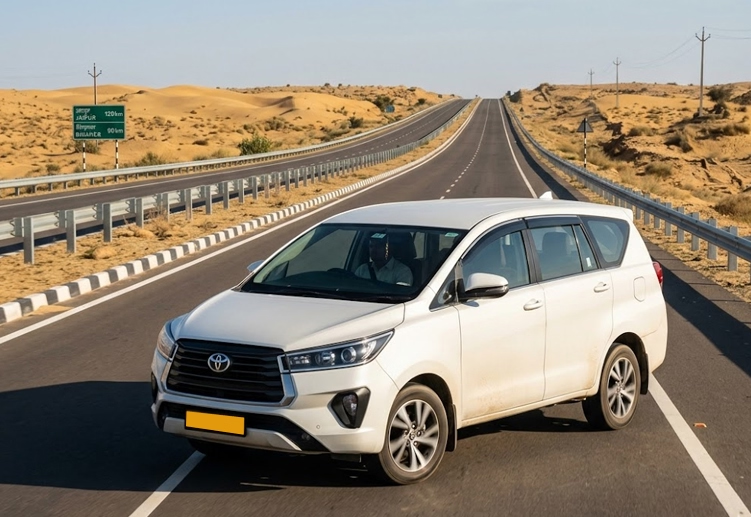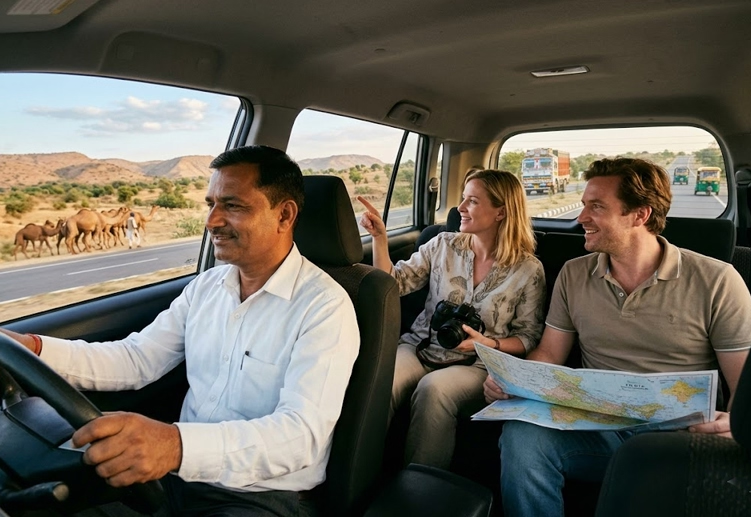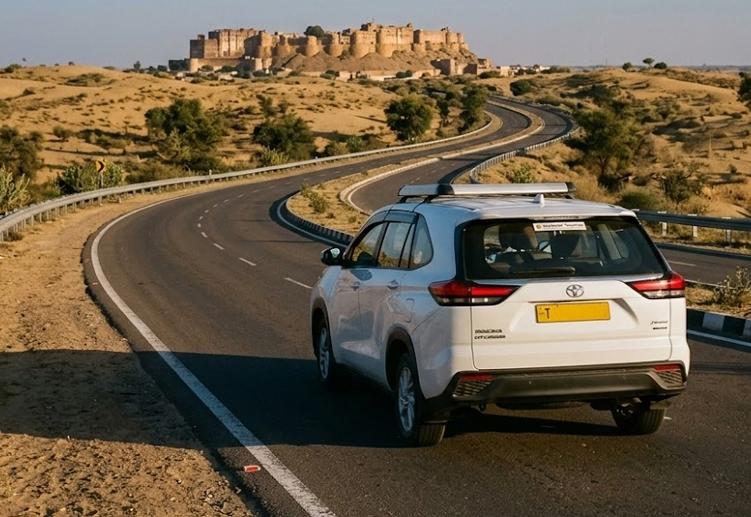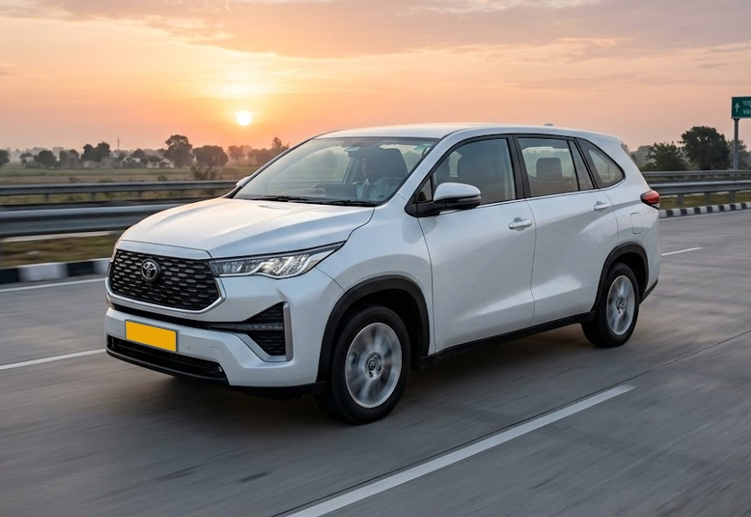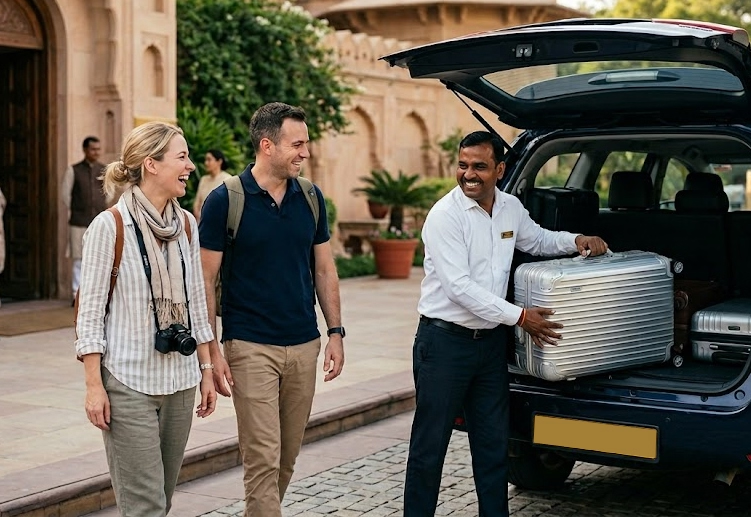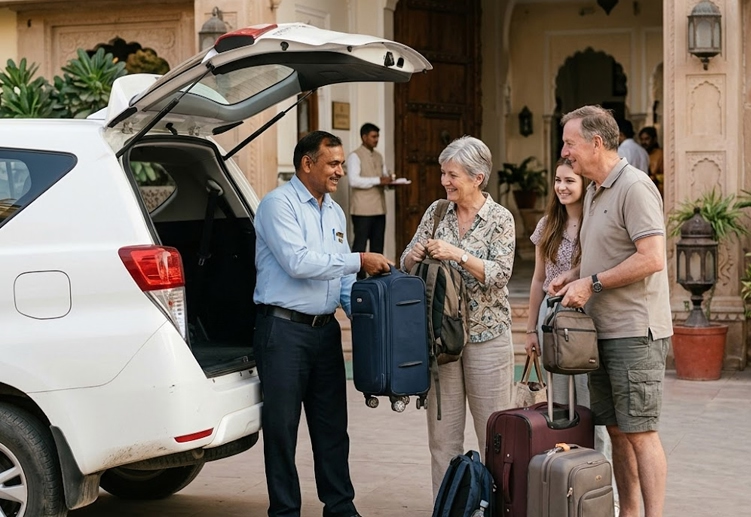


Choosing between a car rental with driver in India and a self-drive rental car can change the character of your entire trip. On paper, both options give you a private vehicle and the freedom to move beyond fixed train and flight schedules. In practice, however, they feel very different. One puts the road, parking, navigation and daily driving decisions in someone else’s hands. The other gives you direct control, but it also makes you responsible for every part of the drive.
For travelers coming from countries with orderly lane discipline, predictable right-of-way rules and easy parking, driving in India can feel more intense than expected. Traffic may include cars, buses, motorcycles, auto-rickshaws, bicycles, pedestrians and animals sharing the same road space. Road quality also varies. A modern expressway can be followed by a busy city entry, a market street, a construction zone or a narrow approach to a heritage hotel. None of this means that foreign travelers cannot self-drive. India’s official tourism portal says foreign visitors with a valid international driving permit or licence can rent and drive a vehicle during their stay. It does mean that the practical question is bigger than simply, “Can I drive?”
The better question is: which option gives you the kind of India trip you actually want? A couple spending a week on the Delhi–Agra–Jaipur route may value comfort and zero driving stress. A long-stay traveler based in a quieter area may prefer the independence of self-drive. A family with children and luggage may care more about door-to-door convenience. A confident road-trip enthusiast may enjoy controlling every detour. Budget matters, but so do time, energy, safety, parking, paperwork, luggage, route complexity and what you want to do during the journey.
This guide compares both options in detail. It looks at real trip costs, licences and rental documents, traffic conditions, fuel, tolls, parking, deposits, insurance, vehicle inspections, long-distance touring, city sightseeing and common mistakes. It also explains when paying for a driver gives genuine value and when self-drive may be a sensible choice.
- Best overall for first-time visitors: car rental with a professional driver.
- Best for maximum personal control: self-drive, if you are confident in local road conditions and meet licence requirements.
- Best for Delhi–Agra–Jaipur and Rajasthan: usually a chauffeur-driven car because multiple cities can be linked without repeated parking or navigation stress.
- Do not compare base rates only: compare fuel, tolls, parking, deposits, insurance, kilometre limits, one-way fees and driver allowances.
- Remember: a driver handles transport; a tour guide handles detailed sightseeing interpretation.
Car Rental with Driver vs Self-Drive in India: The Short Answer
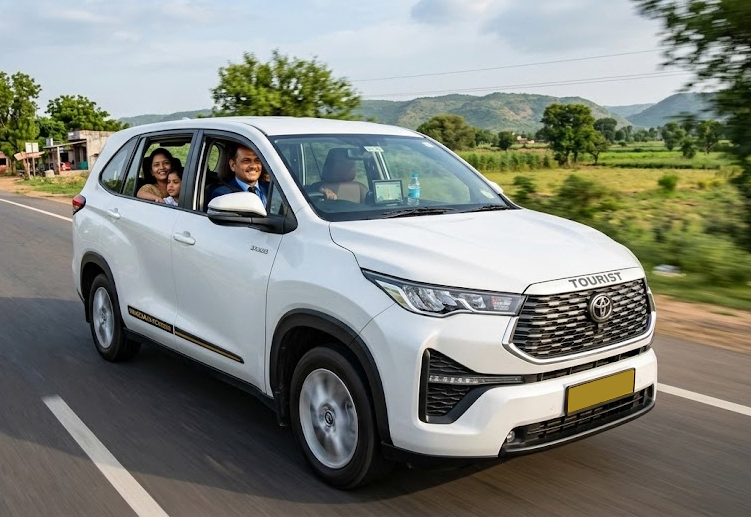
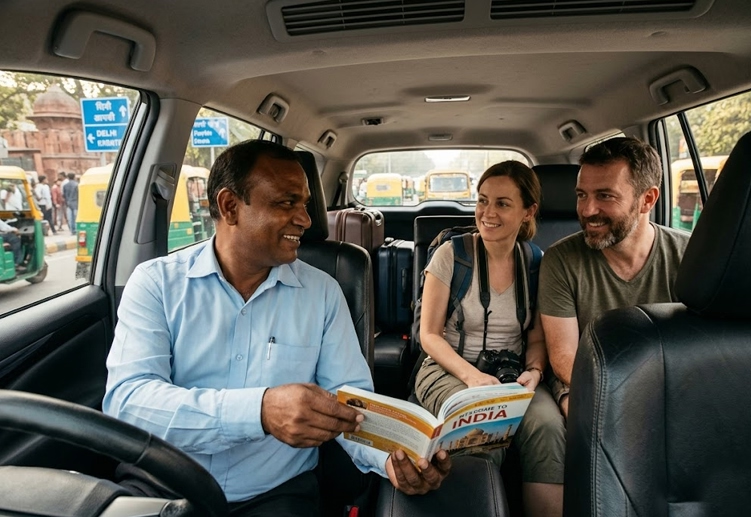
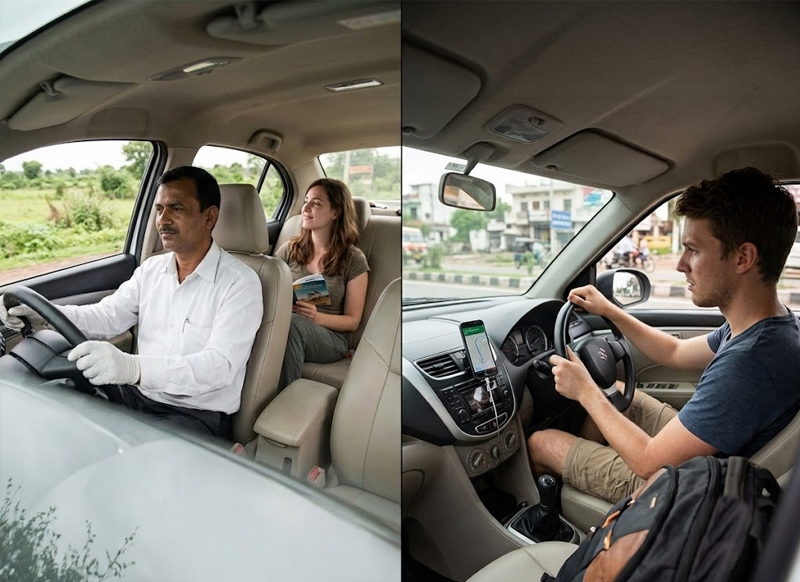
For most international tourists, especially first-time visitors traveling between major North Indian destinations, a car with a driver is usually the easier and more relaxing choice. You keep the privacy of a dedicated vehicle but avoid dealing personally with city traffic, parking, toll booths, local diversions, hotel approaches and long driving days. You can use travel time to rest, talk, work, look at the scenery or plan your next stop.
Self-drive becomes more attractive when independence itself is one of the goals of the trip. If you enjoy driving, understand left-side traffic, are comfortable making rapid decisions in mixed road conditions, have the required documents and do not mind handling deposits, inspections and parking, it can offer a satisfying sense of freedom. It can also make sense for longer stays where the car will be used repeatedly from one base rather than for a fast multi-city sightseeing circuit.
There is no universal winner. The right choice depends on the type of trip. A 12-day Rajasthan route is not the same as a month in Goa. A couple carrying two suitcases has different needs from four adults with luggage. Someone who has driven widely in South Asia may experience Indian roads very differently from a traveler attempting left-side driving for the first time after a long-haul flight.
Quick Comparison: Driver vs Self-Drive
| Factor | Car with Driver | Self-Drive |
|---|---|---|
| Driving responsibility | Handled by the driver | Fully yours |
| Navigation | Usually handled locally | You manage maps, turns and diversions |
| Parking | Driver manages drop-off and parking | You locate, enter and pay for parking |
| Privacy | Private car, but driver is present | Maximum privacy inside the vehicle |
| Traffic stress | Low for passengers | Can be significant in busy areas |
| Route flexibility | High within agreed itinerary and service terms | Very high, subject to rental restrictions |
| Paperwork | Mostly booking and passenger details | Licence, IDP where applicable, rental contract, deposit and inspection |
| Best for | First visits, families, couples, seniors, multi-city touring | Experienced drivers, long stays, privacy-focused travelers |
What Does “Car Rental with Driver” Mean in India?
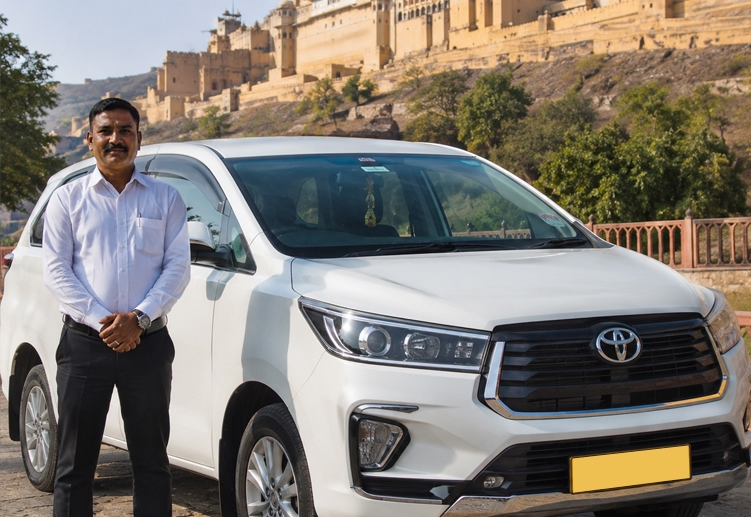
A chauffeur-driven rental normally means that you book a vehicle together with a professional driver for a transfer, day tour or multi-day route. The same car may collect you from an airport or hotel, take you sightseeing, drive between cities and drop you at the final destination. For a longer trip, the driver usually travels with the vehicle throughout the agreed route.
The service can be as simple as an airport transfer or as extensive as a two-week private road journey. A quote may be based on the number of days, total kilometres, a fixed itinerary or a combination of these. In some bookings, fuel and driver allowance are included. In others, tolls, parking, state taxes or extra kilometres are billed separately. This is why the phrase “car with driver” does not describe one universal package. You need a written inclusion list.
The main advantage is continuity. Instead of finding a new taxi in every city, you have one transport arrangement across the trip. Your luggage can remain with you between hotels, departure times can be adjusted within the agreement, and you do not need to learn local parking patterns every morning. For routes such as Delhi, Agra, Jaipur, Pushkar, Jodhpur and Udaipur, that continuity is often more valuable than travelers expect before arriving.
What Does Self-Drive Car Rental Mean in India?
With a self-drive rental, you rent the vehicle without a driver and take full responsibility for operating it during the rental period. You collect the car, verify its condition, follow the rental company’s fuel and kilometre rules, pay applicable road costs and return the vehicle according to the contract. Depending on the company and location, pickup may be at an airport, rental station or delivery point.
Self-drive gives you direct control over departure times, stops and the feel of the road trip. You are not sharing the cabin with a driver, and you can change your mind without first discussing a detour. For travelers who value privacy and enjoy the process of driving, this can be a major advantage.
However, it also transfers every transport task to you. You must understand licence requirements, check insurance and damage liability, photograph the vehicle at pickup, manage fuel, find parking, navigate toll systems, watch for restrictions, deal with breakdown procedures and stay alert during every long driving day. In a holiday itinerary packed with sightseeing, that extra mental workload can matter.
Can Foreign Tourists Self-Drive in India?
India’s official tourism portal states that foreign visitors with a valid international driving permit or licence can drive in India during their stay. Before booking, however, you should confirm exactly what documents the rental company requires for your nationality, licence language, age and vehicle category. Rental-company rules can be stricter than the minimum legal requirement, and documentation policies can change.
Do not assume that a normal domestic licence from your home country will always be enough. If an International Driving Permit is applicable to you, arrange it before travel through the appropriate authority in your home jurisdiction. Carry the original documents required by the rental provider, not only photographs on your phone. Also make sure the name on the booking, payment card and licence documents is consistent.
For travelers staying in India for a longer period or dealing with a special residency situation, the rules can be different from a short tourist visit. In those cases, verify the current position with the relevant Indian transport authority rather than relying on a travel forum or an old blog post.
Driving in India: What Feels Different?
India drives on the left side of the road. That is immediately comfortable for travelers from countries such as the United Kingdom, Australia and New Zealand, but road-side familiarity is only one part of the experience. The more important difference is how traffic space is negotiated. In many areas, drivers encounter frequent merging, motorcycles using small gaps, pedestrians crossing outside formal crossings, slow vehicles, buses pulling in and out, vehicles stopping near markets and occasional animals near or on the road.
Road conditions can change quickly. Major expressways between important cities may be modern and fast, while the final approach to a destination can be slow. A hotel inside an old city may involve narrow streets that do not resemble the highway section shown on a map. Construction and local diversions can also change the preferred route without much warning.
Official road-safety guidance from India’s Ministry of Road Transport & Highways emphasizes basics such as wearing seat belts, obeying signs and speed limits, giving pedestrians priority at uncontrolled zebra crossings, keeping the vehicle fit and avoiding mobile-phone use while driving. These principles are simple, but they matter even more when the road environment is unfamiliar.
Why Indian City Traffic Can Change the Decision
Many travelers imagine self-drive based on the intercity highway. The real test often comes at the beginning and end of the highway. Delhi, Jaipur and other major cities can have complex intersections, dense two-wheeler traffic and congested market areas. Agra may be straightforward on the expressway approach but more demanding around sightseeing zones and busy local roads.
With a driver, you can be dropped close to the practical entrance for a monument or hotel while the driver deals with parking. With self-drive, the parking problem belongs to you. That may involve locating the correct parking area, understanding entry restrictions, walking farther than expected and remembering exactly where you left the vehicle. On one day this is minor. Across several cities it becomes part of the holiday workload.
City driving also makes sightseeing schedules less predictable. A self-driver who spends extra time finding a space can lose part of a timed attraction window or restaurant reservation. A local driver cannot eliminate traffic, but experience with common approaches can reduce unnecessary mistakes.
The Real Cost: Do Not Compare Only the Daily Rental Rate
The biggest comparison mistake is looking at one advertised daily price for a self-drive car and one chauffeur-driven quote and assuming the cheaper number is the cheaper trip. A meaningful comparison needs the all-in cost.
For self-drive, examine the base rental, taxes, security deposit, fuel policy, kilometre allowance, extra-kilometre rate, tolls, parking, airport delivery fees, one-way drop fees, additional-driver charges, insurance options and the amount you could be responsible for after damage. Also check whether crossing certain state borders or entering particular regions requires notice under the rental agreement.
For a car with driver, ask whether fuel, tolls, parking, interstate or state taxes, driver allowance, night charges, airport parking, waiting time and extra kilometres are included. Some operators quote an attractive vehicle rate but add these items later. A good comparison uses two written totals for the same route and the same number of days.
Indicative Cost Thinking: How to Compare Quotes Properly
Rental prices in India vary by city, vehicle type, season, company, trip length and booking conditions, so fixed national price claims can become outdated quickly. Instead of treating any online figure as a guaranteed rate, build a simple comparison sheet. Start with the exact dates and itinerary, then request a self-drive quote and a chauffeur-driven quote for a similar vehicle category.
| Cost Item | Driver Rental | Self-Drive |
|---|---|---|
| Base vehicle charge | Check daily/km package | Check daily rental |
| Fuel | Often included in package, but confirm | Usually your responsibility unless contract says otherwise |
| Tolls | Included or extra | Your responsibility during use |
| Parking | Included or extra | Your responsibility |
| Driver allowance | May be included or extra | Not applicable |
| Security deposit | Usually not comparable to self-drive deposit structure | Common; amount and refund timing vary |
| Damage liability | Vehicle operation is with provider/driver, subject to booking terms | Read insurance excess and liability terms carefully |
| Extra kilometres | May apply above package limit | May apply above rental allowance |
Once you have the two totals, ask yourself what your own driving time is worth. Saving a modest amount may not feel like a saving if you spend several hours a day concentrating on traffic and another hour finding parking. On the other hand, a confident driver staying for several weeks may consider that effort part of the travel experience.
Fuel, Tolls and Parking: Small Items That Add Up
Fuel is straightforward in principle but can still affect the comparison. A self-drive booking may require you to return the vehicle with a specified fuel level. Photograph the fuel gauge at pickup and understand the policy. If the car uses a fuel type you are unfamiliar with, confirm it before leaving the station.
Tolls are common on many intercity routes and expressways. Ask a self-drive company how toll payments are handled and whether the vehicle has an electronic toll arrangement. With a chauffeur-driven booking, ask whether tolls are included in the quote or settled separately. Do not assume either way.
Parking is the least glamorous cost but one of the strongest convenience differences. A driver can normally drop passengers and then find the appropriate parking area. A self-driver must stay with the vehicle until it is parked. Around popular monuments, crowded markets and older neighborhoods, this can be more important than the parking fee itself.
Security Deposits and Damage Liability
Self-drive renters should pay close attention to the security deposit, pre-authorization, deductible or excess, exclusions and the process used to record damage. Before moving the car, inspect the body, wheels, glass, lights and interior. Record existing scratches, dents and wheel damage with clear time-stamped photographs or video if permitted. Make sure any significant issue is documented by the rental representative.
Read what the insurance does not cover. Tyres, wheels, underbody, glass, roof damage, lost keys, incorrect fuel and negligent use can have special conditions. Do not rely on the phrase “fully insured” without reading the actual liability section of the contract.
A car-with-driver customer has a different relationship with vehicle damage because the provider’s driver is operating the car. That does not remove the need for clear booking terms, but it does remove one major area of personal driving liability and pickup/return inspection stress.
Navigation: Google Maps Helps, Local Knowledge Still Matters
Digital maps make self-driving much easier than it once was, but a navigation app does not always understand the practical comfort of a route. It may suggest a shortcut through a narrow street, route you to a hotel entrance that is closed to cars or underestimate the inconvenience of a busy market approach.
A professional local driver who regularly operates on tourist routes may know which hotel entrance is practical, where larger vehicles can wait, where traffic regularly builds and which roadside stop has reliable facilities. That knowledge is not perfect and should not be romanticized, but it can reduce friction.
Self-drivers should download offline maps for important areas, keep a charged phone, carry a car charger and review the route before departure. Do not try to make complex phone adjustments while moving. If the map appears wrong, stop somewhere safe and reassess rather than making a last-second turn.
Flexibility: Self-Drive Wins, But by Less Than You Might Think
Self-drive offers the purest form of control. You can leave at 7:15 instead of 7:30, stop for a photograph, change restaurants or spend an extra hour in a village without explaining your decision to anyone. For travelers who dislike coordinating with a driver, that freedom is valuable.
A private chauffeur also offers considerable flexibility when the booking is structured properly. You can usually adjust departure times, request reasonable stops and modify sightseeing within the agreed route. The limits are commercial rather than mechanical: daily hours, kilometre allowances, overnight arrangements and major route changes may affect the price.
Therefore, the difference is not “flexible versus inflexible.” It is unilateral flexibility versus coordinated flexibility. If you want to change the whole route spontaneously, self-drive is easier. If you mainly want freedom to stop, eat and sightsee at your own pace, a driver can still provide a very flexible trip.
Privacy: The Strongest Argument for Self-Drive
Privacy is one area where self-drive has a clear advantage. Couples, families and friends have the cabin completely to themselves. You can talk freely, play your own music, make phone calls and spend quiet time without another person present.
With a chauffeur, the driver is part of the travel environment even when professional and discreet. Many travelers stop noticing this after the first day, but privacy-sensitive guests may prefer self-drive for that reason alone.
If you choose a driver, discuss boundaries naturally. A good chauffeur should not pressure you into shops, restaurants or sightseeing choices. You should feel comfortable saying that you want a quiet drive, no shopping stops or a specific type of meal break. Professional service is not about constant conversation; it is about making the transport work around the passenger.
Comfort and Fatigue on Long Road Days
Long-distance road travel looks different from the passenger seat. A four- or five-hour transfer can become rest time when someone else is driving. You can look at the landscape, sleep, answer messages or simply switch off. When you are the driver, the same hours require continuous concentration.
This becomes important on itineraries with repeated transfers. Delhi to Agra, Agra to Jaipur and Jaipur onward into Rajasthan can create several driving days in one week. Even if each individual road section is manageable, accumulated fatigue can reduce your energy for forts, markets, walking tours and evening meals.
Self-drive enthusiasts may enjoy the driving itself and feel energized rather than tired. The key is to be realistic about your travel style. If the road is only a means of reaching the destination, paying a driver can protect your holiday energy. If the road experience is part of the destination, self-drive may be more rewarding.
Night Driving: Why It Deserves Extra Caution
Travelers should be cautious about planning unnecessary long-distance night drives, particularly on unfamiliar roads. Visibility is reduced, fatigue increases and road conditions are harder to read. The practical environment can include unlit vehicles, pedestrians, animals, changing road surfaces and heavy commercial traffic.
A professional driver does not make every night journey risk-free, but route familiarity and experience can help. Even with a chauffeur, a sensible itinerary should avoid treating late-night driving as a routine way to squeeze another attraction into the day.
For self-drive, plan conservative arrival times. Do not schedule a first drive immediately after an exhausting international flight if you can avoid it. Collecting an unfamiliar car, adapting to a different traffic environment and navigating a large city while jet-lagged is rarely the best introduction to a holiday.
Airport Arrival: Driver Rental Has a Major Advantage
Airport pickup is one of the situations where a private driver delivers immediate value. After immigration, baggage claim and a long flight, you can meet the driver and go directly to the hotel. There is no rental counter inspection, no first-time navigation and no need to enter busy traffic while tired.
Self-drive can still work well for experienced travelers, but the pickup process takes energy. You need to locate the rental point, complete documents, inspect the vehicle, understand controls, set navigation and then drive into an unfamiliar city. If the rental station is off-airport, there may also be a shuttle or delivery procedure.
A useful compromise for self-drive fans is to spend the first night without a car, rest, and collect the rental the next morning. This reduces fatigue and gives you daylight to inspect the vehicle and understand the route.
Best Choice for Delhi
Delhi is one of the strongest arguments for a chauffeur-driven car. Distances between sightseeing areas can be significant, traffic conditions vary by time of day and parking near attractions may not be where a first-time visitor expects. Old Delhi in particular is better approached with realistic drop-off points and walking, rickshaw or local movement rather than trying to drive a rental into every narrow street.
A driver can move the car while you are sightseeing and collect you at a practical point. For a full-day tour, that removes repeated parking decisions and lets you focus on the city. If you want deeper historical context at major monuments, add a local guide rather than expecting the driver to provide detailed interpretation.
Self-drive is more reasonable if Delhi is simply the starting point for a highway journey and you are comfortable leaving the city. Even then, consider whether collecting the car from a location outside the busiest central areas would simplify the first drive.
Best Choice for Delhi to Agra and the Taj Mahal
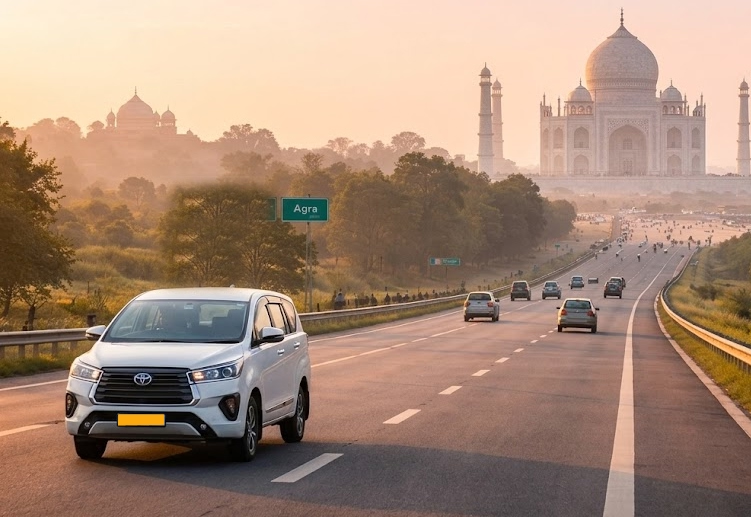
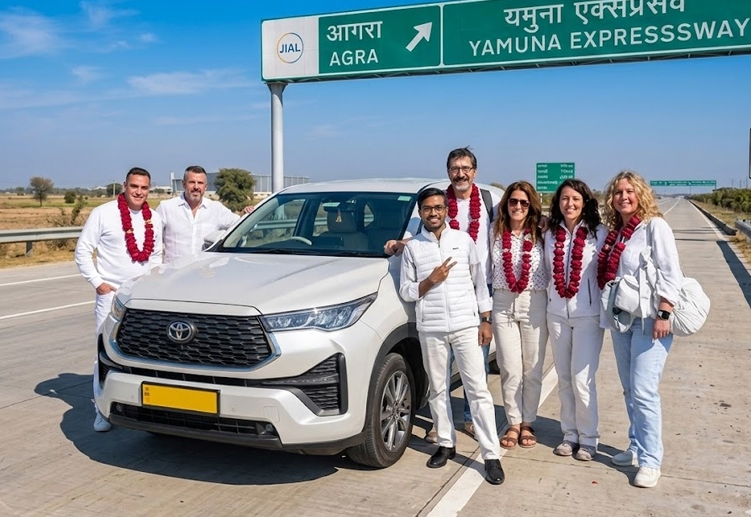
The Delhi–Agra road connection is one of the easier long-distance tourist routes to understand, which can make self-drive tempting. The intercity section can be straightforward compared with dense city traffic. The challenge is still the complete day: leaving Delhi, reaching Agra, handling local traffic, finding approved parking and managing the return if you are doing a same-day trip.
A same-day private tour with a driver allows passengers to rest on the highway and use their energy at the Taj Mahal and other sights. If returning to Delhi the same evening, not having to drive after a full sightseeing day is a significant advantage.
Self-drive works better when Agra is an overnight stop rather than a rushed day trip. You can arrive in daylight, park at the hotel and visit attractions without immediately facing a long return drive.
Best Choice for Jaipur and Rajasthan
Rajasthan is ideal road-trip country in the sense that its major cities connect naturally by road and the landscape between destinations adds to the experience. Jaipur, Pushkar, Jodhpur, Udaipur, Jaisalmer and smaller heritage towns can be linked into a private itinerary without needing a flight every few days.
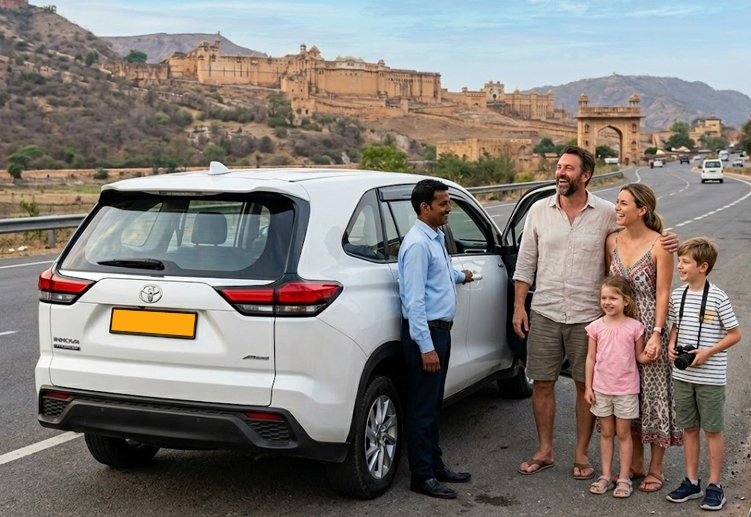
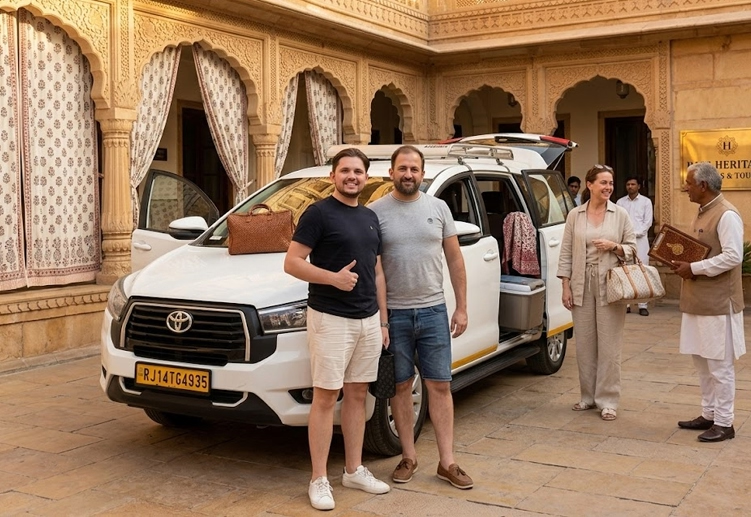
For international visitors, a Rajasthan tour with a private driver is often the most comfortable format because the driver handles long intercity legs and old-city approaches while travelers enjoy the scenery. It also makes luggage movement simple: bags stay in one vehicle between hotels.
Self-drive can be rewarding for confident road trippers, especially on a slower itinerary. The key is to avoid overloading the route. Driving Jaipur to Jodhpur, sightseeing immediately, then moving again the next morning can become tiring when repeated. Build rest days and allow extra time for unfamiliar roads.
Golden Triangle: Which Option Is Better?
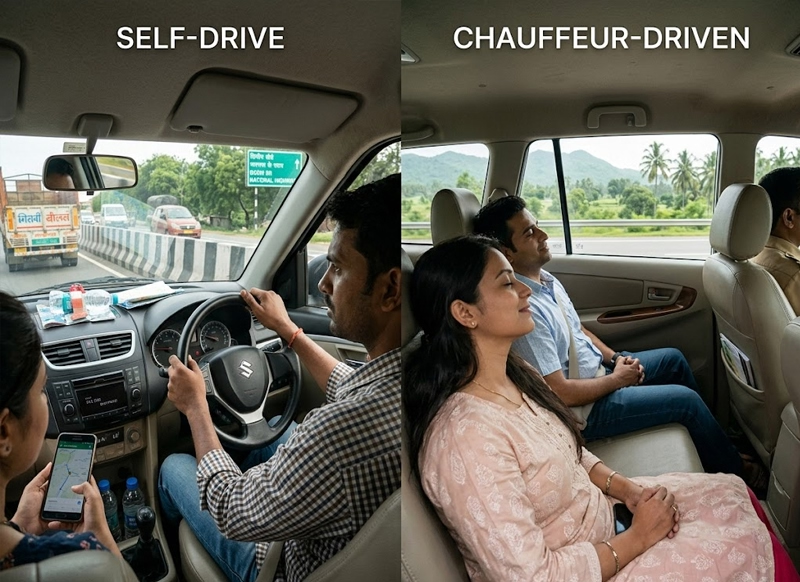
For the classic Golden Triangle covering Delhi, Agra and Jaipur, a driver is usually the better all-round option for first-time international travelers. The route has good road connections, but each city presents different traffic, sightseeing and parking challenges. Keeping the same vehicle and driver removes the need to relearn those practical details at every stop.
Self-drive is viable for travelers who genuinely enjoy driving and are comfortable with Indian road conditions. The Golden Triangle is easier than an unstructured cross-country drive because the destinations are well known and the route is widely traveled. Still, the urban sections can be demanding, and a short five- or six-day itinerary leaves little room for recovery if driving takes longer than expected.
If your priority is sightseeing, choose the driver. If your priority is the road-trip experience itself, self-drive deserves consideration.
Families with Children: Driver Usually Wins
Family travel creates extra tasks: snacks, toilet breaks, luggage, child comfort, attraction timings and sometimes motion sickness. Adding navigation and driving to that list can make a holiday unnecessarily demanding. With a chauffeur, both adults can focus on the children instead of one adult being responsible for the road.
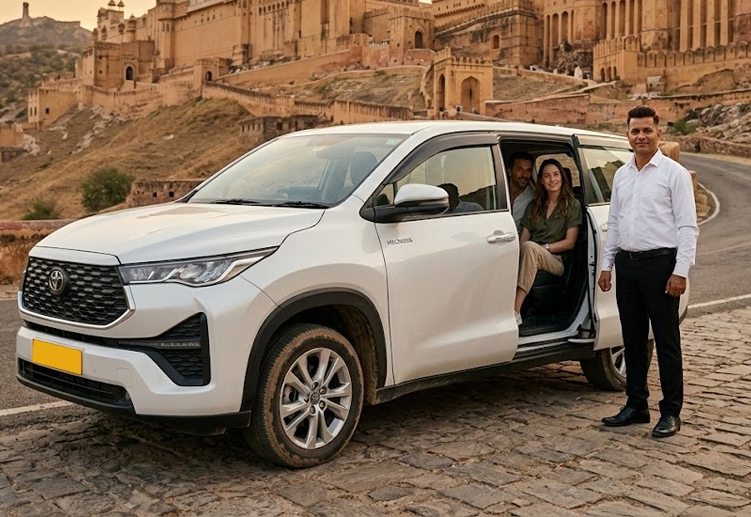
Before booking any vehicle, ask specifically about seating and luggage capacity. A car that technically seats five passengers may not comfortably carry five people plus several large suitcases. For families, an Innova-class MUV or another appropriately sized vehicle may offer more practical space than a compact sedan.
If you require a child restraint, ask the provider in advance rather than assuming one will be available. Self-drive renters should also confirm compatibility and availability of any required child seat when reserving the car.
Senior Travelers and Travelers with Limited Mobility
A chauffeur-driven car is generally more convenient for senior travelers because the vehicle can often be positioned close to hotel and sightseeing access points, reducing unnecessary walking associated with remote parking. The driver can also help with loading luggage and coordinate practical pickup spots.
Vehicle height matters. A large SUV may offer space but can be harder to enter for someone with knee or mobility concerns. A premium MUV with comfortable steps and generous door openings may be a better fit. Ask about the exact or approximate vehicle model before confirming.
Self-drive is not automatically unsuitable for older travelers, especially experienced drivers, but fatigue and unfamiliar traffic deserve more weight in the decision. A trip should feel easier because of the car, not more tiring.
Solo Travelers: The Choice Is More Personal
Solo travelers often make the decision based on privacy, confidence and budget. Self-drive offers complete independence, while a driver provides an extra layer of practical support during transfers. A solo traveler arriving late, carrying luggage or visiting multiple cities may appreciate knowing that one person is responsible for the road logistics.
On the other hand, independent travelers who dislike having another person present may prefer self-drive or a mix of trains and local transport. Cost also matters more because a private chauffeur vehicle is not being shared across two or four passengers.
A hybrid approach can work very well: use trains or flights for long distances, hire local cars with drivers for specific city days and use self-drive only in a region where you genuinely want the road-trip experience.
Couples and Honeymoon Trips
Couples often assume self-drive is automatically more romantic because it offers complete privacy. That can be true on quiet scenic routes. However, a chauffeur can make the trip feel more relaxed because neither partner has to concentrate on traffic, and both can enjoy the scenery together.
For a honeymoon or anniversary trip through Rajasthan, a driver also makes hotel arrivals and luggage transfers smoother. If you are staying in heritage properties inside old quarters, being dropped near the entrance can be much easier than figuring out parking yourself.
The choice comes down to what privacy means to you. If having the cabin alone is essential, choose self-drive. If sharing the journey without either person doing the work of driving is more important, a private chauffeur is likely the better fit.
Business Travelers and Corporate Trips
For business travel, a driver is usually more productive. Time in the car can be used for calls, email, preparation or rest. The driver can wait between meetings, handle parking and adapt to changing office locations. This is particularly useful when the schedule involves industrial areas, hotels, airports and multiple meetings across one city.
Self-drive may make sense for a long corporate assignment where the traveler needs a car daily and is already familiar with the area. For a short visit, however, the administrative time involved in rental pickup, deposits and returns often works against the goal of efficiency.
Vehicle Choice Matters More Than the Rental Format
A poor vehicle choice can make either option uncomfortable. Do not choose by passenger count alone. Count large suitcases, cabin bags, strollers and any special equipment. Think about rear-seat comfort if you will spend four or five hours at a time on the road.
| Vehicle Type | Typical Use | Planning Note |
|---|---|---|
| Sedan | Solo traveler or couple | Good for lighter luggage and shorter touring |
| MUV / Innova-Class | Couples wanting space, families, small groups | Popular for longer routes and luggage |
| Premium SUV / MPV | Comfort-focused private travel | Check actual cabin and luggage space, not only badge |
| Tempo Traveller / Van | Larger groups | More practical than splitting into several small cars |
If booking self-drive, make sure you are comfortable with the physical size of the vehicle. A large SUV may feel reassuring on highways but harder to park in old city areas. If booking a chauffeur, tell the operator your actual luggage quantity so the car can be matched correctly.
Manual or Automatic: Important for Self-Drive Visitors
If you normally drive an automatic, do not book a manual transmission simply because it is cheaper. Learning or relearning clutch control while also adapting to Indian traffic creates unnecessary workload. Reserve the transmission type you are genuinely comfortable driving.
At pickup, locate the lights, wipers, hazard switch, mirrors, parking brake, fuel gauge and spare-wheel or puncture kit arrangements before entering traffic. Set up your phone mount and navigation while stationary. If the controls or vehicle condition do not feel right, resolve the issue before accepting the car.
Self-Drive Pickup Checklist
- Documents: confirm passport/ID, driving licence, IDP where applicable and payment requirements.
- Exterior: photograph scratches, dents, bumpers, wheels, tyres, mirrors, lights and glass.
- Interior: check seats, dashboard warning lights, air-conditioning and cleanliness.
- Safety: confirm seat belts, spare wheel or puncture solution and basic emergency information.
- Fuel: record the gauge and understand the return policy.
- Kilometres: photograph the odometer and confirm the allowance.
- Insurance: understand excess, exclusions and accident reporting steps.
- Return: confirm exact location, deadline, late-return rules and deposit-release process.
Car-with-Driver Booking Checklist
- Vehicle: category, passenger capacity, luggage capacity and air-conditioning.
- Route: pickup, overnight cities, sightseeing use and final drop.
- Price: total package and payment schedule in writing.
- Included costs: fuel, tolls, parking, taxes and driver allowance.
- Limits: daily kilometres or hours and extra-use rates.
- Night use: any late-night or early-morning charges.
- Support: what happens if the car breaks down or a driver change becomes necessary.
- Guides: confirm separately if you want local sightseeing guides.
Driver vs Guide: Do Not Confuse the Roles
A recurring source of disappointment is assuming that hiring a driver automatically includes a professional tour guide. These are different jobs. A driver is responsible for safe transport, route logistics, vehicle care, parking and agreed pickups. A guide interprets history, architecture, religion, local culture and the significance of monuments.
Some experienced drivers know a great deal about the places they visit and may offer useful practical information, but that should not be treated as a substitute for a qualified guide if detailed interpretation matters to you. In Delhi, Agra and Jaipur, adding a local guide for major sightseeing days can improve the experience while keeping the driver focused on transport.
Shopping Stops and Restaurant Recommendations
A private driver may suggest restaurants, craft shops or other stops. Recommendations can be helpful, but they should always remain optional. If you do not want shopping visits, say so clearly at the start of the trip. A professional service should respect that preference.
Self-drive eliminates this issue entirely because you choose every stop. That independence can be attractive to travelers who prefer to research all meals and shops themselves. With a chauffeur, you can still maintain the same control by communicating your preferences: local vegetarian restaurants, no shopping, clean highway facilities, coffee stops or hotel dining.
Breakdowns and Roadside Problems
With a self-drive vehicle, understand the rental company’s roadside-assistance procedure before leaving the pickup point. Save the emergency contact number offline. Ask what to do after a puncture, mechanical warning light or accident, and whether unauthorized repairs can affect reimbursement or insurance.
A chauffeur-driven booking places the first layer of vehicle problem-solving with the driver and operator. If the car develops a serious issue, the provider should explain replacement or support arrangements. Ask about this before booking a long multi-city route.
Neither format guarantees that problems will never happen. The difference is who carries the responsibility for managing them when they do.
Roadside Stops, Toilets and Meal Breaks
Long drives are more comfortable when breaks are planned rather than delayed until everyone is tired. A driver who regularly uses a route may know reliable fuel stations, larger restaurants and cleaner facilities. This can be particularly useful for families and senior travelers.
Self-drivers should identify likely stopping points before departure, especially on longer routes. Do not wait for the fuel gauge or fatigue level to become urgent. Keep drinking water in the car, but balance hydration with practical access to stops.
Best Time of Year for an India Road Trip
Season affects both chauffeur-driven and self-drive travel. North India and Rajasthan are popular in the cooler part of the year because daytime sightseeing is more comfortable. Summer can bring intense heat, making reliable air-conditioning and sensible break planning essential. Monsoon conditions can slow journeys in some regions and make road surfaces less predictable.
For self-drive, season changes the workload. Heavy rain, fog or extreme heat adds complexity to an unfamiliar road environment. A chauffeur does not eliminate weather risk, but local experience can reduce the burden on the traveler.
Always check current weather and road conditions close to the travel date rather than relying only on seasonal averages.
How Many Hours Should You Drive in a Day?
There is no perfect number because road type, stops and traffic matter as much as distance. A 250-kilometre drive on a fast expressway is different from 250 kilometres through smaller roads and busy towns. Map estimates should be treated as planning tools, not promises.
For a holiday, avoid designing every day around maximum possible driving. Leave enough time for breakfast, sightseeing, lunch, hotel check-in and unexpected delays. If self-driving, be even more conservative because you need to arrive with enough energy to park, check in and enjoy the destination.
With a driver, long days are easier for passengers, but an ethical itinerary should still respect safe and reasonable working hours. More kilometres do not automatically create a better trip.
When a Train or Flight Is Better Than Either Car Option
India is vast. Not every route belongs in a car. If two destinations are separated by a very long road journey, a domestic flight or train may save time and fatigue. The strongest itinerary can mix transport: private car for the Golden Triangle, train for another sector, flight for a distant region and local car service at the destination.
Self-drive renters should pay special attention to one-way policies. A route that looks logical on a map may become expensive if the rental company charges heavily for dropping the car in another city or does not permit it at all. A chauffeur operator may also price a one-way route differently because the vehicle and driver eventually need to return.
A Hybrid Strategy Can Be the Smartest Choice
You do not need to choose one transport style for the entire trip. Many travelers benefit from mixing them. For example, use a chauffeur-driven car for Delhi–Agra–Jaipur, fly to another region, then rent self-drive locally for a few relaxed days. Or use trains between major cities and hire a private driver only for rural excursions and day trips.
A hybrid approach lets you spend money where convenience matters most. You can avoid stressful urban driving but still enjoy an independent road trip in a quieter region. It also reduces the chance that one transport decision becomes a burden across a long holiday.
Mistakes to Avoid with a Chauffeur-Driven Rental
Booking only by the lowest quote. A cheap price can hide exclusions, older vehicles or unrealistic kilometre rules. Compare written inclusions.
Not discussing luggage. A vehicle can have enough seats but insufficient boot space.
Assuming the driver is a guide. Add a local guide when historical interpretation matters.
Overplanning the route. Too many one-night stops make even a comfortable car feel tiring.
Accepting unwanted shopping stops. Communicate clearly that retail visits are optional.
Ignoring extra hours and kilometres. Understand how route changes affect the final price.
Mistakes to Avoid with Self-Drive
Driving immediately after a long-haul flight. Fatigue plus unfamiliar traffic is a poor combination.
Skipping the pickup inspection. Document existing damage before leaving.
Buying on base price alone. Deposits, insurance, kilometres and one-way fees can matter more.
Choosing an unfamiliar transmission. Book the type you normally drive.
Underestimating city parking. Highway confidence does not solve old-city parking.
Planning long night drives. Build the itinerary around daylight whenever practical.
Ignoring licence requirements. Verify documentation before travel, not at the rental counter.
Which Option Is Better for a 5–7 Day India Trip?
For a short trip, time and energy are unusually valuable. You have fewer days to recover from wrong turns, rental-counter delays or driving fatigue. If the itinerary includes Delhi, Agra and Jaipur, a chauffeur-driven car is generally the stronger choice. It turns intercity transfers into passenger time and makes sightseeing days easier to manage.
Self-drive can still be worthwhile if driving is one of the main reasons you are traveling and you are highly confident in the environment. Otherwise, the learning curve consumes too large a share of a short holiday.
Which Option Is Better for a 10–14 Day Rajasthan Trip?
For most international visitors, a driver remains the more practical choice because Rajasthan itineraries involve repeated hotel changes and long road sections. One chauffeur and one vehicle create continuity from city to city. You can stop for photographs and meals without having to manage every kilometre yourself.
Self-drive becomes more attractive if the trip is deliberately slow. Spend two or three nights in each place, avoid late arrivals and leave space for route changes. A fast checklist-style itinerary is much harder to enjoy from the driver’s seat.
Which Option Is Better for a One-Month Stay?
Long stays change the economics and the convenience calculation. If you are based in one city or region and need frequent independent transport, self-drive may become more attractive. You learn local routes, identify parking options and spread the pickup paperwork across many days of use.
If the month involves continuous touring across multiple states, a driver may still provide greater value because the logistics remain complex. Consider dividing the trip into regions rather than keeping one vehicle for every day.
Who Should Definitely Consider a Driver?
A chauffeur-driven car deserves strong consideration if this is your first visit to India, you are uncomfortable with dense mixed traffic, you are traveling with children or older relatives, you have several large suitcases, you plan multiple cities, you want to work or rest during transfers, or you simply do not enjoy driving on holiday.
It is also a logical choice if your itinerary includes many hotel changes. The more transitions you have, the more valuable it becomes to keep transport simple.
Who Is a Good Candidate for Self-Drive?
Self-drive suits travelers who actively enjoy driving, are calm in unpredictable traffic, are comfortable with left-side road systems, are willing to study local rules, have the correct documentation, understand rental insurance and deposits, and value cabin privacy more than the convenience of a chauffeur.
It is especially suitable when the itinerary is slow rather than rushed. If you have time to stop early, avoid difficult conditions and change plans after a tiring day, self-drive can be enjoyable instead of stressful.
Our Practical Recommendation for First-Time International Visitors
If you are visiting India for the first time and your plan is primarily sightseeing, start with a car and driver. This gives you the independence of private road travel without making the road itself your responsibility. You can learn how traffic flows, see how hotels and monument parking work and decide whether self-driving appeals to you on a future trip.
For the Golden Triangle and Rajasthan, the argument is especially strong because the route naturally involves several cities. A professional chauffeur can handle the transitions while you keep control over the itinerary, hotel choices, meal preferences and sightseeing pace.
If privacy is your biggest concern, self-drive may still be right. Just make that choice because you genuinely want to drive—not because the headline daily rate looks cheaper.
How to Compare Two Actual Quotes Before Booking
Ask both providers to price the same dates, same route and similar vehicle category. Then compare line by line. A self-drive offer should show the rental rate, kilometre limit, deposit, insurance and damage liability, taxes and one-way conditions. A chauffeur quote should show fuel, driver allowance, tolls, parking, state taxes, kilometre/hour limits and extra-use charges.
Then add the non-financial factors: Who will drive after sightseeing? Who will park? Who deals with a puncture? How much privacy do you want? Are you comfortable handling an unfamiliar vehicle? Do you want travel time to be productive or restful? These answers often make the decision clearer than another small difference in price.
Frequently Asked Questions
Is it better to rent a car with a driver or self-drive in India?
For most first-time international visitors, a car with a driver is usually easier because it removes the stress of unfamiliar traffic, parking, tolls, route changes and local driving habits. Self-drive can suit experienced drivers who strongly value privacy and independence.
Can foreign tourists legally self-drive a rental car in India?
Yes, foreign visitors can rent and drive a vehicle in India when they meet the applicable licence requirements. India’s official tourism portal states that foreign visitors with a valid international driving permit or licence can drive during their stay. Confirm the current documents required by your rental company before booking.
Is a chauffeur-driven car much more expensive than self-drive in India?
Not necessarily. Compare the complete trip cost. Self-drive can involve fuel, tolls, parking, deposits, insurance conditions, excess kilometres and one-way fees. A chauffeur quote may bundle several of those costs, though inclusions vary.
Is driving in India difficult for foreign tourists?
It can be demanding, especially in large cities and busy towns. Mixed traffic, motorcycles, pedestrians, frequent merging, local parking and changing road conditions require concentration. Modern highways can be easier, but city entry and exit remain part of the journey.
What documents should I check for a self-drive rental?
Check the company’s rules for passport or identity documents, your home driving licence, International Driving Permit where applicable, payment card, age restrictions and security deposit. Also understand the insurance and damage-liability terms.
What should be included in a car-with-driver quote?
Confirm fuel, tolls, parking, state taxes, driver allowance, overnight charges, daily kilometre or hour limits, waiting time, airport fees, extra kilometres and taxes. Get the inclusions in writing.
Is a private driver also a tour guide?
No. A driver manages the vehicle, route and road logistics. A local guide is the better option for detailed monument history and cultural interpretation inside sightseeing attractions.
Which option is better for Delhi, Agra and Jaipur?
A car with a driver is usually more practical for the Golden Triangle because it keeps the same transport across several cities and reduces navigation and parking work. Confident self-drivers can still do the route if they are comfortable with Indian traffic.
Is self-drive better for a long stay in one city?
It can be. If you have secure parking, know the local area and need a car regularly, self-drive may offer good independence. In very dense central areas, parking can reduce that advantage.
What is the safest way to choose between the two?
Base the decision on your driving experience, route, trip length, passengers, luggage, comfort with local traffic and the all-in cost. Do not choose self-drive only because the headline rental price is lower, and do not book a chauffeur without checking vehicle quality and written inclusions.
Final Verdict: Which Is Better?
For the average international traveler coming to India for sightseeing, car rental with a driver is the better all-round choice. It gives you most of the freedom people want from a private road trip—door-to-door movement, flexible stops, your own vehicle and a custom schedule—while removing the most demanding parts: driving, parking, navigation and managing the car itself.
Self-drive is not a bad option. For the right traveler, it can be excellent. If you love driving, value complete privacy, understand the documentation, are comfortable with Indian road conditions and have time to travel slowly, self-drive gives you a level of independence that no chauffeur service can fully reproduce.
The mistake is choosing based on image rather than reality. Self-drive is not automatically more adventurous, and a chauffeur is not automatically less independent. The best arrangement is the one that leaves you with more energy for the places you came to see.
If you are planning Delhi, Agra, Jaipur or a longer Rajasthan route, Hire Private Driver India can arrange a suitable private vehicle and professional driver based on your dates, passenger count, luggage and preferred itinerary.
Need a Car with Driver for Your India Trip?
Share your arrival city, travel dates, destinations, number of passengers and luggage. We can help you choose a suitable vehicle and provide a clear quote for your private India road journey.
Get Your Free Custom Quote