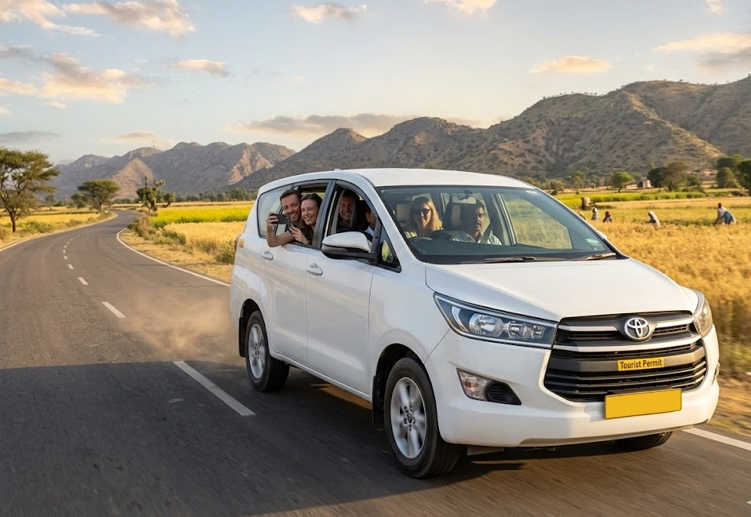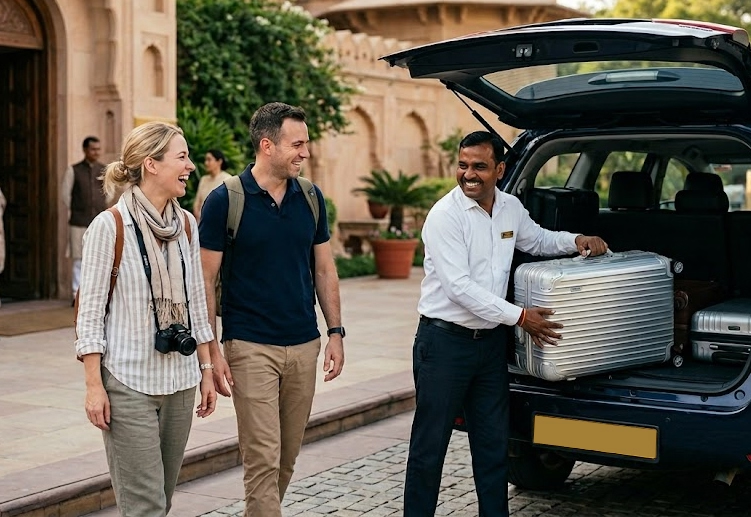


Rajasthan is one of the best regions in India for a road trip because the journey between cities is part of the experience. The route can move from Jaipur’s hill forts to Pushkar’s lake, from Jodhpur’s blue old city to Jaisalmer’s desert landscape, and from the Aravalli hills to the lakes of Udaipur. A well-planned drive lets these places connect naturally instead of feeling like separate hotel stays.
The biggest mistake travelers make is trying to include too much. Rajasthan is large, and a route that looks simple on a map can become tiring when every day includes a long drive, hotel check-in and heavy sightseeing. The strongest itineraries are built around realistic travel time, comfortable overnight stays, useful stops between cities and enough free time to enjoy each place properly.
This guide is designed for international travelers, couples, families and senior guests who want to explore Rajasthan by private car and driver. It explains which cities combine well, how many days to allow, which routes are worth the extra distance, what vehicle works best, what to confirm before booking and how to avoid turning a heritage holiday into a rushed transport schedule.
- Best first Rajasthan route: Jaipur → Jodhpur → Udaipur.
- Best desert extension: Jaipur → Jodhpur → Jaisalmer.
- Best balanced 10–12 day route: Jaipur → Pushkar → Jodhpur → Udaipur with selected heritage stops.
- Best longer circuit: Jaipur → Bikaner → Jaisalmer → Jodhpur → Udaipur → Chittorgarh/Bundi.
- Best planning rule: fewer cities with better pacing usually creates a better trip.
Why Rajasthan Is Ideal for a Private Road Trip
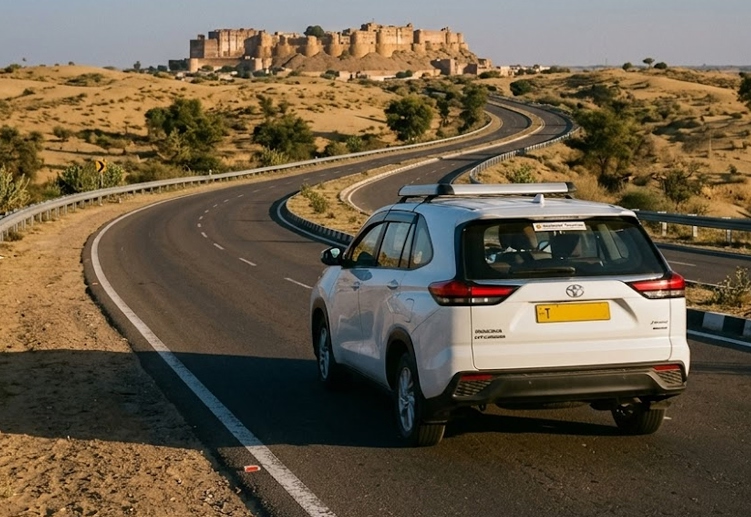
Rajasthan’s major heritage cities are spread out enough to feel distinct but connected well enough for a logical overland route. Jaipur, Jodhpur, Udaipur, Pushkar, Bikaner and Jaisalmer each offer a different visual identity. The road between them adds landscape, village life and smaller heritage stops that would be missed on a flight-only itinerary.
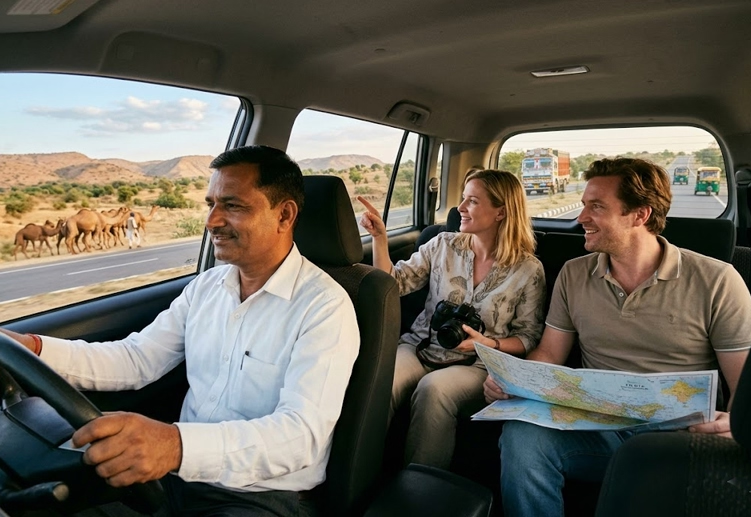
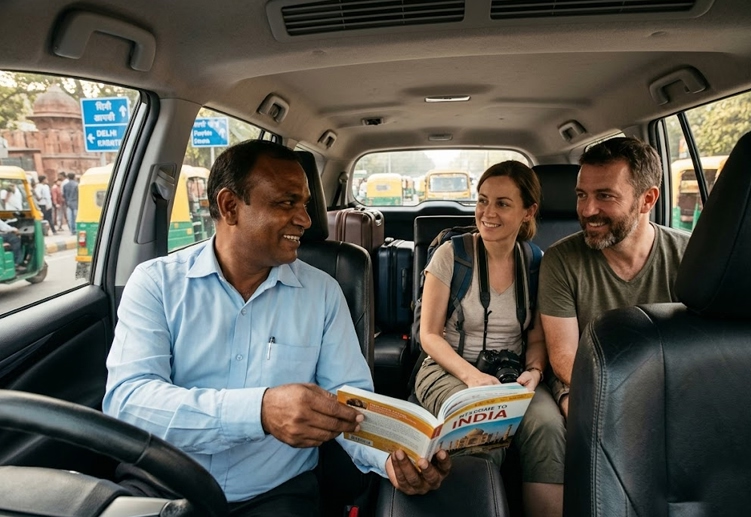
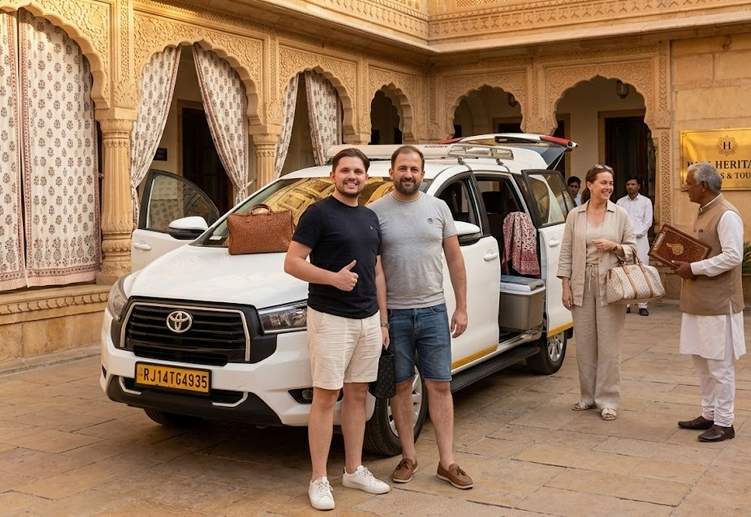
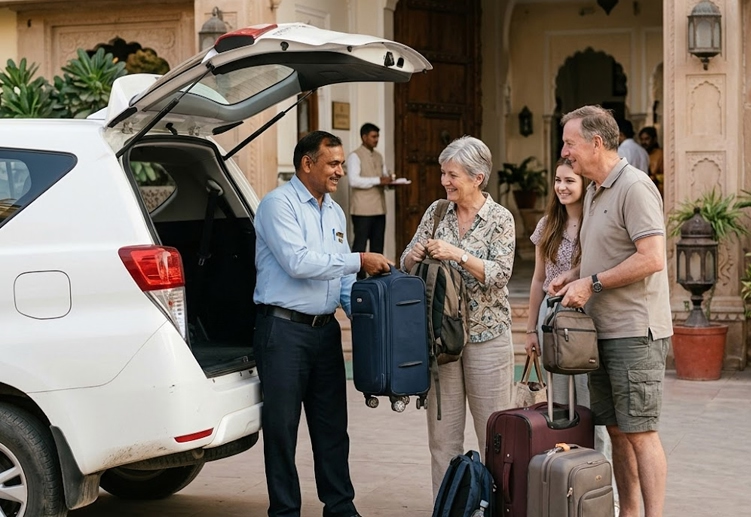
A private car is especially practical because you travel directly from hotel to hotel. Luggage stays with you, stops can be adjusted, and the day can be shaped around monument timings instead of train or bus schedules. This flexibility matters on a longer trip, where one late arrival can otherwise affect several days.
For many visitors, the value is continuity. You are not starting a new transport arrangement every morning. The vehicle, driver and route remain familiar, which makes the holiday easier to manage and more relaxed.
How Many Days Do You Need for Rajasthan?
There is no single correct answer, but the route should match the number of days rather than the other way around. A short trip should focus on fewer cities. A longer trip can include western Rajasthan, secondary heritage towns and wildlife without creating repeated six- or seven-hour travel days.
- 5–6 days: Jaipur → Jodhpur → Udaipur.
- 7–9 days: Jaipur → Pushkar → Jodhpur → Udaipur, or Jaipur → Jodhpur → Jaisalmer.
- 10–12 days: Jaipur → Pushkar → Jodhpur → Udaipur with Kumbhalgarh/Ranakpur or Chittorgarh.
- 12–14 days: Jaipur → Bikaner → Jaisalmer → Jodhpur → Udaipur with selected heritage extensions.
- 14+ days: add Bundi, Ranthambore, Mandawa or slower two-night stays without rushing.
Route One: Jaipur → Jodhpur → Udaipur
This is the strongest first-time Rajasthan road trip for many travelers. It gives three very different cities without excessive backtracking. Jaipur provides major forts, palaces and markets; Jodhpur adds Mehrangarh Fort and the blue-city character; and Udaipur finishes the route with lakes, hills and a slower atmosphere.
The journey also works well because the final leg can include high-value heritage stops. Depending on timing, travelers often consider Ranakpur or Kumbhalgarh on the way toward Udaipur. These should be treated as proper stops rather than squeezed into an already overloaded day.
Suggested pacing
- Jaipur: 2 nights minimum, preferably 3 if arriving from an international flight or Delhi.
- Jodhpur: 2 nights gives enough time for Mehrangarh Fort and the old city.
- Udaipur: 2–3 nights works well because the city rewards a slower pace.
Jaipur: The Best Starting Point for Rajasthan
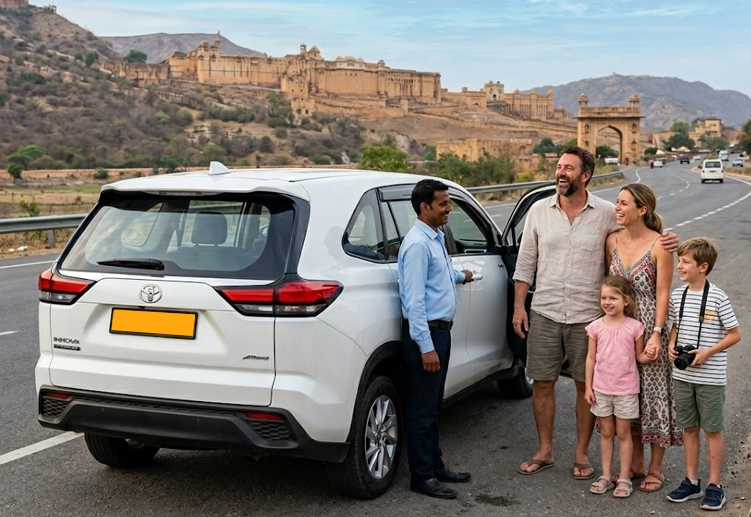
Jaipur works well at the beginning of a Rajasthan trip because it is easy to combine with Delhi and Agra and has enough sightseeing to justify more than one night. The city’s main heritage highlights include Amber Fort, City Palace, Jantar Mantar, Hawa Mahal, old bazaars and hilltop viewpoints.
A Jaipur sightseeing tour can cover the main city attractions efficiently, but travelers who enjoy markets, textiles and crafts should keep extra time for the old city rather than trying to add every nearby excursion.
If Jaipur is your arrival city, avoid scheduling a major intercity drive immediately after a late flight. One comfortable arrival day often improves the rhythm of the entire trip.
Route Two: Jaipur → Pushkar → Jodhpur → Udaipur
Adding Pushkar creates a softer transition between Jaipur and Jodhpur. It works particularly well for travelers who like smaller towns and want a change from large fort-and-palace sightseeing. Pushkar’s lake, ghats, markets and walkable scale make it feel very different from the state capitals.
Pushkar can be an overnight stop or a shorter visit, depending on the rest of the itinerary. Travelers who want a more relaxed Rajasthan experience often enjoy one night here, while people with limited time can continue onward after a few hours.
Jodhpur: Where the Route Becomes More Dramatic
Jodhpur is one of Rajasthan’s most rewarding heritage cities because Mehrangarh Fort dominates the entire landscape. The city also offers Jaswant Thada, local markets and an old-town atmosphere that feels more intimate than Jaipur.
Do not treat Jodhpur as a one-night transit stop if the fort is important to you. Arriving late and leaving early means missing the reason the city belongs on the route in the first place.
Route Three: Jaipur → Jodhpur → Jaisalmer
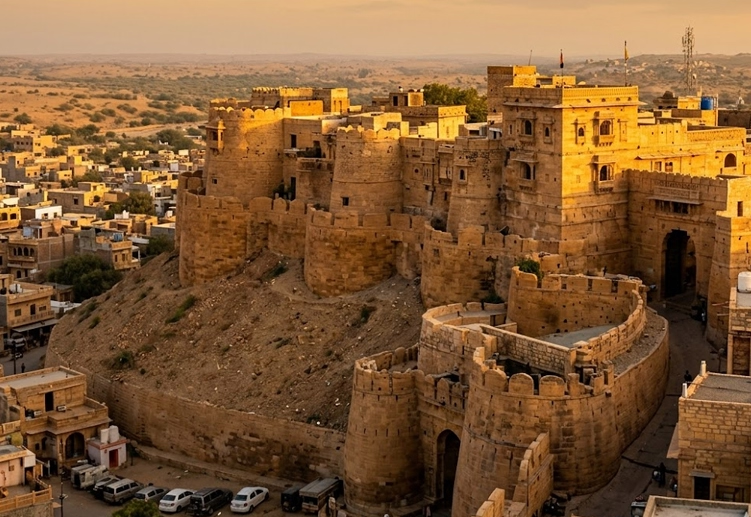
Travelers who want desert landscapes should consider continuing west to Jaisalmer. This is a stronger route for visitors with more time because Jaisalmer is not a small detour. It deserves enough nights to justify the distance.
Jaisalmer offers a completely different visual language: golden sandstone, havelis, the living fort, desert roads and open skies. The city is especially rewarding for travelers who want photography, architecture and desert atmosphere rather than only large palace complexes.
A common planning mistake is adding Jaisalmer to a short itinerary simply because it is famous. If your schedule is tight, Jaipur–Jodhpur–Udaipur often gives a more balanced first trip. If you have ten days or more, Jaisalmer becomes much easier to include comfortably.
Route Four: Jaipur → Bikaner → Jaisalmer → Jodhpur
This is a good western Rajasthan circuit for travelers who want more desert character and fewer of the state’s lake-and-hill destinations. Bikaner works as a useful step between Jaipur and Jaisalmer and adds Junagarh Fort, old-city character and a less tourist-heavy atmosphere.
Because this route pushes farther west, it should not be combined with too many southern Rajasthan cities unless the holiday is long enough. The best itineraries respect geography instead of forcing every famous name into one loop.
Udaipur: The Best Place to Slow Down
Udaipur works beautifully near the end of a Rajasthan road trip. After several fort cities and long drives, the lakes and hills create a softer pace. City Palace, Lake Pichola, old-city streets and evening viewpoints all benefit from having enough time rather than being squeezed into a single rushed day.
For many couples and senior travelers, Udaipur is the city where an extra night adds the most value. It is also a useful place to schedule a lighter day before a flight or the next long transfer.
Ranakpur and Kumbhalgarh: Worthwhile Stops Between Jodhpur and Udaipur
Ranakpur and Kumbhalgarh are among the strongest reasons to keep a private car on this route. They sit naturally between major cities and are easier to include by road than by public transport.
Ranakpur is known for its Jain temple architecture and intricate marble work. Kumbhalgarh offers a very different experience with a major hill fort and expansive defensive walls. Trying to do both plus a long city sightseeing program on the same day can be tiring, so choose the combination that matches your pace.
Chittorgarh and Bundi: Best for Travelers Who Want More Depth
Chittorgarh and Bundi are excellent additions for repeat visitors or travelers with extra days. Chittorgarh is large, historical and emotionally significant within Rajasthan’s Rajput story. Bundi is smaller, quieter and rich in murals, stepwells and old-town atmosphere.
These places add depth, but they should not be used simply to increase the number of stops. Include them when the route has enough time for proper sightseeing.
Ranthambore: How to Add Wildlife Without Breaking the Route
Ranthambore works best when safari timing is planned first and the road itinerary is built around it. Wildlife schedules are less flexible than city sightseeing, so confirmed safari slots should guide arrival and departure times.
A Jaipur to Ranthambore day trip is possible for some travelers, but a longer Rajasthan journey is usually better served by an overnight stay when wildlife is a serious priority.
Should You Add Agra to a Rajasthan Road Trip?
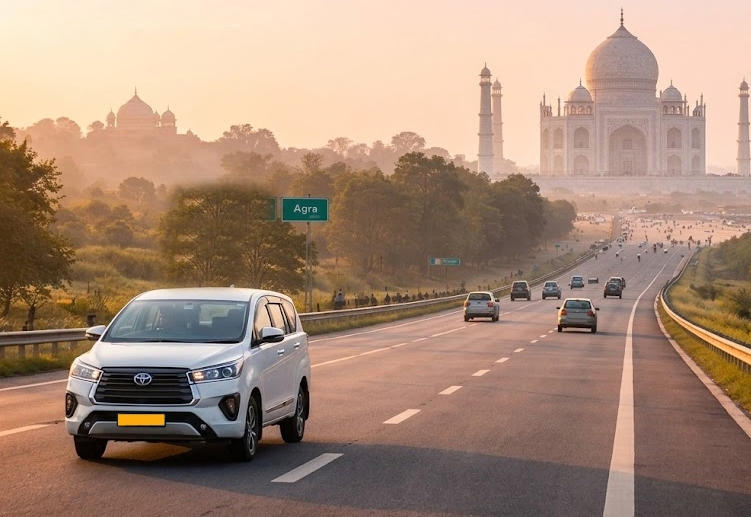
Agra is a logical extension when the route begins or ends in Delhi. It adds Mughal architecture to a trip otherwise dominated by Rajput heritage and can create a satisfying contrast. Travelers can combine Agra with Jaipur as part of a broader North India journey rather than treating it as a separate trip.
If you are already in Jaipur and have very limited time, a Jaipur to Taj Mahal day trip may be an option, but for a multi-day road holiday, an overnight route is usually more comfortable.
Best Vehicle for a Rajasthan Road Trip
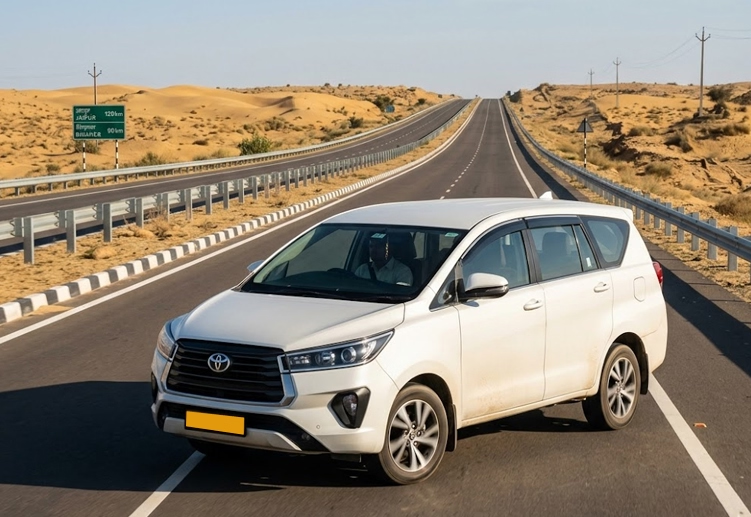
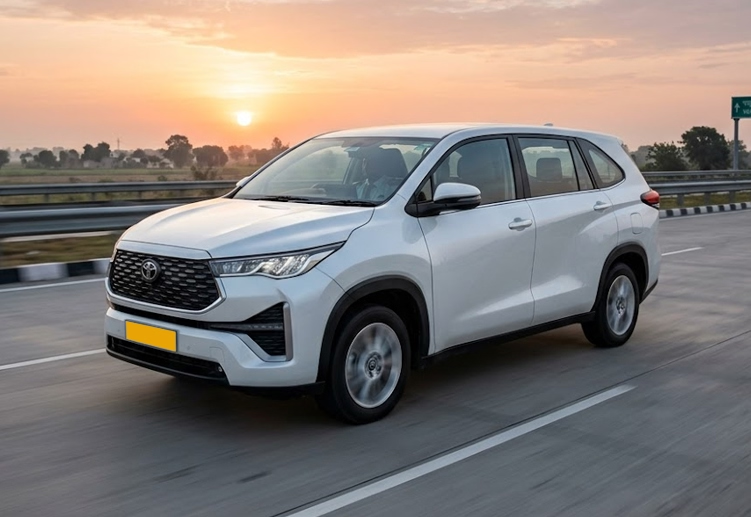
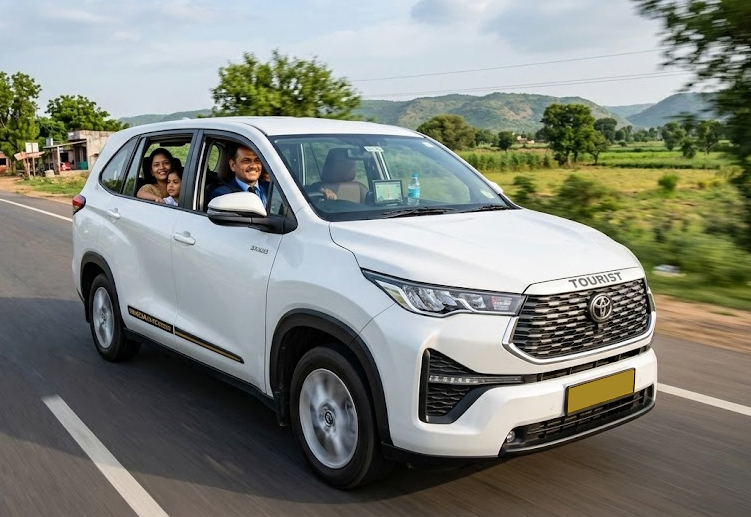
Vehicle choice affects the quality of a long Rajasthan trip more than many travelers expect. The right option depends on passenger count, luggage, height, mobility and how many hours you expect to spend on the road.
| Vehicle | Best For | Practical Advantage |
|---|---|---|
| Sedan | 1–2 travelers | Economical and suitable for lighter luggage and standard highway travel. |
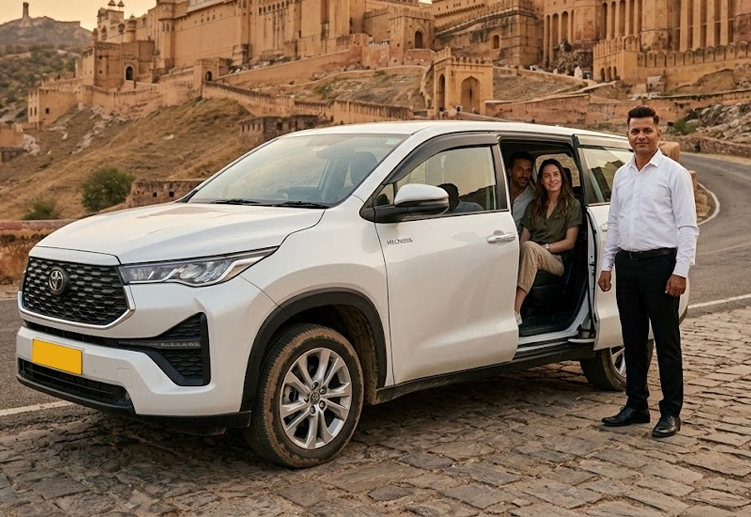
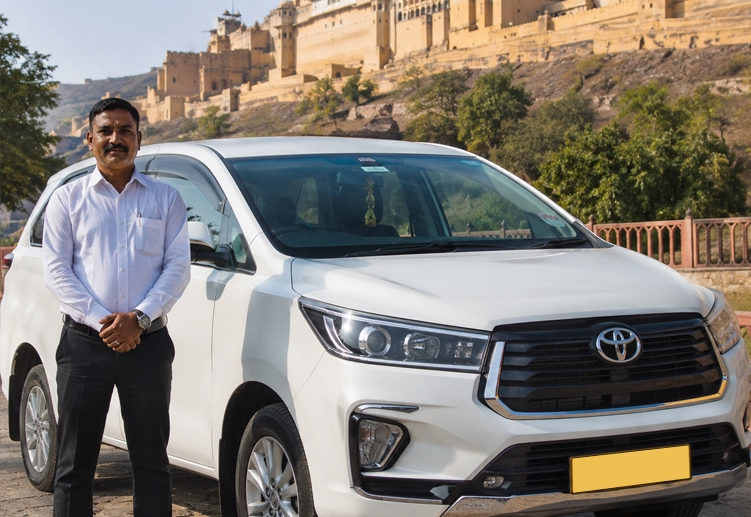
| Innova / MUV | Couples, families, 3–5 travelers | More luggage room, easier entry and better long-distance comfort. |
| Premium MPV / SUV | Comfort-focused travelers | Useful for longer routes where rear-seat space matters more. |
| Tempo Traveller | Larger groups | More practical for group luggage and coordinated travel. |
Do not choose a vehicle only by the number of seats. Ask how much luggage space remains when all passengers are seated. On a long tour, suitcase capacity can matter as much as passenger capacity.
Private Driver vs Train Travel in Rajasthan
Trains can be useful for selected city pairs, but a private driver is usually better suited to travelers who want several heritage cities in one continuous route. The biggest advantage is not speed; it is flexibility. Hotel pickups, rural stops, heritage detours and luggage movement become much easier.
That does not mean every traveler needs a car for every day. If you strongly prefer rail travel, a mixed itinerary can also work. The best choice depends on whether convenience and route flexibility matter more to you than the experience of train travel itself.
What a Professional Driver Should — and Should Not — Do
A driver’s main job is safe, reliable transportation and practical route support. A good driver may help with realistic departure times, suitable meal stops, parking areas and route logic. However, a driver is not automatically a licensed guide, historian or shopping adviser.
For detailed monument history, arrange a qualified sightseeing guide where needed. This keeps responsibilities clear and avoids unrealistic expectations. A professional road trip works best when the driver focuses on the journey and specialist guides focus on interpretation.
What to Confirm Before Booking
- Vehicle category: confirm the actual class of vehicle, not just a general label.
- Luggage: tell the operator how many large and small bags you will carry.
- Pricing: ask whether the quote is route-based, daily or kilometer-based.
- Inclusions: confirm fuel, tolls, parking, state taxes and driver allowance.
- Extra use: ask how additional sightseeing, late hours or route changes are charged.
- Driver details: confirm when the driver’s name and phone number will be shared.
- Payment: request written deposit, balance and cancellation terms.
- Hotels: share hotel names early because location can affect route timing.
Best Time for a Rajasthan Heritage Drive
October to March is generally the most comfortable season for long sightseeing days and fort visits. Cooler mornings and evenings can be pleasant, but winter fog may occasionally affect road visibility in parts of North India, so keep some flexibility in the schedule.
April to June can be very hot, especially in western Rajasthan. Travel is still possible, but early sightseeing, air-conditioned vehicles and midday rest become more important. July to September can bring greener landscapes in parts of the state, particularly around Udaipur and the Aravallis, but rain may slow road travel.
The best season is therefore not only about temperature. It is about the style of trip you want, your tolerance for heat and how much flexibility you can build into driving days.
How Long Should a Driving Day Be?
Four to five hours of intercity driving is manageable for many travelers when combined with sensible breaks. Longer days are sometimes necessary, especially toward Jaisalmer, but they should not happen repeatedly.
Families with children, senior travelers and guests who prefer slow travel should consider adding nights rather than compressing the route. The best itinerary is the one that leaves enough energy for the destination after the drive.
Food and Rest Stops on the Route
Rajasthan’s food is one of the pleasures of the journey, but long driving days are not the best time to experiment with every rich dish at once. A balanced mix of local specialties, lighter meals and clean highway stops usually works better.
- Dal Baati Churma: one of the state’s most recognizable traditional meals.
- Gatte Ki Sabzi: a popular vegetarian option.
- Ker Sangri: strongly associated with the desert region.
- Laal Maas: a rich meat dish for travelers who enjoy spicy food.
- Mirchi Vada: especially associated with Jodhpur.
- Ghevar: a classic Rajasthani sweet.
Carry drinking water, basic medication and any essential snacks for longer desert stretches. If you have dietary restrictions, tell the driver early in the day rather than waiting until the route reaches a limited-stop area.
Temple, Fort and Heritage-Site Etiquette
Rajasthan includes active temples as well as historical monuments. Dress requirements, shoe rules and photography restrictions can vary. Carry a light scarf or layer that can help with modest dress when needed, and follow local instructions at religious sites.
At forts and palaces, allow more time than expected. Large complexes such as Amber Fort, Mehrangarh and Chittorgarh are not quick photo stops. Comfortable shoes and water make a noticeable difference.
Common Rajasthan Road Trip Mistakes
Adding Jaisalmer without enough days. The city is worth the journey only when the route gives it enough time.
One-night stays everywhere. Constant packing and check-in can make a beautiful route feel exhausting.
Scheduling major sightseeing after long drives. Put important monuments on days when you can enjoy them properly.
Choosing the smallest possible vehicle. Long-distance comfort and luggage space matter on multi-day tours.
Ignoring geography. Rajasthan is large; a route should minimize unnecessary backtracking.
Assuming every stop is essential. The best trip often improves when one or two secondary destinations are removed.
A Practical 10-Day Rajasthan Route
- Day 1: Arrive Jaipur.
- Day 2: Jaipur sightseeing.
- Day 3: Jaipur to Pushkar; overnight Pushkar or continue according to pace.
- Day 4: Continue to Jodhpur.
- Day 5: Jodhpur sightseeing.
- Day 6: Jodhpur to Udaipur with Ranakpur or Kumbhalgarh.
- Day 7: Udaipur sightseeing.
- Day 8: Udaipur leisure / second sightseeing day.
- Day 9: Udaipur to Chittorgarh or onward connection.
- Day 10: Departure or continue toward Jaipur/Delhi depending on flights.
This is only a framework. Flight times, hotel locations and sightseeing priorities should decide the final version. A good road itinerary is customized around the traveler rather than copied exactly from a template.
Frequently Asked Questions
How many days are ideal for a Rajasthan heritage road trip?
Around 10 to 14 days works well for a broad circuit. Seven to nine days is better for a focused route such as Jaipur, Jodhpur and Udaipur.
Which Rajasthan cities are best for first-time visitors?
Jaipur, Jodhpur and Udaipur create one of the strongest first-time combinations. Add Jaisalmer when you have enough time for a longer western Rajasthan route.
Is a private car better than trains for this route?
For a multi-city heritage journey, a private car is usually more flexible because it supports direct hotel transfers, luggage handling and stops between cities. Trains can still work well for selected travelers or individual legs.
Which car is best for a couple?
A sedan can be sufficient for two travelers with moderate luggage. For a longer Rajasthan trip, many couples prefer an Innova-class vehicle for more rear-seat and luggage space.
Is Jaisalmer worth adding?
Yes, if desert scenery and sandstone architecture are priorities and your itinerary has enough days. It is less suitable as a rushed add-on to a short trip.
Can I add Ranthambore to a Rajasthan road trip?
Yes. Ranthambore works well when safari availability is confirmed first and the surrounding road days are planned around fixed safari timings.
What should a private-driver quote include?
Ask for written details of the vehicle, fuel, tolls, parking, state taxes, driver allowance, kilometer or daily limits, extra-hour charges and payment terms.
What is the best time to visit Rajasthan by road?
October to March is generally the most comfortable period for sightseeing. Summer and monsoon travel can also work if daily timings and road plans are adjusted for weather.
Plan Your Rajasthan Road Trip Around Comfort, Not Just Distance
A Rajasthan road trip becomes memorable when the route has enough variety without becoming exhausting. Jaipur, Jodhpur and Udaipur form a strong core. Pushkar adds a smaller-town experience. Jaisalmer adds desert character. Ranakpur, Kumbhalgarh, Chittorgarh and Bundi add depth when the schedule allows.
The key is to build the itinerary around comfortable driving days, proper sightseeing time and the right vehicle. A private driver can make the journey much easier, but the route itself still needs to be realistic.
If you want a Rajasthan itinerary built around your arrival city, number of days, hotel level and preferred pace, Hire Private Driver India can help plan a private car-and-driver journey through the state.
Plan Your Private Rajasthan Road Trip
Share your travel dates, arrival city, number of travelers and preferred destinations. We can help create a practical Rajasthan route with the right vehicle, sensible pacing and a professional private driver.
Get Your Free Rajasthan Itinerary