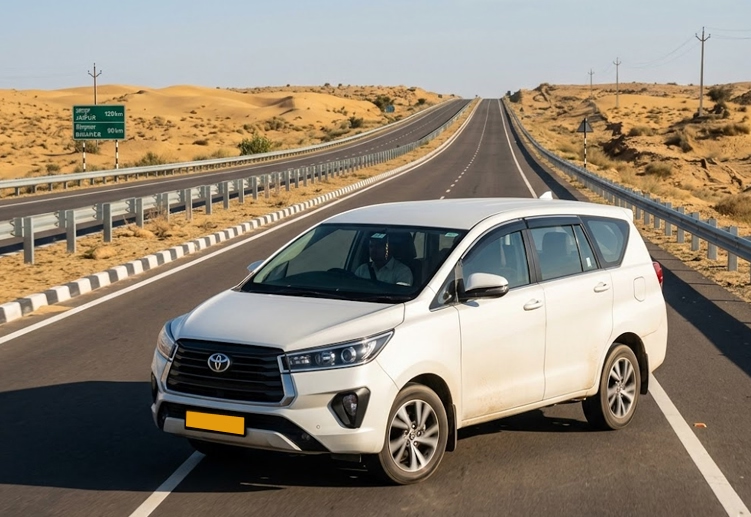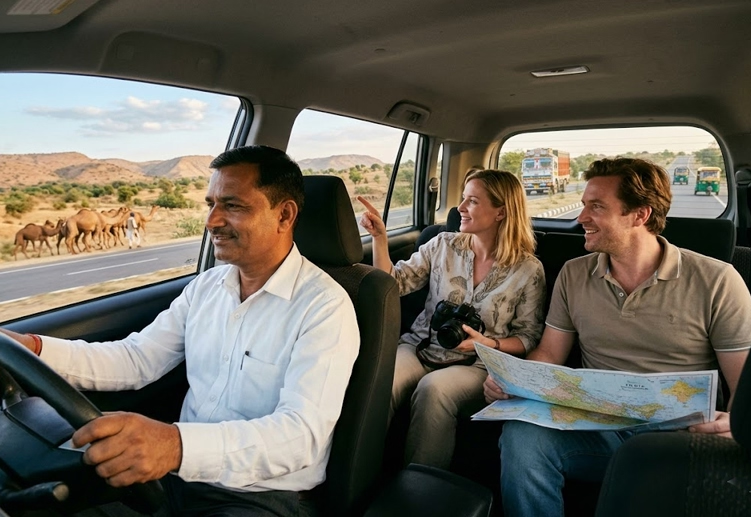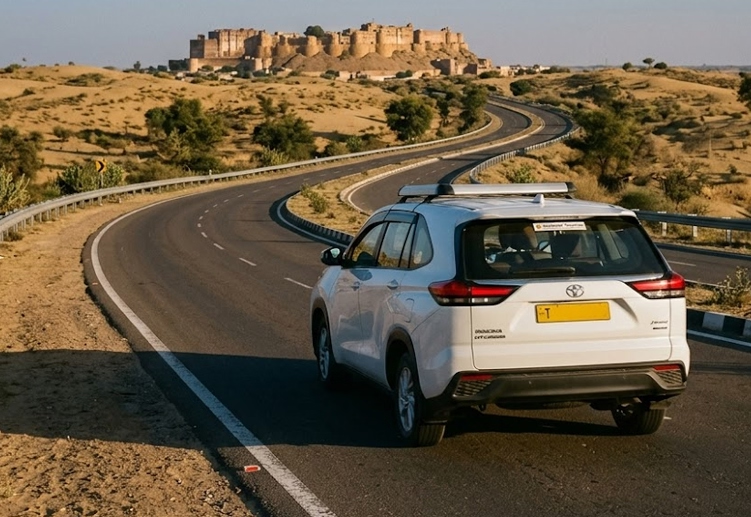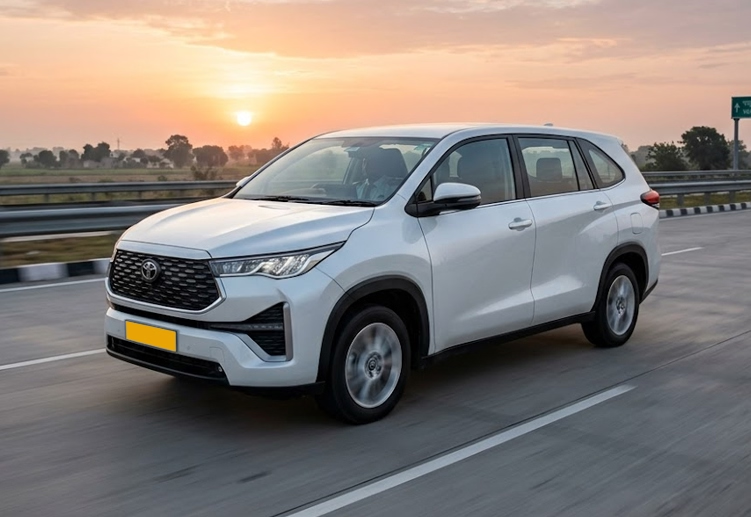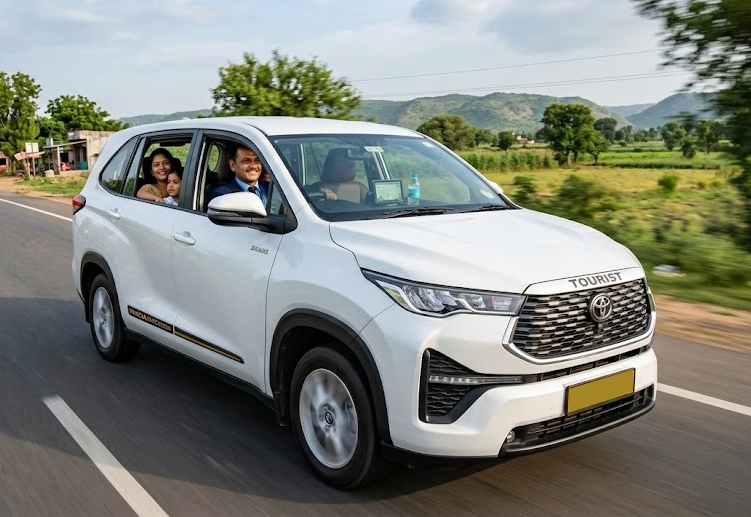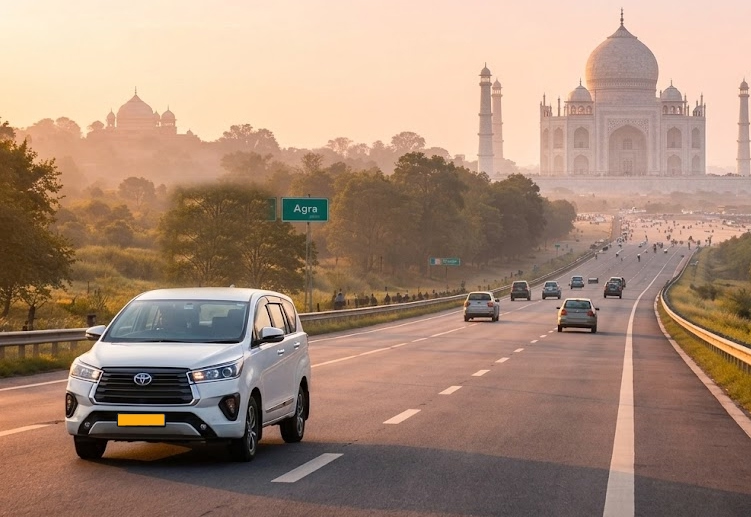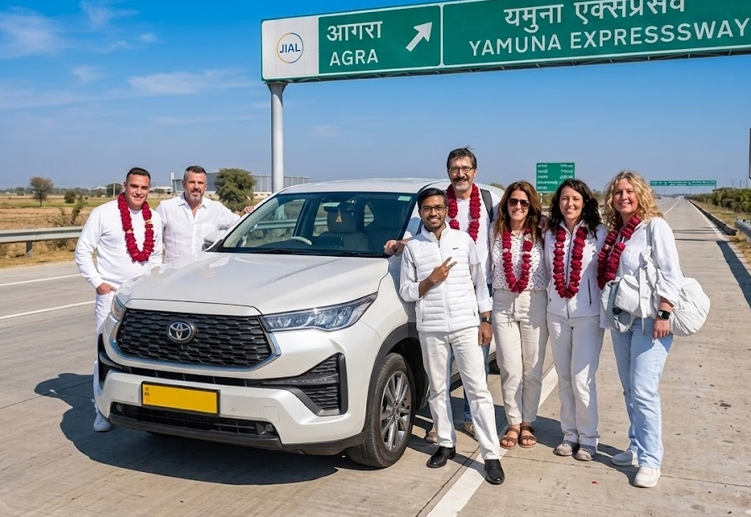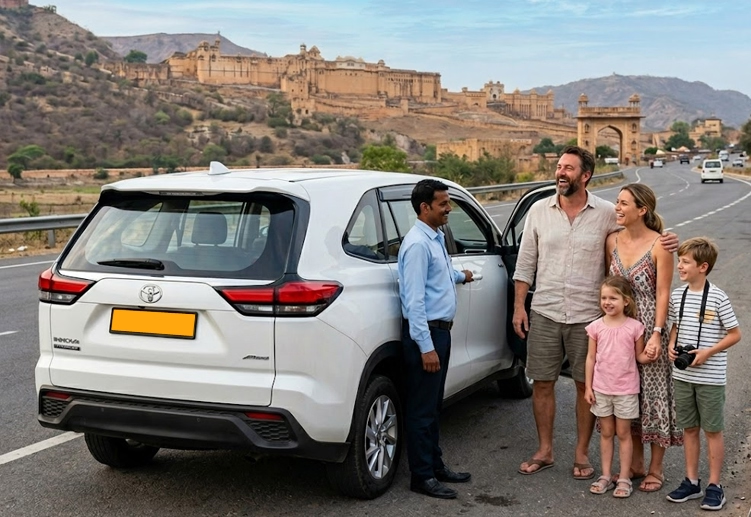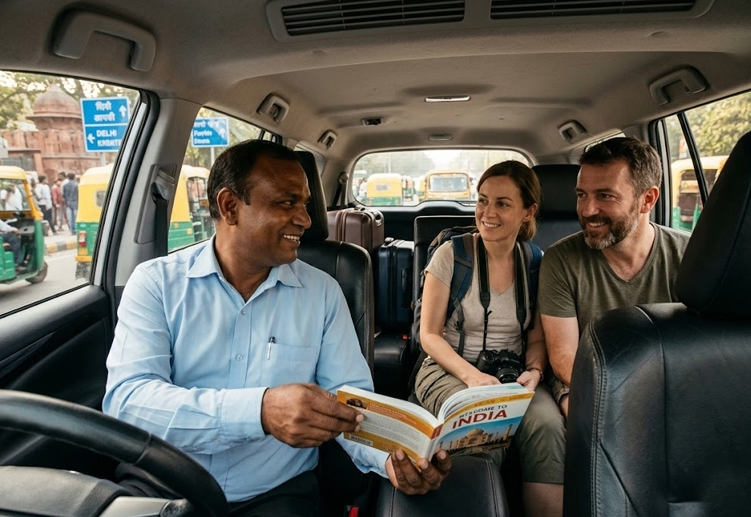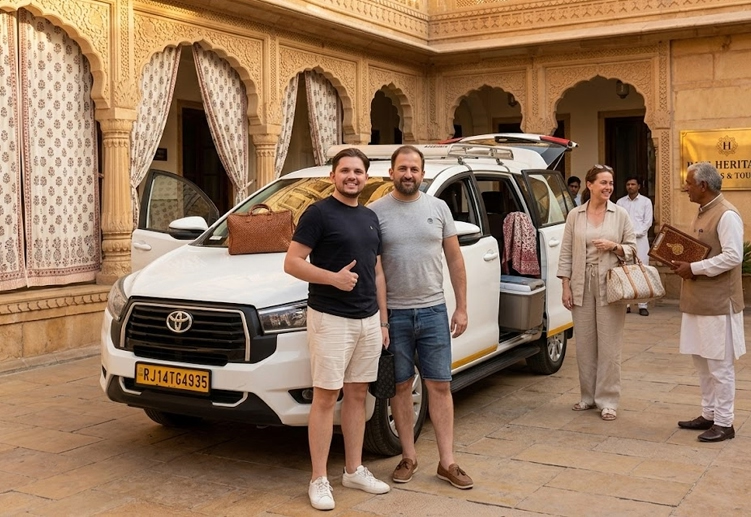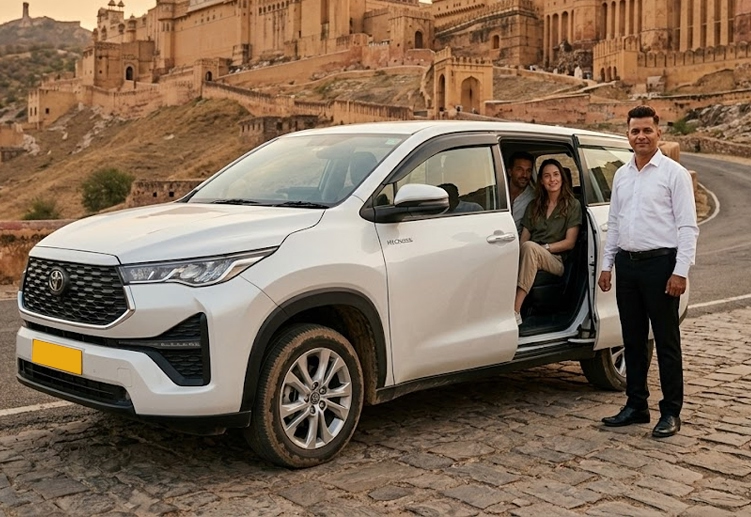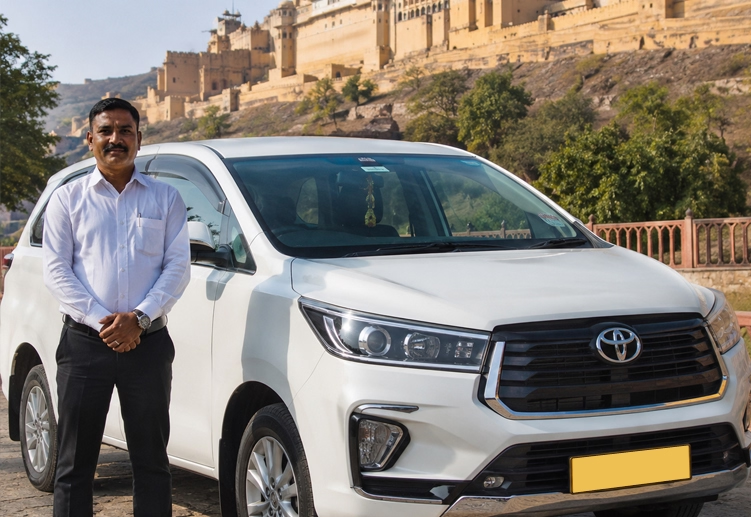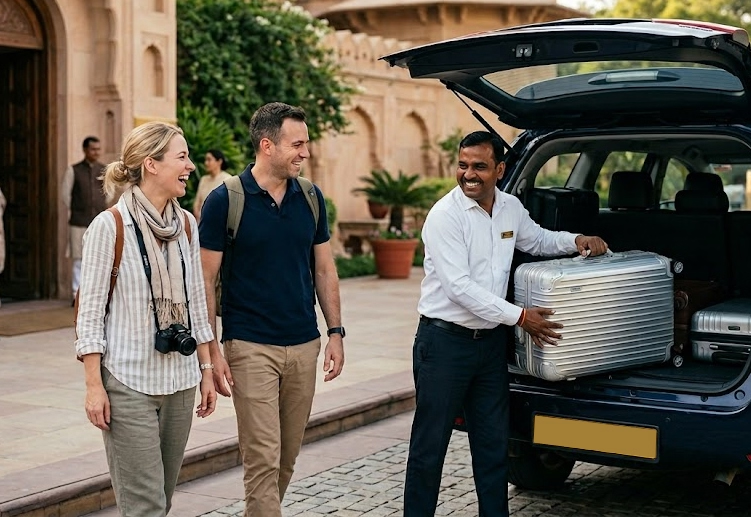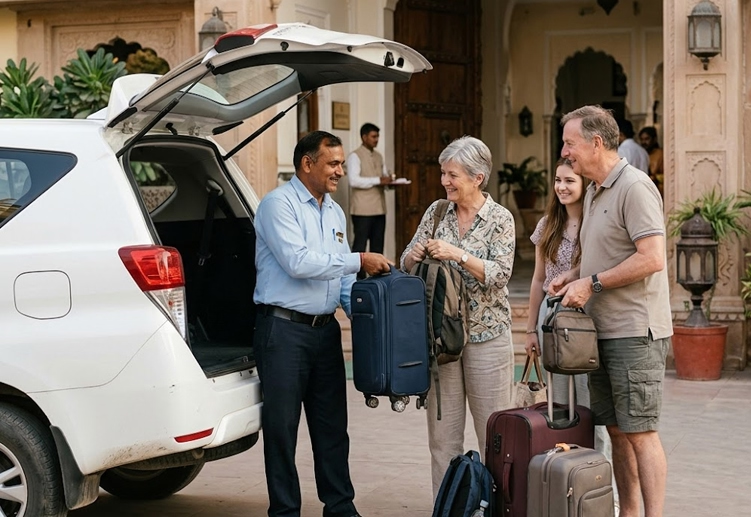


Planning a first trip to India from the United States can feel exciting and slightly overwhelming at the same time. Flights are long, cities are enormous, distances between famous sights can be greater than they look on a map, and the transportation system works very differently from what many Americans are used to at home. If you are planning Delhi, Agra, Jaipur, Rajasthan or another multi-city route, one of the most useful questions to answer early is whether you should hire a private driver in India.
For many American travelers, a private car with a professional driver offers an excellent middle ground between a fully escorted group tour and completely independent travel. You still choose your hotels, restaurants, sightseeing priorities and pace, but you do not have to drive in unfamiliar traffic, negotiate with a different taxi every day or move large suitcases on and off trains whenever you change cities.
A chauffeur-driven trip is especially practical in North India. Delhi, Agra and Jaipur form the classic Golden Triangle, and many travelers continue from Jaipur into Rajasthan through Pushkar, Jodhpur, Udaipur, Ranthambore or Jaisalmer. The same vehicle can collect you at the airport, carry your luggage, take you between hotels, wait while you sightsee and remain available for planned transfers throughout the route.
The important part is knowing what you are actually booking. Indian driver rates may be quoted per kilometer, per day or as one complete itinerary. Some prices include fuel but exclude tolls and parking. A vehicle advertised for six passengers may have very little baggage room when every seat is used. Your driver may speak good practical English, but that does not automatically make the driver a professional sightseeing guide.
This guide is written specifically for travelers coming from the United States. It covers current 2026 visa and arrival basics, private-driver pricing, vehicle choices, airport pickup, American luggage habits, safety checks, road-trip routes, tipping, payments, SIM and eSIM planning, travel insurance, health considerations, common scams, driver-versus-guide expectations and the questions you should ask before paying a deposit.
- Best for first-time visitors: pre-arrange a reputable private driver before flying from the United States.
- Best first route: Delhi-Agra-Jaipur, with Rajasthan as an easy extension.
- Best car for one or two travelers: air-conditioned sedan with moderate luggage.
- Best comfort upgrade: Toyota Innova or Innova Crysta.
- Best for larger groups: Tempo Traveller or an appropriately configured minibus.
- Most important booking rule: compare the complete itinerary price and inclusions, not only the advertised per-kilometer rate.
Why American Travelers Often Hire a Private Driver in India
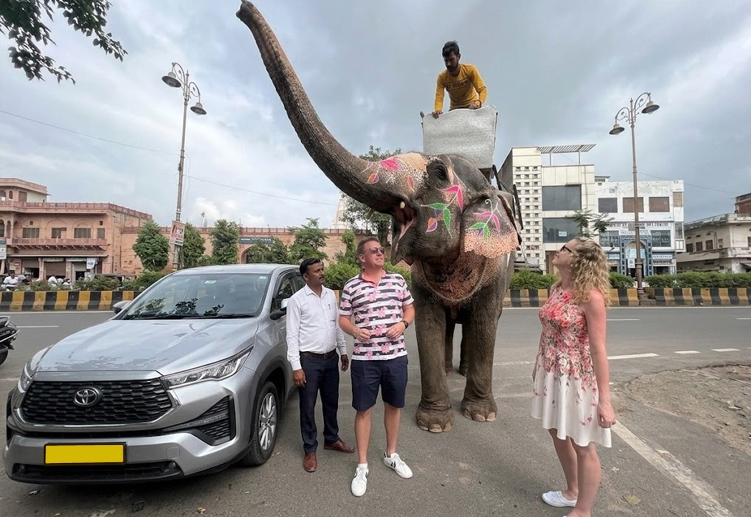
Many Americans are used to self-driving vacations. A road trip through California, Arizona or New England may involve renting a car at the airport and handling everything independently. India is different. Although self-drive rentals exist, the traffic environment, parking, road behavior, motorcycles, pedestrians, animals, lane discipline and local navigation can be unfamiliar even to confident U.S. drivers.
Hiring a driver removes that part of the trip while preserving most of the freedom. You decide when to leave, where to stop and how long to stay. The driver takes responsibility for the vehicle, routes, parking and intercity driving. You can look out of the window, sleep, answer messages, talk with your travel partner or simply watch the country change around you.
The advantage becomes more obvious as soon as you add several cities. A single airport transfer in Delhi is easy to arrange independently. A single taxi in Jaipur is easy too. The real value of a touring driver appears when one car connects Delhi airport, your hotel, Agra, Jaipur and several Rajasthan destinations without forcing you to rebuild the transport plan every morning.
Is Hiring a Chauffeur Normal in India?
Yes. Chauffeur-driven cars are a normal part of Indian travel, not an ultra-elite luxury reserved only for celebrities or executives. Domestic families, business travelers, international tourists and wedding groups regularly book cars with drivers for local and outstation journeys.
This can surprise Americans because the word "chauffeur" often sounds expensive in the United States. In India, standard sedans with drivers can be relatively affordable, especially when two, three or four people share the total. Higher-end services with premium vehicles, uniformed chauffeurs and luxury amenities are available, but they are only one part of the market.
There is also a difference between a basic taxi and a touring driver. A basic taxi mainly handles one transfer. A touring driver is accustomed to multi-day itineraries, hotel pickups, waiting during sightseeing, luggage, road stops and several cities in sequence.
Private Driver, Taxi Driver and Tour Guide: Know the Difference
A taxi driver takes you from one point to another. A private touring driver does that too, but normally stays with the itinerary for several days and manages the same car throughout the journey.
A tour guide has a different role. Guides explain history, architecture, religion, culture and monuments. In Delhi, Agra and Jaipur, many travelers hire a local guide for the sightseeing day while the driver handles transportation and parking.
Some experienced drivers know an enormous amount about their region and can help with restaurants, everyday customs, practical route decisions and road stops. That local knowledge is valuable, but you should not assume a driver will provide the same depth of interpretation as a trained guide inside the Taj Mahal, Amber Fort or a major museum.
Quick Comparison: Driver vs Other Transport
| Transport | Best For | Main Advantage | Main Limitation |
|---|---|---|---|
| Private Driver | Multi-city touring | Door-to-door flexibility | Costs more than the cheapest public transport |
| Train | Selected long routes | Efficient and memorable | Fixed schedule and station transfers |
| Domestic Flight | Very long distances | Saves time across regions | Airport time and baggage rules |
| App Cab / Taxi | Short city rides | Convenient on demand | Different driver each journey |
| Self-Drive | Highly confident drivers | Full independence | Navigation, traffic and parking responsibility |
Who Benefits Most from a Private Driver?
First-time India visitors often gain the most because the driver removes one unfamiliar system from an already intense trip. Couples can travel privately without joining a bus tour. Families avoid carrying bags and children through stations every few days. Senior travelers may appreciate direct hotel-to-hotel transfers and the ability to stop whenever needed.
Photographers also benefit. A train takes you from station to station; a private car can stop at a viewpoint, colorful market, roadside chai stand or village when the route and traffic allow. Food-focused travelers can ask for a lunch stop instead of being tied to an airline or rail schedule.
You may not need a full-time driver if you are staying in one city for most of the trip. Four nights in Mumbai followed by a beach resort in Goa is different from a ten-day Delhi-Agra-Jaipur-Jodhpur-Udaipur road journey. Use the car where it creates real value.
U.S. Passport, Visa and Arrival Basics for India in 2026
American travelers need a valid U.S. passport and an appropriate Indian visa unless they qualify to enter with an Overseas Citizen of India card. The Government of India's official visa portal lists the United States as eligible for e-Visa services, including tourist options. For e-Visa applications, the official instructions state that the passport should have at least six months of validity when the application is made and at least two blank pages for immigration stamping.
India's official visa system currently lists 30-day, one-year and five-year e-Tourist Visa options. The official fee schedule for U.S. passport holders lists the 30-day tourist fee at US$10 for April-June and US$25 for July-March, the one-year e-Tourist Visa at US$40 and the five-year version at US$80, plus the stated bank charge. Fees and eligibility rules can change, so always confirm the live government portal before applying.
Foreign arrivals can also complete India's e-Arrival Card online through the official immigration/visa system within 72 hours before arrival. The e-Arrival Card is arrival information, not a substitute for the visa.
Do not rely on a search advertisement that looks like a government visa website. The official Indian visa portal specifically warns travelers about intermediaries and unauthorized emergency or express-fee claims.
Current U.S. Travel Advisory: What Americans Should Know
The U.S. Department of State currently lists India at Level 2: Exercise Increased Caution due to crime and terrorism, with higher-risk rules for certain specific areas. A Level 2 advisory does not mean Americans should avoid ordinary tourist travel throughout India, but it does mean you should read the destination-specific details instead of relying on a general impression.
The State Department recommends reviewing personal security plans, staying alert to surroundings, considering travel insurance and enrolling in the Smart Traveler Enrollment Program, or STEP. STEP is a free program that can deliver U.S. embassy or consulate alerts and can help consular officials contact you or an emergency contact during a crisis.
For a standard Delhi-Agra-Jaipur-Rajasthan itinerary, check the latest advisory shortly before departure because security guidance and regional restrictions can change. Your driver or hotel can help with local logistics, but U.S. government guidance should be the reference for official American travel-security advice.
Why a Reliable Driver Can Reduce Travel Stress
A driver does not remove every travel risk, but a reputable service reduces uncertainty around transportation. You know who is collecting you, which company is responsible, where the car is going and how to contact support. This is particularly useful after a long international flight when you are jet-lagged and do not want to make complicated transportation decisions at the airport.
It also reduces the need to negotiate with random taxis at stations or tourist sites. The U.S. State Department warns that transportation-related scams can occur around airports, railway stations and popular tourist areas. Pre-arranged transport removes many opportunities for confusion.
When Should You Book Your Driver from the United States?
For a multi-day itinerary, book before you fly. You do not necessarily need to reserve a standard sedan half a year in advance, but giving yourself time to compare operators is much better than choosing a driver while standing in a hotel lobby after arrival.
Advance booking becomes more important between October and March, around Christmas and New Year, during major Indian festivals and in busy wedding periods. If you specifically want an Innova Crysta, luxury vehicle or larger Tempo Traveller, book earlier than you would for a standard sedan.
A complicated two-week itinerary with several hotels deserves more notice than a one-way Delhi-to-Agra transfer. The operator needs enough information to allocate the right vehicle and driver.
How to Find a Reliable Private Driver in India
Start with an established operator that clearly explains its services and publishes real contact details. Look for vehicle categories, destinations, a working phone or WhatsApp number and enough information to show that the business regularly handles multi-day tourist trips rather than only local cabs.
Read recent reviews, but do not stop at the star rating. Look for specific comments about airport pickups, clean cars, calm driving, long Rajasthan routes, English communication, punctuality and how the company handled a change or problem.
Request a quote for your actual itinerary. The quality of the response tells you a great deal. A good operator should ask about dates, passenger count, luggage and destinations. Vague answers and pressure for immediate payment deserve more caution.
What Information to Send When Requesting a Quote
- Your India arrival date and flight number if airport pickup is required.
- Number of adults and children.
- Number of large checked suitcases, carry-ons and backpacks.
- Your planned cities in order.
- Confirmed hotel names where available.
- Your final drop-off city, airport or railway station.
- Whether local sightseeing is required in each city.
- Whether you want local guides.
- Any child-seat, mobility or accessibility requirements.
- Your preferred vehicle if you already know what you want.
How Much Does a Private Driver Cost in India in 2026?
There is no single nationwide chauffeur tariff. Rates vary by region, vehicle, operator, season and whether the quote includes fuel, tolls, parking and driver allowance. Current 2026 market examples give a useful planning framework.
Published rates commonly place standard sedans around ₹10-₹13 per kilometer for outstation use, Ertiga-type vehicles around ₹13-₹16 per kilometer, and Innova or Innova Crysta vehicles around ₹16-₹20 per kilometer. Tempo Traveller rates commonly begin around the mid-₹20s per kilometer depending on size and seating layout.
These numbers are comparison points, not promised prices. One current Jaipur operator advertises around ₹12/km for a sedan, ₹15/km for an Ertiga and ₹19/km for an Innova Crysta, while other current Delhi-Jaipur examples show sedans around ₹10-₹12.5/km and Crysta-type pricing around ₹18/km. The difference is exactly why travelers should request a complete itinerary quote.
| Vehicle | Best For | Useful 2026 Planning Range* | Comfort |
|---|---|---|---|
| Sedan | Solo / couple | ₹10-₹13/km | Good |
| Ertiga / Similar | Small family / 3-4 travelers | ₹13-₹16/km | Good to very good |
| Innova / Crysta | Families / comfort-focused travelers | ₹16-₹20/km | Very good |
| Tempo Traveller | Larger groups | ₹24-₹30/km | Depends on configuration |
*Indicative 2026 market examples only. Final cost depends on route, number of days, minimum daily kilometers, tolls, parking, driver allowance, state taxes, GST and vehicle availability.
Per-Kilometer Pricing and Minimum Daily Kilometers
Outstation taxi and chauffeur services in India commonly use per-kilometer pricing. The advertised rate is only one part of the calculation. Many companies apply a daily minimum, often around 250 kilometers for multi-day outstation bookings.
If you book a seven-day trip but drive only 1,300 actual kilometers, the operator may still calculate the fare using a 1,750-kilometer minimum, depending on its policy. Mileage may also start from the company's garage rather than your hotel.
For an American visitor, the easiest solution is to send the complete itinerary and ask for one estimated total. If the company still uses per-kilometer billing, ask how the minimum and garage-to-garage rules apply to your route.
Fuel, Tolls, Parking, Taxes and Driver Allowance
Fuel is often included in a per-kilometer rate, but never assume it. Toll roads are common on major North India routes. Parking charges may arise at monuments, hotels, airports and city attractions. Interstate taxes or permits can also matter when the route crosses state lines.
Driver allowance covers the driver's expenses while working away from home. Some companies include it in the quoted tour price; others charge a fixed amount per day. You normally do not book your driver into your own hotel room because touring operators have standard arrangements for driver accommodation.
A slightly higher all-inclusive quote can be better value than a cheap headline rate followed by daily extras.
Choosing a Car: American Luggage Changes the Equation
Many U.S. travelers arrive with larger checked luggage than a typical domestic Indian taxi passenger. A vehicle that technically seats four adults may not comfortably carry four adults plus four large 28-inch suitcases, four carry-ons and several backpacks.
This is one of the most common planning mistakes. Do not choose the car using passenger capacity alone. Send the operator an honest luggage count. If you are taking a two-week trip and plan to shop for textiles, handicrafts or souvenirs, leave extra room.
Sedan: Best Value for One or Two Americans
A Dzire, Etios, Aura or similar sedan is normally ideal for a solo traveler or couple. It is economical, air-conditioned, easy to maneuver in city traffic and perfectly capable of handling mainstream highways between Delhi, Agra, Jaipur and Rajasthan.
Two travelers with one normal checked suitcase each plus carry-ons usually fit comfortably. If both travelers have oversized luggage, photography gear and shopping bags, an upgrade may be worthwhile.
Ertiga: Useful for a Small Family
An Ertiga or similar MPV is a useful middle category. It offers more seating flexibility than a sedan without the full Innova Crysta price. It works well for a small family or three adults.
The third row reduces luggage space when occupied. Four adults with four large American-style checked bags should ask the operator to confirm the actual storage arrangement.
Innova Crysta: The Popular Comfort Upgrade
The Toyota Innova Crysta is one of the most popular long-distance tourist vehicles in India. It offers more cabin room, flexible seating and a comfortable ride for long days on the road.
It is particularly attractive for three to five travelers, senior travelers, families or anyone spending ten or more days in the same vehicle. A couple does not automatically need one, but many comfort-focused couples choose it for long Rajasthan circuits.
Tempo Traveller for Groups
For larger groups, a Tempo Traveller is usually more comfortable than squeezing everyone into the maximum capacity of an MPV. Different models have different seat layouts and luggage arrangements, so confirm the actual configuration.
Seven or more travelers often benefit from keeping the group in one appropriate vehicle rather than coordinating two cars every morning.
Vehicle Comparison for U.S. Travelers
| Your Group | Recommended Vehicle | Why |
|---|---|---|
| 1 traveler | Sedan | Lowest practical touring cost |
| 2 travelers + normal luggage | Sedan | Excellent value |
| 2 travelers + several large bags | Ertiga / Innova | More luggage flexibility |
| 3 adults | Ertiga / Innova | Better long-distance comfort |
| 4 adults + checked luggage | Innova Crysta | Stronger cabin and baggage arrangement |
| 5-6 travelers | Innova or Tempo Traveller | Depends on baggage volume |
| 7+ travelers | Tempo Traveller | Better group configuration |
English-Speaking Driver: What Should Americans Expect?
A driver does not need perfect American English. Practical conversational English is enough if you can clearly discuss hotel pickups, departure times, restaurants, rest stops, sightseeing changes and simple problems.
Ask specifically for someone experienced with international travelers. Keep complex addresses and important timings in WhatsApp so both sides have a written reference. U.S. accents and Indian accents can occasionally require repetition, but clear simple communication usually works well.
Delhi Airport Pickup After a Long U.S. Flight
Many American travelers arrive in Delhi after a long overnight journey, often with one or more connections. Pre-arranged airport pickup is one of the easiest ways to start the trip. You avoid making a transport decision immediately after immigration, baggage claim and jet lag.
Send the operator your flight number, not only the expected landing time. Ask where the driver will meet you and whether they will carry a name board. Save both the driver and company WhatsApp numbers before leaving the United States.
Do not build a tight same-day sightseeing schedule around your published landing time. Immigration, baggage and traffic can all take longer than expected.
Should You Drive Straight from Delhi Airport to Agra?
You can, but decide based on arrival time and energy rather than simply saving a hotel night. Delhi to Agra commonly takes around four to five hours depending on traffic and where you begin. After a transpacific or transatlantic journey with a connection, another long road transfer can feel exhausting.
If your schedule allows, sleeping in Delhi and starting the next day can create a much better first impression. If you do continue to Agra, keep the day simple and avoid a timed monument plan immediately after arrival.
The Golden Triangle: Best First Road Trip for Americans
Delhi, Agra and Jaipur are an excellent introduction to chauffeur-driven travel in India. The route combines major highlights without requiring a very long vacation.
Delhi offers Mughal history, colonial architecture, markets and modern neighborhoods. Agra is home to the Taj Mahal and Agra Fort. Jaipur brings Rajasthan's forts, palaces and bazaars into the journey.
The route works especially well with a private car because the road sectors are logical and there are useful stops between cities. Fatehpur Sikri can be incorporated between Agra and Jaipur rather than treated as a separate return excursion.
How Many Days for Delhi, Agra and Jaipur?
Five days is possible but rushed. Six or seven days is more comfortable for most first-time American visitors, especially because jet lag can affect the first two mornings.
A common pattern is two nights in Delhi, one or two in Agra and two nights in Jaipur. If you prefer slower travel, add another night instead of adding another city.
A private driver gives flexibility, but it cannot make distances disappear. The most enjoyable itineraries leave breathing room.
Delhi to Agra with a Private Driver
Delhi to Agra is one of India's most common tourist road sectors and is connected by the Yamuna Expressway. A standard sedan is completely suitable for the route. You do not need an SUV because of road conditions.
Travel time depends on your Delhi neighborhood, traffic and breaks. The drive itself may be straightforward, but crossing Delhi before reaching the expressway can add substantial time.
If the Taj Mahal is your main priority, consider staying overnight in Agra and visiting at a relaxed time rather than treating the whole city as a hurried day trip.
Agra to Jaipur via Fatehpur Sikri
This is a classic private-car travel day. Fatehpur Sikri lies naturally between Agra and Jaipur, so you can stop without returning to Agra afterward.
Your large luggage normally stays in the locked vehicle during sightseeing. Keep passports, money, medication, electronics and other valuables with you in a day bag.
Do not overload the day with too many extra stops. Flexibility is valuable because it lets you slow down, not because it lets you turn every road day into a race.
Extending from Jaipur into Rajasthan
Once you reach Jaipur, a driver becomes even more valuable if you continue through Rajasthan. Jaipur is well connected by road and rail, while destinations such as Pushkar, Jodhpur and Udaipur fit naturally into a road itinerary. Rajasthan Tourism lists Pushkar about 145 kilometers from Jaipur, and Jodhpur about 186 kilometers from Pushkar and 257 kilometers from Udaipur.
Official Rajasthan Tourism itineraries commonly treat Jodhpur to Udaipur as roughly 260 kilometers and about five hours before sightseeing stops. That is exactly the kind of sector where a driver adds value because you can include Ranakpur or another en-route stop.
Explore our Rajasthan tour packages if you want ideas for extending a Golden Triangle trip beyond Jaipur.
A Practical 10-Day First India Route
| Day | Route | Plan |
|---|---|---|
| 1 | Delhi | Airport pickup and recovery from jet lag |
| 2 | Delhi | Old and New Delhi sightseeing |
| 3 | Delhi-Agra | Drive to Agra and local sightseeing |
| 4 | Agra-Jaipur | Taj Mahal, Fatehpur Sikri and onward drive |
| 5 | Jaipur | Amber Fort and city sightseeing |
| 6 | Jaipur-Pushkar | Relaxed transfer and Pushkar |
| 7 | Pushkar-Jodhpur | Drive to Jodhpur |
| 8 | Jodhpur | Mehrangarh Fort and old city |
| 9 | Jodhpur-Udaipur | Drive with optional Ranakpur stop |
| 10 | Udaipur | City sightseeing or onward flight |
Private Driver vs Train for American Visitors
India's railway network is part of the travel experience, and American visitors should not feel that hiring a driver means avoiding trains completely. Rail can be excellent for selected long-distance routes.
A train makes sense when it saves significant road time or when you specifically want the experience. A driver makes more sense when you want hotel-to-hotel travel, intermediate sightseeing or a route involving smaller destinations.
For the Golden Triangle and Rajasthan, many couples prefer the continuity of one car because they do not have to move luggage through stations every few days. Other travelers combine a driver for Rajasthan with a train to Varanasi or a flight to South India.
Private Driver vs Domestic Flights
India is enormous. A driver is excellent within a connected region, but it is not the right tool for crossing the entire country. If you want Rajasthan and Kerala on the same vacation, fly between regions and arrange a new vehicle in the south.
A good plan might use a driver from Delhi through Agra, Jaipur and Udaipur, then a flight to Mumbai, Goa or Kochi. Think of private chauffeurs regionally rather than keeping one car for every state.
Private Driver vs Self-Drive for Americans
Self-driving may look familiar because Americans are accustomed to road trips, but the practical road environment in India can be dramatically different from driving in the United States. Lane behavior, traffic density, motorcycles, pedestrians, animals, parking and local expectations demand constant attention.
Hiring a driver gives you most of the freedom of a road trip without making traffic management part of the vacation. It also removes questions around rental deposits, local documents and accident procedures.
If you are deciding between the two, read our car rental with driver vs self-drive India guide.
Best Time for Americans to Visit India
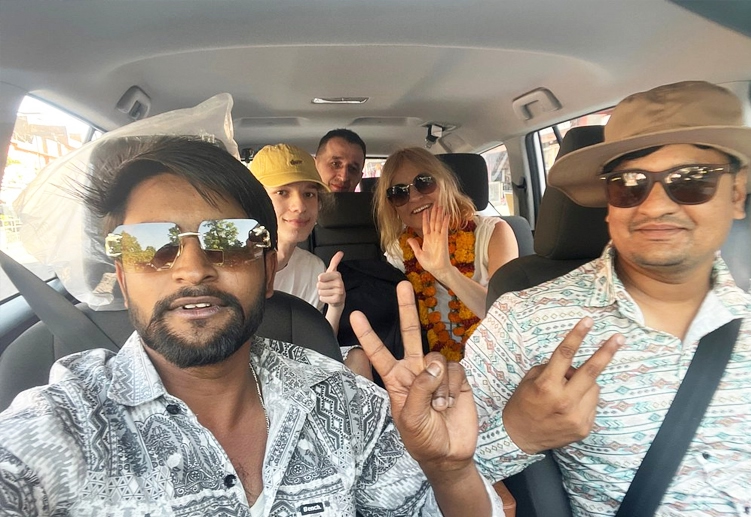
The best season depends on the region, but November through March is a popular period for North India because temperatures are generally more comfortable. The CDC's 2026 Yellow Book notes that many travelers prefer India during the winter months because conditions are more agreeable.
December and January can bring surprisingly cool mornings and evenings in Delhi, Agra and Rajasthan. Americans who imagine nonstop tropical heat are often surprised to need a light jacket at sunrise.
April through June can be extremely hot in North India. Air-conditioning becomes essential, and sightseeing is more comfortable early in the morning. The monsoon generally affects much of India from June through September, although timing and intensity vary by region.
Seat Belts and Child Seats
Use a seat belt whenever one is provided. If you are traveling with a child and require a particular restraint, discuss the requirement before arrival. Do not assume every Indian chauffeur fleet carries a U.S.-style child seat or that every seat can accommodate one correctly.
If you bring your own car seat, confirm airline baggage rules and vehicle compatibility. Passenger safety matters more than fitting the maximum number of seats into a vehicle.
Simple Road-Day Rules That Make the Trip Better
Keep road days realistic. Use daylight for most intercity transfers, allow meal and restroom breaks, wear seat belts and never pressure the driver to recover lost time by speeding. A well-maintained air-conditioned vehicle matters more than a luxury badge, especially from April through June.
Keep passports, medication, money and important electronics in a small day bag rather than the trunk. Carry water, a charger or power bank and a light layer in winter. Send hotel addresses and important timed tickets to the driver in writing so each day's pickup plan is clear.
Shopping Stops and Commission Pressure
Drivers and guides sometimes suggest textile stores, jewelry shops, marble workshops or handicraft showrooms. These can be interesting if you want to shop, but they should remain optional.
If shopping is not part of your plan, say politely at the beginning that you prefer no commercial stops unless you request them. Read reviews for comments about "no pressure shopping" when evaluating operators.
Tipping Your Driver as an American
American tipping habits are more aggressive than tipping expectations in many other countries. Do not feel that you must apply a U.S. restaurant percentage to a chauffeur booking.
Tipping a driver is discretionary and should reflect trip length, group size and service quality. On a multi-day journey, many travelers give one gratuity at the end rather than tipping every night.
Ask your operator for current local guidance if you want a reference point, then use your judgment. A tip should reward excellent service, not compensate for unclear pricing.
Cash, Cards and Paying for a Driver
Agree on the payment process before the trip. Some operators take a deposit electronically and collect the balance in India. Others accept bank transfer, card, cash or local digital payments.
Do not assume the individual driver can process a U.S. credit card. The driver and the company may handle payments separately.
Keep written receipts for substantial payments. Notify your bank before international travel if required and carry more than one payment method in case a card transaction fails.
Should You Pay the Entire Tour in Advance?
A deposit is normal for many confirmed multi-day bookings, particularly during peak season or when a specific vehicle is being reserved. Full advance payment policies vary.
Before sending a large amount, make sure you have the itinerary, total price, company details, vehicle category, cancellation terms and payment schedule in writing.
A suspiciously cheap offer combined with pressure for urgent full payment through an unusual method deserves additional scrutiny.
WhatsApp Is Essential for India Travel
Before departure, compare your U.S. carrier's India roaming plan with a travel eSIM if your phone is unlocked. Reliable data is useful for Maps, airline apps, hotel messages and driver coordination; you do not need a local number if your roaming or eSIM setup works well.
WhatsApp is widely used by hotels, drivers and travel companies in India. Install and configure it before leaving the United States. Save the company number and driver number, and keep your itinerary in the message thread.
You can send hotel pins, flight changes, restaurant locations and pickup times without worrying about pronunciation. Ask for the driver's name and vehicle registration before your airport arrival when the allocation is final.
Using Local Guides Alongside Your Driver
The driver normally drops you at the appropriate meeting point, then parks while you visit the monument with the guide. The guide and driver coordinate the pickup afterward.
This is particularly useful in Delhi, Agra and Jaipur. You can book guides only where you want detailed historical interpretation and use the driver alone on simpler days.
Why the Driver Should Not Control Your Itinerary
A good driver can suggest route changes when traffic, closures or local conditions require them. That is useful. It is different from changing your holiday for the driver's convenience.
Your itinerary should reflect what you want to see. Share the agreed plan with both the operator and driver so everyone understands the priorities.
Women Travelers: Extra Planning Matters
The current U.S. State Department guidance advises women travelers in India to use strict security precautions and recommends reliable cars and drivers. Women traveling alone should read the latest advisory carefully before departure.
Confirm the driver identity before getting into the vehicle, share your itinerary with someone you trust and avoid accepting an unexpected replacement without checking with the company. For app-based rides, share ride details with a friend or family member.
If you ever feel threatened, India uses 112 as a national emergency number from mobile phones. Keep the U.S. Embassy and relevant consulate information saved as part of your emergency planning.
Keep Passports and Valuables with You
Large suitcases can normally remain in the locked touring car during an en-route sightseeing stop, but passports, money, medication, jewelry, phones, cameras and important documents should remain with you.
A small cross-body bag or day backpack makes this simple and prevents you from repeatedly opening the main luggage.
How to Compare Two Driver Quotes Properly
| Check | Quote A | Quote B |
|---|---|---|
| Vehicle model/category | Confirm | Confirm |
| Number of days | Same? | Same? |
| Minimum kilometers | Confirm | Confirm |
| Fuel | Included/extra? | Included/extra? |
| Tolls | Included/extra? | Included/extra? |
| Parking | Included/extra? | Included/extra? |
| Driver allowance | Included/extra? | Included/extra? |
| State taxes / GST | Included/extra? | Included/extra? |
| Breakdown support | Confirm | Confirm |
Red Flags When Hiring a Driver
No clear total price. You should understand the charging system before paying.
No vehicle clarity. "Luxury SUV" is too vague for a multi-day booking.
Artificial payment pressure. Peak season can require deposits, but extreme urgency is a warning sign.
No business identity. Know who is responsible for the trip.
Refusal to discuss commercial registration. Tourist transport should be appropriately licensed.
Unrealistic driving times. A professional operator should not promise impossible road schedules.
Repeated pressure to shop. Your sightseeing priorities should come first.
Common Mistakes American Travelers Make
Bringing too much luggage. A car that looks spacious can fill very quickly with U.S.-size checked suitcases.
Trying to cover too much India in one trip. The country is roughly one-third the size of the United States but has enormous population density and travel-time variability.
Comparing only the headline rate. The full total matters more than the lowest per-kilometer number.
Assuming chauffeur means guide. Use local guides for in-depth monument interpretation.
Scheduling a flight right after a long road sector. Keep buffers.
Applying U.S. tipping habits automatically. Ask for local guidance instead of using American percentage norms.
Using unofficial visa websites. Apply through the official Indian government portal.
Questions to Ask Before Paying a Deposit
- What exact vehicle or category am I booking?
- Will our luggage fit comfortably?
- Is the vehicle air-conditioned?
- Is it commercially registered and insured for passenger use?
- Can you provide an English-speaking driver?
- Does the driver have experience with international travelers?
- What is the complete tour price?
- Are fuel, tolls and parking included?
- Are driver allowance, state taxes and GST included?
- Does a minimum daily kilometer rule apply?
- Where does mileage counting begin and end?
- What happens if the car has a mechanical problem?
- What is the cancellation policy?
- When is the remaining balance due?
- When will I receive driver and vehicle details?
A Simple Booking Process from the USA
First, choose your cities and approximate number of nights. You do not need every restaurant and museum finalized.
Second, send the route, dates, passenger count and luggage to two or three reputable operators.
Third, compare complete written quotes rather than the cheapest advertised kilometer rate.
Fourth, confirm vehicle category, inclusions, airport pickup, cancellation policy and payment schedule.
Fifth, pay the agreed deposit through the documented method and save the confirmation.
Finally, several days before travel, reconfirm the flight, first hotel, driver contact and meeting point.
Preparing for Arrival Day
Have your passport, valid visa or OCI documentation and arrival information ready. Complete the current e-Arrival Card through the official system within the permitted pre-arrival window.
Save the chauffeur contact and company contact offline. After baggage claim, connect to mobile data or airport Wi-Fi if necessary and message the driver.
Only get into the vehicle associated with your booking. If a different driver appears, confirm the change with the company first.
What to Keep in the Car on Road Days
Keep water, tissues, hand sanitizer, sunglasses, sunscreen, a light layer, charger, power bank and any medication you need in a small day bag.
During North India winter, a jacket can be useful for early starts. In hot months, water and sun protection are more important.
Food, Water and Travel Health
Use bottled or appropriately filtered drinking water and follow sensible food hygiene. A driver can recommend established restaurants, but you make the final decision about where to eat.
The CDC's 2026 Yellow Book advises travelers to be current on recommended vaccines and medicines before India travel and notes increased mosquito-related illness risk during the monsoon season. Health advice depends on your itinerary and medical history, so speak with a qualified travel-health professional before departure rather than relying on a driver or blog.
Travel Insurance Is Important for Americans
Do not assume your U.S. health insurance works normally overseas. The State Department recommends reviewing overseas medical coverage and strongly encourages insurance that can address medical treatment, evacuation and trip disruption where appropriate.
Medicare and Medicaid generally do not function as ordinary overseas medical coverage. Check your personal policy and consider supplemental travel insurance if needed.
Enroll in STEP Before You Travel
The Smart Traveler Enrollment Program is a free U.S. government service. You can register your trip and receive security or emergency alerts from the U.S. embassy or consulate.
It also gives consular officials a way to reach you or your emergency contact during a crisis. Enrollment is especially sensible on a longer multi-state itinerary.
Do You Need the Driver Every Day?
Not always. If you spend three full days at a resort without sightseeing, keeping a touring car idle may not add value. Ask whether the itinerary can pause or whether the service can finish and restart.
For a straightforward Delhi-Agra-Jaipur-Rajasthan route, however, keeping the same car usually creates the most convenience.
Should You Add Varanasi to the Same Road Trip?
Varanasi is extraordinary, but you do not need to connect it to Rajasthan entirely by car. Depending on your itinerary, a train or domestic flight may be more efficient.
A common approach is to use a driver through Delhi, Agra, Jaipur and Rajasthan, then switch transport modes for Varanasi.
Should You Add Ranthambore?
Ranthambore works naturally with the Golden Triangle or Rajasthan. Your private driver takes you to the hotel and handles onward transfers.
The wildlife safari itself uses authorized safari vehicles, not your regular touring sedan or Innova. You do not need to rent a huge SUV merely because a tiger safari appears in the itinerary.
Final Pre-Booking Checklist for American Travelers
- Valid U.S. passport checked.
- Correct Indian visa or OCI status confirmed.
- Official e-Arrival requirement checked.
- Latest U.S. State Department advisory reviewed.
- STEP enrollment considered/completed.
- Travel and medical insurance checked.
- Passenger and luggage count confirmed.
- Vehicle category confirmed.
- Total chauffeur price in writing.
- Minimum kilometers understood.
- Fuel, toll and parking policy clarified.
- Driver allowance and taxes clarified.
- Commercial passenger vehicle confirmed.
- Cancellation terms understood.
- Airport pickup procedure confirmed.
- Driver and company contact details saved.
Frequently Asked Questions
Is hiring a private driver in India worth it for American travelers?
For many first-time U.S. visitors taking a multi-city trip, yes. A private driver makes hotel-to-hotel transportation, luggage, airport pickup and sightseeing transfers much easier while allowing you to keep a flexible itinerary. It is particularly useful on Delhi-Agra-Jaipur and Rajasthan routes.
How much does a private driver cost in India in 2026?
Current market examples commonly show standard sedans around ₹10-₹13 per kilometer, Ertiga-type vehicles around ₹13-₹16 per kilometer and Innova or Innova Crysta vehicles around ₹16-₹20 per kilometer. Larger Tempo Travellers often begin around the mid-₹20s per kilometer. Minimum daily kilometers and extra charges may apply.
Do U.S. citizens need a visa for India?
Yes. American travelers need an appropriate Indian visa unless they qualify to travel on an OCI card. The United States is listed as eligible for India's e-Visa system for qualifying purposes. Always apply through the official Indian government visa portal and check current rules before departure.
What vehicle is best for two American travelers?
An air-conditioned sedan is normally sufficient for two adults with moderate luggage. Consider an Ertiga or Innova Crysta if you have several large checked suitcases, want more rear-seat room or are taking a long Rajasthan road trip.
Can the same driver take us through Delhi, Agra, Jaipur and Rajasthan?
Yes. Multi-day chauffeur tours commonly use the same car and driver from Delhi through Agra and Jaipur and onward through Rajasthan, subject to the agreed route. This continuity is one of the biggest advantages of hiring a touring driver.
Is an Indian private driver also a tour guide?
Not automatically. A chauffeur handles transportation, routes and practical road logistics. Book a local professional guide separately if you want detailed historical and architectural interpretation at monuments in Delhi, Agra, Jaipur or other cities.
Should Americans book a driver before flying to India?
For a multi-day route, advance booking is usually better. It gives you time to compare operators, verify the vehicle, discuss luggage, arrange airport pickup and understand the complete price. It is especially helpful during the October-to-March high season.
Are fuel, tolls and parking included?
It depends on the company. Some quotes include fuel and driver allowance while tolls and parking are separate. Others offer one inclusive tour price. Ask for a written breakdown covering fuel, tolls, parking, taxes, driver allowance and minimum kilometers.
Is India safe for American tourists using a private driver?
A reputable driver can reduce transportation uncertainty, but travelers should still follow the latest U.S. State Department guidance and normal personal-security practices. Confirm the company and driver details, share your itinerary when appropriate and keep emergency information accessible.
Do I need to tip my driver?
Tipping is discretionary. American percentage-based tipping habits do not need to be applied automatically. Many travelers give a gratuity at the end of a multi-day trip based on the quality of service, duration and group size. Ask the operator for current local guidance if you want a reference point.
What is the best first road trip in India for Americans?
Delhi, Agra and Jaipur are an excellent first route. Six or seven days gives most visitors a comfortable introduction. If you have more time, continue from Jaipur through Pushkar, Jodhpur and Udaipur for a longer Rajasthan road trip.
Should I use a driver for my whole India vacation?
Usually not if your trip covers distant regions. A chauffeur is excellent for connected routes such as North India and Rajasthan. For very long jumps such as Udaipur to Kerala or Delhi to Goa, use a domestic flight and arrange a new local driver in the next region.
Final Advice: Hiring a Private Driver in India from the USA
For many American travelers, a private driver is one of the easiest ways to explore North India. It provides the independence of a private road trip without asking you to learn unfamiliar traffic patterns, negotiate transportation every day or move large bags through railway stations whenever you change cities.
The key is to buy the right service rather than automatically choosing the lowest rate. Match the vehicle to your passengers and luggage, request a complete written quote, clarify minimum kilometers and extra charges, make sure the car is appropriate for commercial passenger travel and choose an operator that communicates clearly before you pay.
For one or two travelers, a clean sedan is usually enough. Families, travelers with larger luggage and people spending many days on Rajasthan roads often appreciate an Innova-class vehicle. Larger groups should choose a proper Tempo Traveller rather than filling every possible seat in a smaller vehicle.
Also use the right transport for each part of India. A driver is excellent for Delhi-Agra-Jaipur and Rajasthan. Trains can improve selected routes. Flights make sense when you cross the country. A strong itinerary is not the one that uses one transportation method everywhere; it is the one that makes each travel day simple.
Finally, take care of the U.S.-specific details before departure. Use the official Indian visa portal, check the latest State Department advisory, consider STEP enrollment, confirm overseas medical coverage and save your driver and company contacts before boarding the flight. Once those practical pieces are in place, the road-trip side of India becomes much easier to enjoy.
If you are planning India travel from the United States, send us your dates, arrival airport, number of travelers, luggage and the cities you want to visit. We can help you choose the right vehicle and build a clear private-driver route for the Golden Triangle, Rajasthan or a longer India journey.
Planning Your India Trip from the USA?
Share your U.S. arrival flight, travel dates, number of travelers, luggage and planned cities. We can recommend the right chauffeur-driven vehicle and provide a clear private-driver quote for your India journey.
Get Your Free Custom Quote