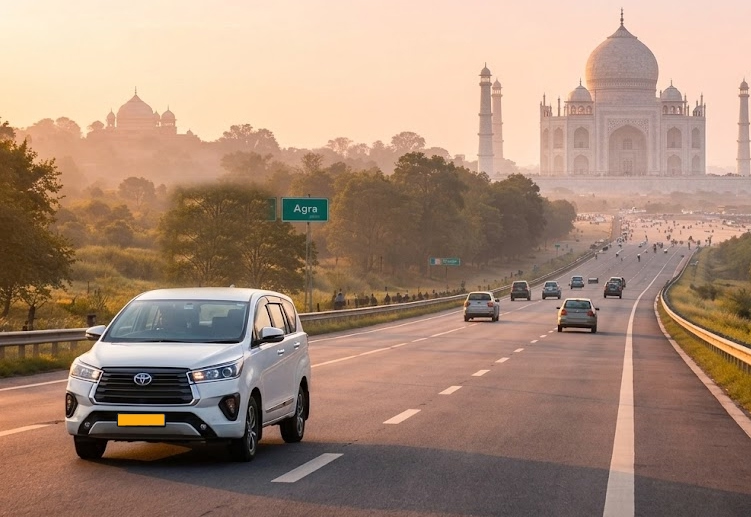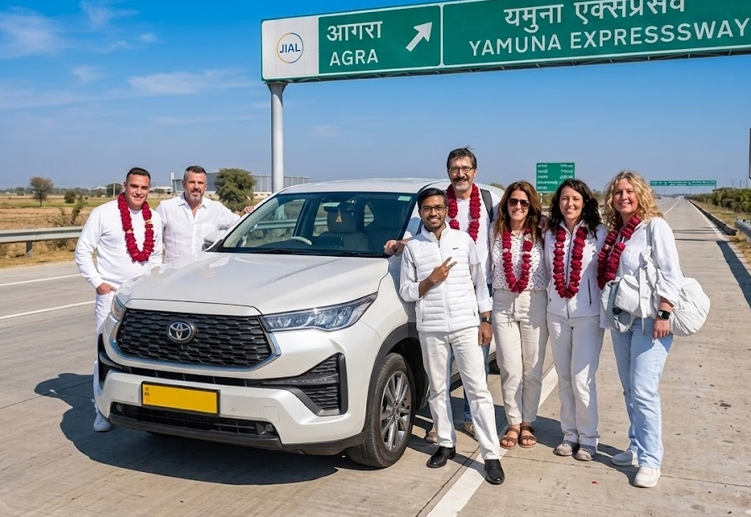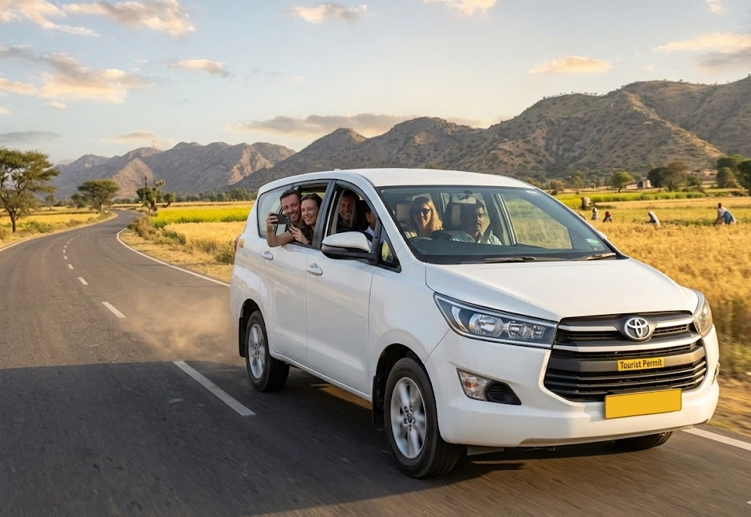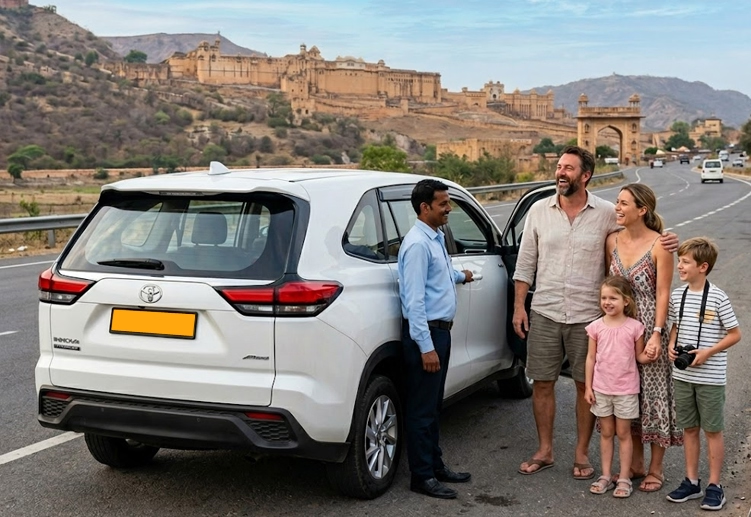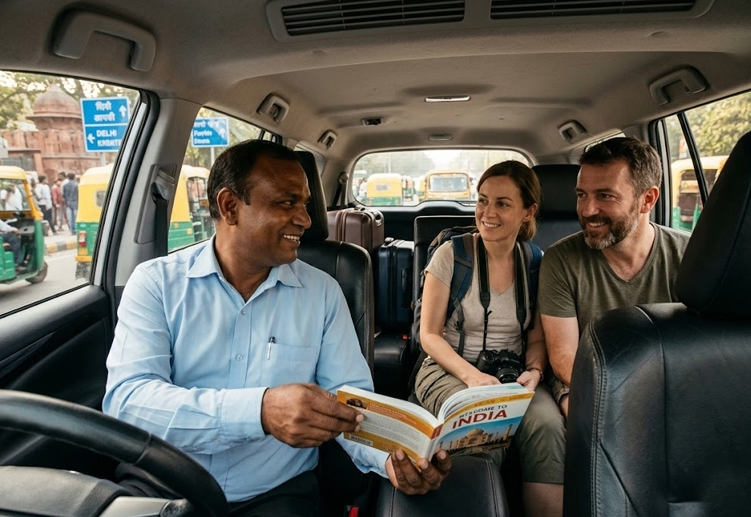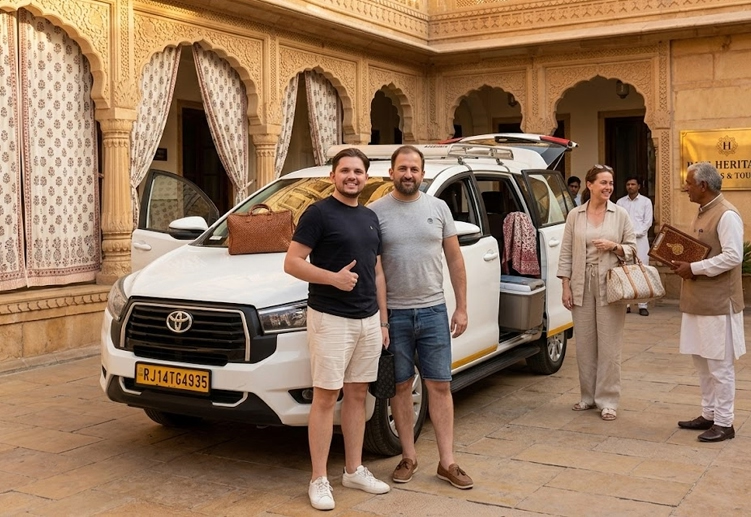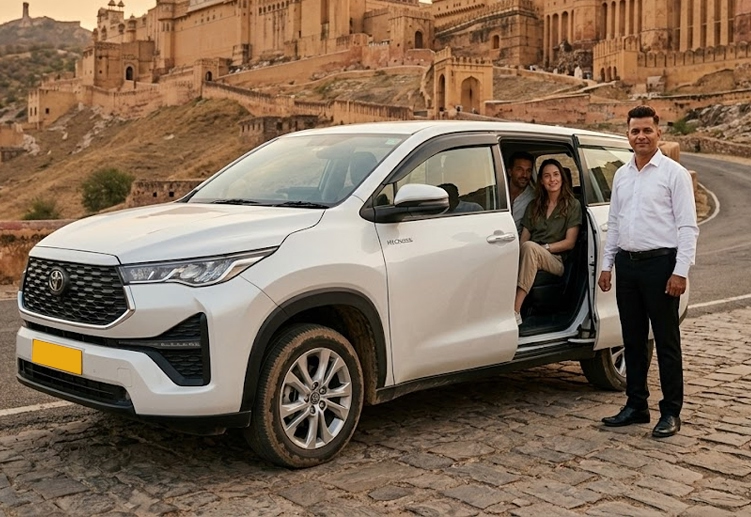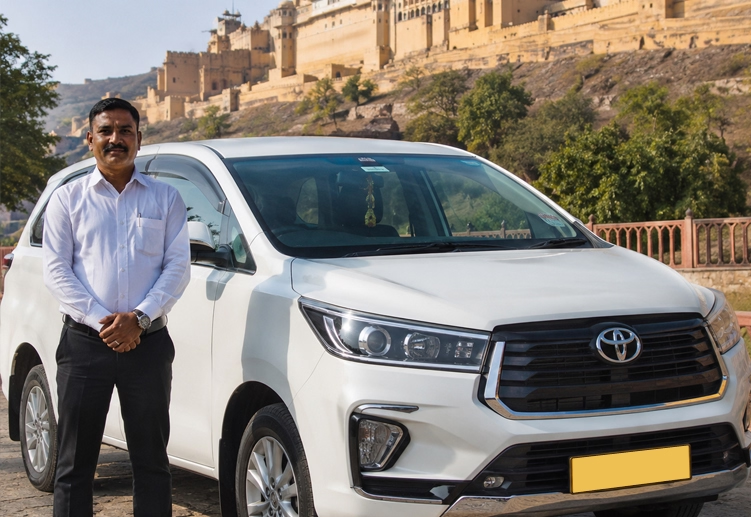


For many European travelers, the first challenge of planning an India holiday is not deciding what to see. The difficult part is working out how to move comfortably between everything. Delhi, the Taj Mahal in Agra, Jaipur's forts, Rajasthan's historic cities, wildlife parks and smaller heritage towns can look straightforward on a map, yet the practical reality of travelling between them is very different from driving through France, Germany, Spain, Italy, the Netherlands, Belgium, Switzerland or the United Kingdom.
India is made for overland travel, but it rewards a different approach. Distances that appear moderate can take longer because of city congestion, roadworks, toll plazas, motorcycles, trucks, livestock, busy market towns and constantly changing traffic conditions. Railway journeys can be memorable, and domestic flights are useful for covering huge distances, but neither provides the door-to-door freedom that many independent travelers want on a multi-city holiday.
This is why hiring a private driver in India has become such a practical option for couples, families, friends and senior travelers from Europe. You have your own vehicle, your luggage remains with you during transfers, departure times can be planned around your itinerary and you avoid negotiating different taxis every time you move to another city.
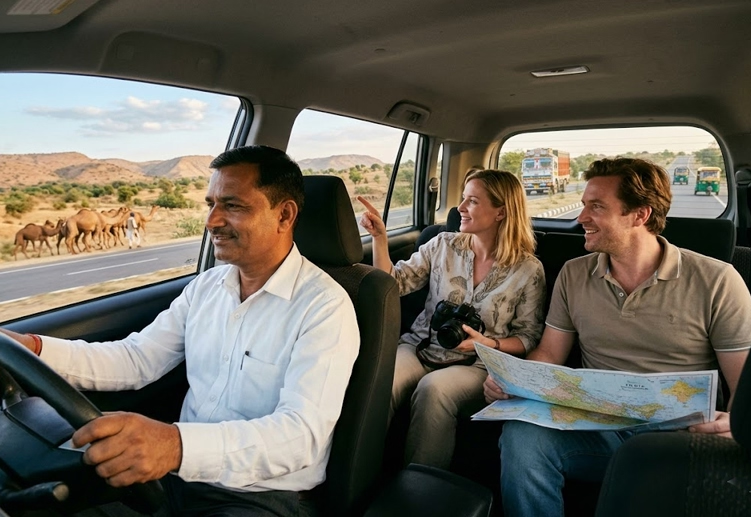
A private driver does not turn India into Europe, and that should not be the goal. What it does is remove much of the logistical friction. Instead of concentrating on traffic, parking, highway navigation and unfamiliar local driving behaviour, you can look outside the window, talk with your companions, rest between destinations and experience the countryside as part of the holiday.
The system works particularly well in North India. A driver can collect you at Delhi Airport, stay with you while you explore Delhi, continue to Agra for the Taj Mahal, drive onward to Jaipur and then extend the journey through Rajasthan to places such as Pushkar, Jodhpur or Udaipur. A trip that would otherwise involve multiple train reservations, airport transfers and local taxis becomes one connected itinerary.
This guide is written specifically for travelers arriving from Europe. It explains how private-driver travel works in India, what it costs, which vehicle to choose, how to book safely, what should be included in the quotation, the best routes for a first visit, realistic driving expectations, visa preparation, road safety, accommodation, money, tipping, food, communication, common mistakes and practical itinerary ideas. It also explains where a private car makes sense and where a train or flight may actually be the better choice.
Why European Travelers Choose a Private Driver in India
European travelers often arrive in India with plenty of experience using trains, rental cars and public transport. In many European countries it is normal to collect a rental vehicle at an airport and independently drive between cities. India requires a different calculation.
Traffic density is one reason. The mix of road users can include cars, motorcycles, auto-rickshaws, bicycles, buses, trucks, tractors, pedestrians and animals. Lane behaviour may feel less predictable than in Europe, and road rules are experienced differently in practice from one city or region to another.
Then there is the question of energy. A traveler who drives four or five hours personally must remain focused for the entire journey. A traveler sitting in the back of a chauffeur-driven vehicle can arrive in Jaipur or Jodhpur with enough energy to enjoy the evening.
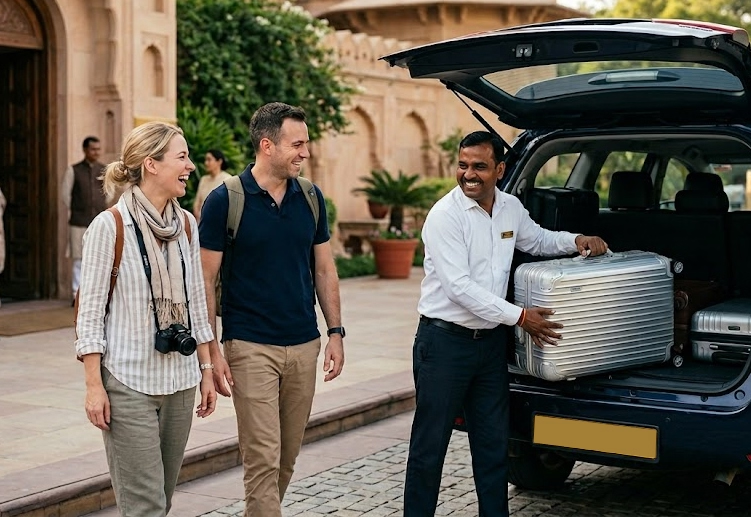
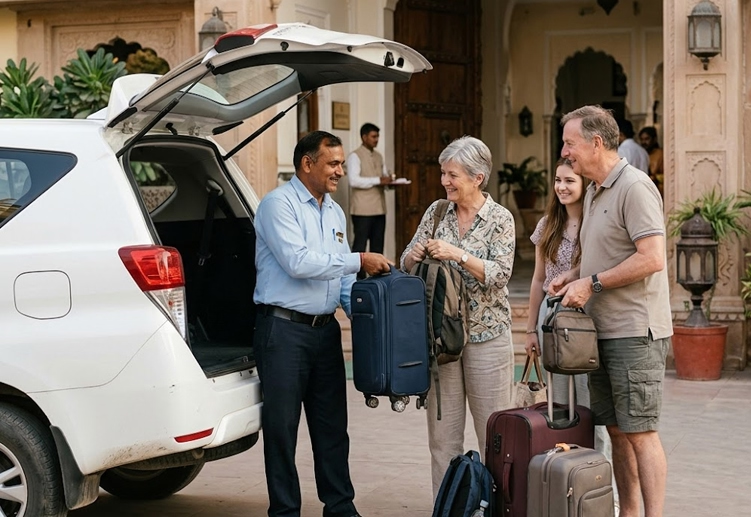
Private transport also solves the luggage problem. If you are taking a two-week India holiday, you may have one large suitcase plus hand luggage. Moving those bags repeatedly through railway stations, taxi ranks and hotel transfers becomes tiring. With one vehicle, the luggage simply moves with you.
For couples, the benefit is independence. For families, it is convenience. For senior travelers, it is often comfort. For first-time visitors, it is the reassurance of having the same transport arrangement across multiple unfamiliar cities.
The Main Advantages
- Hotel-to-hotel transport without repeated taxi negotiations.
- One vehicle for several connected destinations.
- More control over departure times and rest stops.
- Simple luggage handling between cities.
- Air-conditioned transport during hot weather.
- Less dependence on fixed train or group-tour schedules.
- Ability to stop at worthwhile places between cities.
- More comfortable travel for couples, families and older visitors.
- Airport and railway pickups can be incorporated into the same itinerary.
- Local road navigation is handled by an experienced driver.
Private Driver, Chauffeur or Car Rental With Driver: What Do These Terms Mean?
Travel websites use several expressions for essentially similar services: private driver, chauffeur, car with driver, chauffeur-driven car and car rental with driver. The exact level of service varies between operators, so concentrate less on the label and more on what is actually being provided.
A standard tourist private-driver service normally means a dedicated vehicle plus professional driver for the agreed itinerary. The driver collects you from hotels, airports or railway stations and transports you between destinations.
A chauffeur service may suggest a more premium positioning, but the word alone does not guarantee a luxury vehicle. Always confirm the exact car model or vehicle category.
It is also important to distinguish a driver from a licensed sightseeing guide. An experienced driver may know tourist routes extremely well and can often help with practical information, but a driver is not automatically qualified to provide detailed historical interpretation inside monuments.
If history is important to you, use the driver for transport and arrange a qualified local guide in cities such as Delhi, Agra or Jaipur. This combination gives you both practical road support and proper sightseeing interpretation.
India Entry and Visa Planning for European Travelers
Europe is not one nationality, so there is no single immigration rule that applies identically to every European passport holder. A traveler from France may have different administrative circumstances from someone travelling on a British, German, Italian, Spanish, Swiss, Dutch, Belgian, Polish, Irish or Scandinavian passport.
The safest rule is simple: check requirements according to the passport you will actually use. The Government of India's official Indian Visa Online portal states that foreign nationals entering India generally need a valid passport together with an appropriate regular visa, eVisa or other qualifying status unless an exemption applies.
The same official portal currently states that foreign nationals and OCI card holders can submit an electronic arrival card within 72 hours before arrival. Arrival and health procedures can change, so check official information again shortly before the flight rather than assuming requirements are identical to those in force when you originally booked the holiday.
Before Flying From Europe
- Check the passport you are travelling on. Requirements depend on nationality rather than simply European residence.
- Use the official Indian visa portal. Avoid websites that imitate government visa services while charging additional fees.
- Check your visa details carefully. Names, passport numbers and other information should match your passport.
- Keep your visa or travel authorisation accessible. Digital copies are useful, but printed copies can still be helpful during international travel.
- Review arrival requirements again shortly before departure. Immigration and health procedures can change.
- Buy appropriate travel insurance. Make sure it covers your destinations, activities and transport arrangements.
- Check your own government's India travel advice. Security guidance can vary by region and may change after you book.
French official travel guidance, for example, describes India's eVisa system and notes that the application is handled online through India's official portal. It also shows why nationality-specific checking matters: European governments provide their own advice based on their citizens' documents and consular arrangements.
Should Europeans Self-Drive in India Instead?
For experienced European motorists, the question is understandable. If you regularly rent a car in Italy, France, Portugal, Greece or Spain, why pay for a driver in India?
The first issue is documentation. Requirements are not identical for every European licence. Current UK travel guidance says British drivers need the 1949 International Driving Permit together with their UK licence, and also notes that rules concerning the length of time a UK licence can be used vary by Indian state.
French government advice illustrates the point from another nationality. It states that short-term visitors using a French licence should also carry an International Driving Permit. These differences are exactly why a generic statement such as "European licences are valid in India" is not useful.
The second issue is road experience. Legal permission to drive does not mean self-driving will be relaxing. Indian roads can involve conditions unfamiliar to visitors, especially dense motorcycle traffic, livestock, limited lighting, trucks, unpredictable lane movement and busy urban intersections.
For travelers whose primary goal is sightseeing rather than the challenge of driving, hiring a professional driver usually provides a better balance. You still have the freedom of a road trip without spending each transfer day mentally exhausted.
Understanding Indian Roads Before Your First Journey
The most important thing to forget from European road-trip planning is the idea that kilometres automatically translate into predictable travel time. In much of Europe, motorway driving allows a traveler to estimate arrival relatively accurately. India is less consistent.
A highway journey may begin smoothly, slow near a city, stop briefly at a toll plaza, encounter roadworks and then pass through a crowded market area before reaching the hotel. The result is not necessarily a bad journey; it simply requires realistic planning.
Mapping applications are helpful for orientation, but do not build a packed sightseeing schedule around the most optimistic estimate on your phone. A good operator will usually recommend a departure time based on practical experience rather than distance alone.
India's road environment also changes quickly. One stretch may be a modern expressway while the next passes through local traffic. The variety is part of the experience, especially when you are not personally responsible for driving.
Why Daylight Transfers Are Usually Better
Whenever possible, plan longer intercity journeys during daylight. Current British travel guidance describes significant road-safety risks in India and notes issues including livestock on roads. Other European travel advisories also recommend caution when travelling overland.
Daylight gives the driver better visibility and gives you a more enjoyable view of the countryside. It also avoids the pattern of sightseeing until evening and then beginning a four- or five-hour highway transfer when everyone is already tired.
A comfortable schedule is usually straightforward: breakfast, departure during the morning, one or two sensible stops, arrival before late evening and relaxed check-in at the next hotel.
There will occasionally be early airport transfers or unavoidable evening journeys. The point is not that all night driving is impossible; it is that a holiday itinerary should not make it the default.
The Best First Route: Delhi, Agra and Jaipur
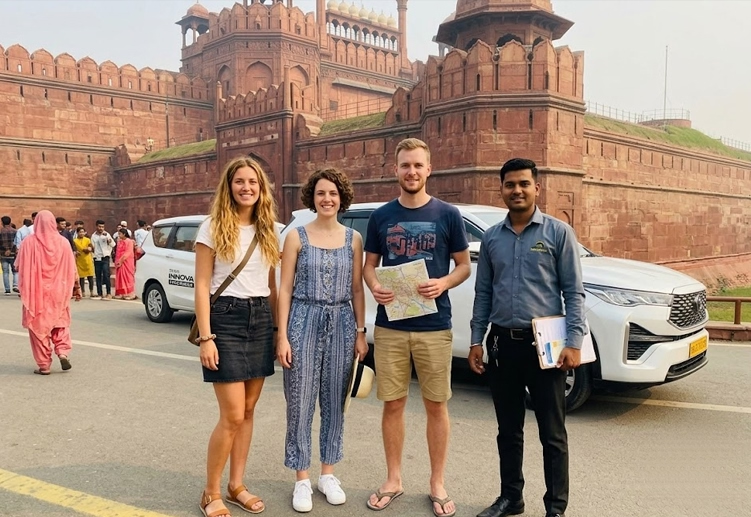
For a first visit from Europe, the Golden Triangle is one of the most logical private-driver routes in India. Delhi, Agra and Jaipur offer three very different experiences while remaining geographically connected enough for road travel.
Delhi combines Mughal architecture, colonial-era avenues, markets, religious sites and modern urban India. Old Delhi and New Delhi feel dramatically different, which is why the capital deserves more than an airport night.
Agra provides the Taj Mahal, but visitors who slow down also discover Agra Fort and other elements of Mughal history. Staying overnight makes the experience far more comfortable than treating the city as a rushed photograph stop.
Jaipur introduces Rajasthan through Amber Fort, City Palace, Jantar Mantar, Hawa Mahal, bazaars, textiles and crafts. The city can easily fill two days.
Because these destinations connect naturally, you avoid unnecessary flights and use the same car for the entire journey. Travelers who want an established starting point can compare Golden Triangle tours and then customise the number of nights.
A Comfortable 7-Day Golden Triangle Itinerary
- Day 1: Arrive in Delhi, meet your driver and transfer to the hotel.
- Day 2: Explore Old Delhi and New Delhi.
- Day 3: Continue Delhi sightseeing or keep a slower day after the international flight.
- Day 4: Drive from Delhi to Agra and visit Agra Fort or an evening viewpoint.
- Day 5: Visit the Taj Mahal, then drive toward Jaipur with an optional heritage stop.
- Day 6: Explore Amber Fort and Jaipur's main monuments.
- Day 7: Continue Jaipur sightseeing or return toward Delhi depending on your flight plan.
Seven days is possible, but eight to ten days feels more relaxed. Travelers arriving from Western Europe may be tired after an overnight or connecting flight, so leaving a little space at the beginning can improve the entire journey.
Extending a Private Driver Tour Into Rajasthan
Once travelers reach Jaipur, Rajasthan becomes the natural extension. This is where a private driver becomes particularly valuable because trains and flights do not always connect smaller heritage destinations as conveniently as a car.
From Jaipur, Pushkar provides a slower atmosphere around its sacred lake and ghats. Jodhpur then adds Mehrangarh Fort, old lanes and the blue-painted neighbourhoods associated with the city. Udaipur brings lakes, palace architecture and a softer pace.
Travelers with more time can add Bundi, Bikaner, Mandawa, Jaisalmer or wildlife stops such as Ranthambore. The important thing is not to include every famous name simply because a vehicle is available.
Rajasthan is large. A route with too many one-night stays becomes a sequence of check-ins and check-outs rather than a holiday. Two or three nights in major destinations creates a much stronger experience.
A 14-Day Delhi, Agra, Jaipur and Rajasthan Route
- Days 1�2: Delhi.
- Day 3: Delhi to Agra.
- Day 4: Taj Mahal and Agra sightseeing, then onward toward Jaipur.
- Days 5�6: Jaipur.
- Day 7: Jaipur to Pushkar.
- Day 8: Pushkar to Jodhpur.
- Days 9�10: Jodhpur.
- Day 11: Jodhpur to Udaipur with a worthwhile stop on the way.
- Days 12�13: Udaipur.
- Day 14: Fly onward or connect with the next stage of your journey.
You can explore established Rajasthan tours for route inspiration before creating a private version around your available days.
Should You Include Jaisalmer?
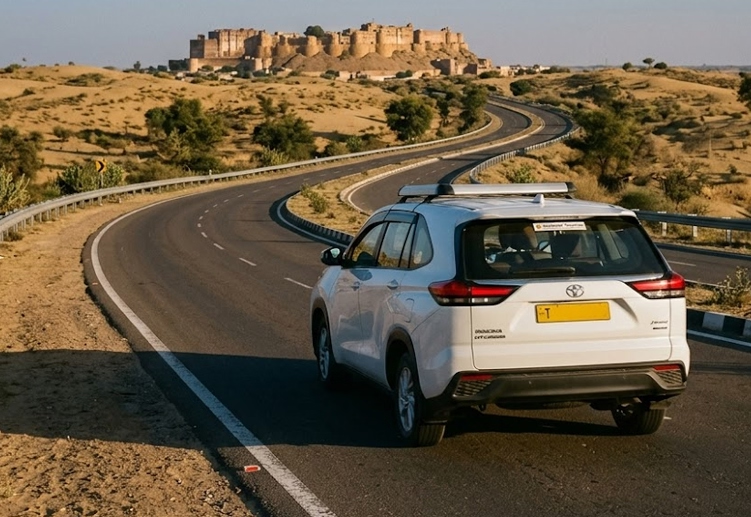
Jaisalmer is one of Rajasthan's most atmospheric destinations, but it sits much farther west than Jaipur, Pushkar or Udaipur. European visitors sometimes add it to a ten-day itinerary because the city looks close on a map. In practice, that can create too much driving.
If desert landscapes, Jaisalmer Fort and the western Rajasthan atmosphere are major priorities, give the destination enough time. A longer 17- to 21-day Rajasthan itinerary handles Jaisalmer more comfortably than a rushed week.
If time is limited, Jaipur, Pushkar, Jodhpur and Udaipur create a satisfying circuit without pushing every day to its maximum.
How Much Does a Private Driver in India Cost in 2026?
There is no official national tariff for private tourist cars with drivers, so any website promising one universal rate should be treated cautiously. The price changes according to the vehicle, route, kilometres, trip duration, city, season and what the quotation includes.
Recent 2026 market guides commonly place professional tourist car-and-driver services at roughly ?4,000 per day and upward for a sedan, with larger MPVs and SUVs costing more. Some published 2026 guides place an Innova-style vehicle around ?6,000�?7,500 per day and larger group vehicles higher. These should be treated as planning ranges rather than fixed rates.
A five-day Delhi, Agra and Jaipur journey, for example, is usually quoted as one itinerary rather than simply five identical daily rates. Route kilometres, Delhi pickup, Jaipur finish, empty vehicle return, tolls and driver overnight allowance can all affect the final number.
The most useful price is therefore not the lowest rate visible online. It is the final written quotation showing exactly what you will and will not pay.
What Your Quote Should Explain
- Exact vehicle category.
- Number of travel days.
- Total route or agreed itinerary.
- Fuel policy.
- Driver service and daily allowance.
- Highway tolls.
- Parking charges.
- State taxes or permits where applicable.
- Daily kilometre allowance if one exists.
- Additional kilometre charges.
- Late-night supplements where applicable.
- Airport and railway pickup charges.
- Driver accommodation arrangement.
A quotation that simply says "car and driver �40 per day" does not tell you enough. If tolls, taxes, parking and driver allowance are added separately, the final amount may look very different.
Should You Pay in Euros, Pounds or Indian Rupees?
Most India-based operators price their services in Indian rupees, although some may provide an approximate euro or pound equivalent for international customers. The rupee price is usually the most useful reference because exchange rates change.
If you are quoted in euros or pounds, ask whether that amount is fixed or simply an estimate converted from rupees. Also confirm the payment method and any card, bank-transfer or international transaction fees.
Do not carry the full value of a long tour in cash unless the operator specifically requires cash and you are comfortable with that arrangement. A written payment schedule is clearer: for example, a deposit to confirm the booking followed by the balance according to agreed terms.
Keep payment receipts and booking correspondence. A professional company should be able to explain its payment process before you send money.
Choosing the Right Vehicle
Vehicle choice matters more than many European travelers expect. A small sedan may look perfectly adequate for two people, but luggage changes the calculation. Two large checked suitcases, cabin bags, a camera backpack and winter clothing can fill the boot quickly.
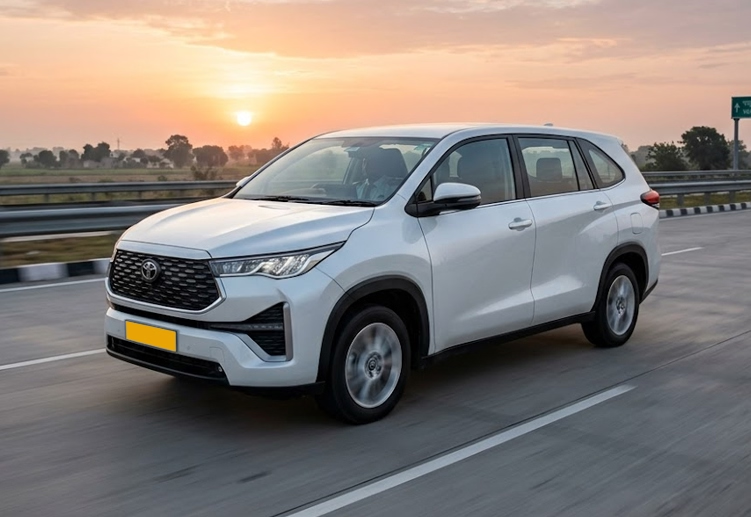
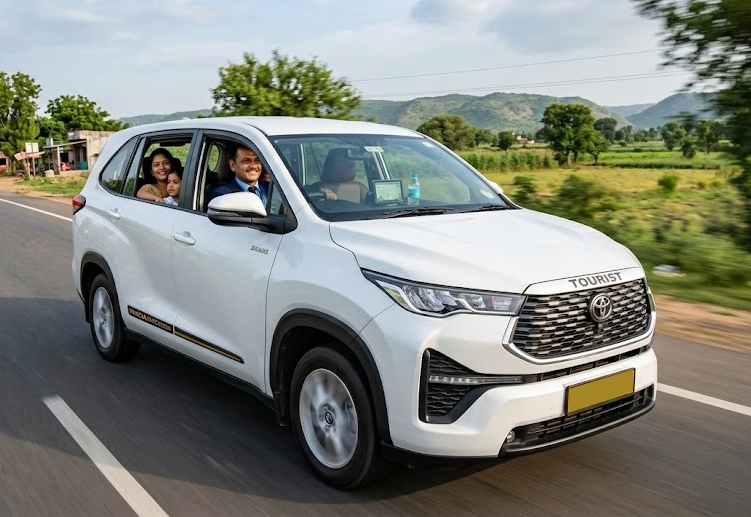
For one or two travelers with moderate luggage, a sedan can be economical. Couples who prioritise space, taller passengers, families and small groups often prefer an Innova or Innova Crysta-style MPV. Larger groups usually need a Tempo Traveller or similar vehicle.
When enquiring about car rental with driver in India, provide the passenger count and luggage count at the beginning. Do not simply say "four people." Four people with hand luggage and four people with four 23-kilogram suitcases require different vehicles.
Vehicle Questions Worth Asking
- Is the vehicle air-conditioned?
- How many large suitcases fit comfortably?
- Are seat belts available for passenger seats?
- Which exact model or category is being quoted?
- Will the same vehicle be used throughout the tour?
- Is there enough rear-seat comfort for five- or six-hour journeys?
- What happens if the vehicle develops a mechanical problem?
- Is the car licensed and permitted for the planned interstate route?
For a two-week tour, paying a little extra for more space can be one of the best upgrades you make. Comfort is cumulative. A small inconvenience on day one can feel much larger by day ten.
Sedan or Innova: Which Is Better for a Couple?
A sedan is usually the budget-friendly option for two people and can be perfectly suitable for a shorter Golden Triangle journey. If both passengers travel light, there may be little reason to pay for a larger vehicle.
An Innova-style vehicle becomes attractive on a longer Rajasthan route. It generally offers easier entry and exit, more luggage flexibility and a higher seating position. Travelers who are tall or who simply value space may find the difference worthwhile.
The choice is not about luxury alone. A large vehicle with poor maintenance is not automatically better than a clean, well-maintained sedan. Ask about the actual car standard rather than focusing only on size.
English-Speaking Drivers: What Should You Expect?
An English-speaking driver can make the trip much easier, particularly for European travelers who do not speak Hindi. You need to be able to agree on hotel pickups, restaurant breaks, departure times and itinerary changes.
English ability varies. Some drivers speak fluently and enjoy conversation. Others have practical tourism English that is sufficient for daily logistics. If communication is especially important to you, state that clearly before booking.
Do not expect a professional lecture on history during every journey. The driver may know local stories and practical information, but guiding and driving are different jobs.
If you want an in-depth explanation of Mughal history at the Taj Mahal or Rajput architecture at Amber Fort, arrange a qualified local guide and let the driver manage transportation.
How to Check a Private Driver Company Before Booking
International travelers should never choose a driver only from a low price in a social-media message. A few basic checks can reveal whether the service operates professionally.
- Look for a functioning company website with clear contact information.
- Ask for a detailed itinerary rather than a one-line price.
- Check whether the operator explains the vehicle and inclusions.
- Review recent traveler feedback across more than one source where possible.
- Confirm who will meet you at the airport.
- Ask whether support is available if the vehicle has a problem.
- Keep booking details and payment conditions in writing.
- Be cautious if the company pressures you to pay the entire amount immediately without clear documentation.
- Check whether the itinerary sounds realistic rather than simply accepting every request you make.
A good operator should occasionally tell you that your plan is too ambitious. If you request Delhi sightseeing, a five-hour transfer and three monuments in another city on the same day, blindly saying yes is not good service.
Airport Pickup: The Best Way to Start the Journey
For many European visitors, Delhi Airport is the first contact with India. After a long international journey, collecting luggage and finding transport is not the moment to begin comparing taxi offers.
A pre-arranged driver should provide a clear meeting procedure. Save the company WhatsApp number before you fly and know what name will be displayed at the meeting point.
Flight delays should also be discussed in advance. Professional airport pickup services normally monitor arrival information or remain in contact with travelers when schedules change.
If your flight arrives late at night, consider going directly to a Delhi hotel rather than beginning a long intercity drive. Starting the real road journey after breakfast is far more comfortable.
Jet Lag and the First 24 Hours
Travelers from the UK, Ireland and continental Europe may arrive after an overnight flight, often with a connection depending on the departure city. Even when the time-zone difference does not look extreme, lack of sleep can make the first day exhausting.
Do not schedule every major Delhi attraction immediately after landing. Transfer to the hotel, eat, rest and perhaps explore something nearby.
If your total trip is two weeks, sacrificing half a day to recovery does not reduce the holiday. It can prevent the first three days from feeling unnecessarily tiring.
Best Time of Year for a Private Driver Tour in North India
For Delhi, Agra, Jaipur and Rajasthan, October through March is generally the most popular period for road travel because temperatures are usually easier for sightseeing than during the hottest months.
October and November often offer warm days. December and January can have cold mornings and evenings, especially in North India. European travelers sometimes assume Indian winter means shorts and sandals every day, then discover they need a jacket for sunrise sightseeing.
Winter can also bring fog in northern regions. Keep some buffer around important flights and train connections rather than planning a long road transfer that is supposed to end only an hour before check-in.
February and early March can be particularly attractive in Rajasthan. Temperatures then rise sharply as the season moves toward April, May and June.
Summer travel is possible, but sightseeing needs a different rhythm: early starts, air-conditioned transport, more water and a slower midday schedule.
Monsoon conditions vary by region. Heavy rain can affect road conditions and journey times, so travelers visiting in wetter months should keep more flexibility.
European Christmas and Winter Holidays in India
December and early January are popular because many Europeans have annual leave around Christmas and New Year. This period can work well for Rajasthan, but it is also busy.
Preferred hotels, heritage properties and wildlife safaris may fill earlier than in less popular months. If you are travelling over Christmas or New Year, arrange key reservations before leaving everything until the final few weeks.
Pack layers. Delhi may feel cool at breakfast, comfortable by afternoon and chilly again after sunset. Desert areas can also become cold at night.
Where a Private Driver Makes Sense�and Where It Does Not
A private car works best when destinations are geographically connected. Delhi, Agra, Jaipur, Pushkar, Jodhpur and Udaipur are a classic example. You can build a logical line or circuit without flying repeatedly.
The same logic does not work when travelers try to connect every corner of India by road. India is far larger than many first-time European visitors realise.
Adding Varanasi, Mumbai, Goa, Kerala or South India may be better handled with a domestic flight or selected train journey. A driver can then meet you in the new region if required.
The best itinerary does not use one form of transport because you have paid for it. It chooses the right transport for each distance.
Combining Private Cars and Indian Trains
Indian trains can be an enjoyable part of the trip, and hiring a private driver does not mean abandoning rail travel completely.
You might use a train for one specific route and have your driver service begin or finish at the relevant station. In other situations, a car is easier because it removes station transfers and luggage handling.
Travelers should decide what they actually want from the train. If riding an Indian train is part of the experience, include one useful journey. If you are choosing rail only because you believe road travel is always slower or more expensive, compare the complete door-to-door journey first.
Planning a Taj Mahal Visit With a Private Driver
The Taj Mahal is one of the main reasons many Europeans visit North India. A private driver makes Agra easy to include, but the monument itself still deserves proper planning.
Check current opening days, entrance procedures and ticket arrangements close to the visit. Staying overnight in Agra gives you more control than arriving from Delhi, seeing the monument and immediately driving several more hours to Jaipur.
A slower plan allows you to visit the Taj Mahal, return to the hotel for breakfast or rest and see Agra Fort before continuing the following day.
If time is extremely limited, explore our same-day tour options. A day trip can work well when Delhi is your only base, but a multi-city private tour does not need to move at the same speed.
Why Jaipur Deserves Two or Three Days
Jaipur suffers from being the final point of the Golden Triangle. Travelers sometimes arrive believing one quick day is enough before returning to Delhi.
Amber Fort alone is outside the central old-city area. City Palace, Jantar Mantar, Hawa Mahal and the bazaars occupy another part of the city. Add crafts, food, photography and local shopping and one day becomes very full.
A private Jaipur sightseeing tour can cover major monuments efficiently, but a second day allows you to enjoy the city rather than continuously checking the clock.
Ranthambore and Wildlife Extensions
European wildlife enthusiasts often add Ranthambore National Park to the Golden Triangle or Rajasthan. The location can fit well, but wildlife travel requires more planning than ordinary city sightseeing.
Safaris operate at scheduled times and depend on booking availability. Do not build an itinerary that arrives at the park only minutes before a confirmed safari.
Stay nearby and give yourself enough time on the preceding road transfer. Remember that wildlife sightings are never guaranteed, including tiger sightings.
Travelers with limited time can review a Jaipur to Ranthambore tour, but an overnight stay is normally more comfortable within a longer route.
Food Stops During a Private Road Trip
A private journey gives travelers opportunities to experience Indian food beyond formal hotel dining. A knowledgeable driver can identify practical highway restaurants and established stops used by tourists and local travelers.
Choose food that is freshly prepared and drink sealed bottled or appropriately treated water. Keep water in the vehicle, especially during warmer months.
Vegetarians usually find India exceptionally easy. Vegan travelers should explain dairy restrictions clearly because ghee, butter, yoghurt and paneer are common in Indian cuisine.
If you have serious allergies, do not rely only on a casual spoken explanation. Carry a written note that clearly describes the allergen and seriousness of the reaction.
European travelers who enjoy chilli should still begin carefully. Indian perceptions of mild, medium and hot can differ significantly from those in restaurants back home.
Coffee, Tea and Rest Stops
Road travel is not supposed to mean sitting inside a car for six hours without stopping. Sensible breaks are part of a comfortable private journey.
Chai is widely available and can become one of the memorable everyday experiences of the trip. Modern highway restaurants and service areas are also increasingly common on major routes.
Tell your driver when you need a toilet, coffee, stretch or meal break. You are paying for private transport, not competing in an endurance event.
Money, ATMs and Cards for European Visitors
Cards are widely accepted in larger hotels, restaurants and shops, but some cash remains useful for markets, tips, small purchases and places where international cards do not work reliably.
Carry more than one bank card and keep the backup separately. European banks sometimes block foreign transactions when activity looks unusual, so check whether your bank requires travel notification.
When an ATM or card terminal offers to convert a payment directly into euros or pounds, look carefully at the exchange rate and fees. Your own bank's conversion may be preferable, depending on your card.
Avoid carrying a large amount of physical cash simply because everyday rupee expenses appear small in euro terms.
Tipping Your Private Driver in India
Tipping can be confusing for travelers from countries where gratuities are modest or largely optional. In India's tourism industry, tips are more common for drivers, guides and hotel staff.
There is no single amount that fits every private-driver trip. Duration, service quality, group size and the level of assistance all matter.
Ask the company for general guidance before the journey if you want a planning figure, then decide according to the service you actually receive.
A tip should not replace the driver's contracted salary or be demanded aggressively. It is a gratuity for good service.
Mobile Data, eSIMs and WhatsApp
A working phone makes private travel much easier. WhatsApp is commonly used for communicating with drivers and travel companies, sharing hotel locations and confirming pickup times.
Before leaving Europe, compare your home network's roaming package with a travel eSIM or local connectivity option. The best choice depends on your phone and how much data you expect to use.
Download offline maps before major road journeys. Even when the driver knows the route, seeing your approximate location helps you understand how the day is progressing.
Save hotel names and booking confirmations offline. This is useful when a city contains several properties with similar names.
Accommodation and Driver Logistics
You normally book and pay for your own hotels. The driver's overnight arrangement should be explained by the transport company and should not become something you unexpectedly organise at every stop.
Many professional tour quotations include the driver's allowance or accommodation arrangements in the transport price. Confirm this before booking.
When selecting your own hotel, think about location as well as room quality. A charming property deep inside a narrow old-city lane may be atmospheric but difficult for vehicle access.
In Rajasthan, heritage hotels can be one of the highlights of the trip. You do not need to stay in luxury properties every night; one or two memorable heritage stays combined with good mid-range accommodation can offer excellent value.
Private Driver Travel for Couples
Couples are one of the groups that benefit most from private transport. There are only two schedules to coordinate, a sedan or MPV is usually enough and the itinerary can remain highly flexible.
Rajasthan works particularly well for couples interested in historic hotels, photography and slower evening experiences. Udaipur, Jaipur and Jodhpur all offer strong combinations of sightseeing and atmosphere.
If comfort matters more than the lowest possible price, consider a larger vehicle even for two people. Over a long multi-city holiday, the extra room can be worthwhile.
Private Driver Travel for Families
Families appreciate having one vehicle because daily bags, snacks, jackets and children's belongings can stay organised. There is less repeated unpacking at railway stations and taxi ranks.
The itinerary should be slower than an adult-only sightseeing schedule. Plan regular meals and toilet stops and avoid very late hotel arrivals.
Discuss appropriate child restraints before arrival. Do not assume the required seat will automatically be available in every tourist vehicle.
A vehicle that technically seats five may not comfortably fit five people plus international luggage. Book according to real space requirements.
Private Driver Travel for Senior European Visitors
Senior travelers often value private road transport because it reduces unnecessary walking and luggage handling. A car can collect passengers directly from a hotel entrance and deliver them to the next property.
India's major monuments can involve stairs, uneven surfaces and considerable walking. Tell the company about mobility considerations in advance so sightseeing order and hotel selection can be planned more sensibly.
A slower itinerary with two- or three-night stays is usually better than changing city every morning.
Women Traveling With a Private Driver
Women, including solo travelers, use private-driver services across India, but operator selection and normal safety precautions are important.
Book through a traceable company, keep the office contact number and share the itinerary with someone you trust. Confirm the driver's identity before departing the airport or hotel.
Current government travel advice should always take priority over a blog when evaluating regional security. The UK currently advises against travel to certain parts of India, while German and French authorities also maintain region-specific guidance.
A Golden Triangle or Rajasthan tourist route should still be checked against your own government's latest advice before departure.
What to Pack for a Chauffeur-Driven India Tour
- Comfortable walking shoes: Historic forts and old cities often have uneven surfaces.
- Light layers: Useful for winter mornings and warmer afternoons.
- Sun protection: Carry sunscreen, sunglasses and a hat.
- Power bank: Maps and photography can drain phone batteries quickly.
- Prescription medication: Carry enough for the full trip with required documentation.
- Reusable day bag: Keep water, medication and daily essentials together.
- Modest clothing: Useful for temples and religious places.
- Universal adapter: European plugs are not guaranteed to match every Indian socket.
- Offline document copies: Save passport, visa, insurance, driver and hotel information.
- Light scarf: Helpful for religious sites, sun and air-conditioned environments.
- Small umbrella: Useful during rain and strong sun.
- Hand sanitiser and tissues: Practical on long road journeys.
Do not fill your suitcase completely before arriving. India is tempting for textiles, crafts and souvenirs, particularly in Rajasthan.
Cultural Differences European Travelers Should Expect
India's intensity can surprise even experienced travelers. Streets may feel louder, personal space can be smaller and busy markets may appear chaotic compared with cities in northern or western Europe.
Give yourself time to adapt rather than immediately deciding whether every difference is positive or negative.
At religious sites, follow dress and photography rules, remove shoes when requested and listen to local instructions.
Bargaining is common in some markets but not every shop. Keep the conversation friendly. Fighting aggressively over an amount equivalent to one or two euros rarely improves anyone's holiday.
Shopping Stops and Driver Commissions
One issue international travelers occasionally mention is unwanted shopping. Some tourism businesses receive commission from shops when travelers make purchases.
There is nothing wrong with visiting a reputable textile, jewellery or craft shop if you genuinely want to shop. The problem begins when the day's itinerary becomes dominated by places you never requested.
Tell the company in advance if you do not want shopping stops. A professional driver should respect your preference.
If you are interested in shopping, ask for time in markets or specific craft areas rather than automatically accepting every commercial stop suggested along the route.
Common Mistakes European Travelers Make When Hiring a Driver
- Choosing only by price. A slightly cheaper quote means little if the vehicle is uncomfortable or important costs are excluded.
- Not checking inclusions. Ask about fuel, tolls, parking, taxes and driver allowance.
- Planning by kilometres. Indian road times do not always resemble European motorway times.
- Booking the smallest possible vehicle. International luggage requires real space.
- Scheduling too many one-night stays. Constant hotel changes become tiring quickly.
- Assuming the driver is a professional guide. Use local guides where detailed history is important.
- Planning long transfers after full sightseeing days. Use daylight and morning departures.
- Trying to drive across all of India. Use flights for distant regions.
- Leaving no buffer before an international flight. Weather, traffic or road disruption can cause delays.
- Failing to confirm airport meeting details. Know who is collecting you before you land.
- Not stating that you dislike shopping stops. Make your preferences clear at booking.
- Ignoring current government travel advice. Regional security conditions can change.
How Many Hours Should You Spend in the Car Each Day?
There is no universal limit, but repeated long driving days reduce the value of a holiday. A five-hour transfer once or twice in a two-week itinerary is very different from spending six hours in the car every day.
Try to alternate transfer days with full sightseeing days. Two nights in Jaipur means you can enjoy the city without packing a suitcase the next morning.
If a journey becomes especially long, consider breaking it with an overnight stop that adds genuine interest rather than simply enduring the drive.
A Better Daily Routine
A comfortable Indian road-trip day is usually simple. Start at a sensible time, complete the longer driving section while everyone is fresh, stop when required and arrive before the evening becomes late.
On sightseeing days, begin early enough to avoid some traffic and heat but do not create a military schedule unless that is genuinely your travel style.
Private travel gives you flexibility, so use it. If you loved a monument and stayed an extra hour, remove a minor stop rather than racing through the rest of the day.
How Far in Advance Should Europeans Book?
For normal travel periods, private transport often has more flexibility than hotels or wildlife safaris, but booking earlier gives you better vehicle choice and more time to refine the itinerary.
If you are travelling over Christmas, New Year or another busy period, do not wait until arrival to organise a complicated multi-city route.
Travelers with specialised requirements such as a large vehicle, child seat, luxury car or particular language preference should also enquire earlier.
Booking Directly From Europe
You do not need to wait until you arrive in India. In fact, confirming transport before departure is usually easier because you can compare proposals calmly.
Send the company your arrival airport, dates, destination list, number of passengers, approximate luggage, hotel plans and departure city.
Ask for a written day-by-day outline. This quickly reveals whether both sides understand the same route.
Keep the final confirmation on your phone and in your email. Save the company telephone and WhatsApp details separately in case airport Wi-Fi is unreliable.
What Information to Send When Requesting a Quote
- Your arrival date and airport.
- Your departure date and city.
- Every city you want to visit.
- Number of adults and children.
- Approximate number of large suitcases.
- Preferred vehicle category if known.
- Hotel names if already booked.
- Any wildlife safari or train bookings with fixed times.
- Whether you want local sightseeing guides.
- Mobility or accessibility considerations.
- Whether you prefer a relaxed or fast-paced itinerary.
The more accurate your first message is, the more useful the quotation will be.
Can You Change the Itinerary During the Trip?
Private travel is flexible, but it is not unlimited. Small changes such as starting an hour later, adding a local stop or changing the sightseeing order may be easy.
Large changes can affect kilometres, driver schedules, interstate permits and the overall price. Driving to a city hundreds of kilometres outside the agreed route is not the same as adding a local market.
If you want major changes, speak with the company as soon as possible and agree on any additional charges before the new journey begins.
Is a Private Driver More Expensive Than Trains?
For one traveler, a train ticket can certainly cost less than a dedicated private car. For a couple, family or small group, the comparison becomes more interesting because the vehicle price is shared.
Also compare the entire journey, not just the ticket. A train may require a taxi to the station, luggage handling, the rail journey and another taxi at the destination.
A private vehicle takes you from one hotel directly to the next and can include sightseeing along the way. That convenience has value.
The right question is not simply "which is cheapest?" It is "which gives the best combination of cost, comfort, time and experience for this particular route?"
Is a Private Driver a Luxury Service?
European travelers sometimes assume that having a chauffeur for two weeks must be an ultra-luxury product. In India, private car-and-driver travel covers a wide range of budgets.
A standard air-conditioned sedan with an experienced driver is primarily a transport service. Premium SUVs, luxury vehicles and high-end concierge support exist for travelers who want them, but they are not required for a comfortable trip.
This makes private driving accessible to many mid-range travelers, especially couples and families who compare the total cost with multiple taxis, transfers and other transport.
When a Local Guide Is Worth Paying For
A private driver solves transportation, but some destinations become much more meaningful with a specialist guide.
Delhi's history spans multiple empires and periods. Agra's Mughal architecture becomes easier to understand with context. Jaipur's palaces and astronomical instruments contain details that are easy to miss.
You do not need a guide every day. Consider hiring one at major historical sites and enjoying independent exploration elsewhere.
This provides a better balance than expecting the driver to perform both jobs simultaneously.
Frequently Asked Questions
Is hiring a private driver in India worth it for European travelers?
For many visitors, yes. A private driver provides door-to-door transport, luggage convenience, flexibility and local road experience. It is particularly useful for connected routes such as Delhi, Agra, Jaipur and Rajasthan where several destinations can be covered with the same vehicle.
How much does a private driver in India cost?
There is no single national tariff. Current 2026 market guides commonly show professionally operated tourist car-and-driver services beginning around several thousand rupees per day, with sedans generally cheaper than Innova-style MPVs, SUVs and group vehicles. Route length, tolls, parking, taxes and driver allowance all affect the final price, so request an itemised quotation.
Do European citizens need a visa for India?
Requirements depend on your actual passport nationality. Foreign travelers generally require a valid passport plus the appropriate Indian visa, eVisa or qualifying status unless an exemption applies. Check the official Indian Visa Online portal and your own government's India travel advice shortly before departure.
Can I drive myself in India with a European licence?
Do not assume one rule applies to all European licences. Requirements vary by nationality and Indian state, and some travelers need an International Driving Permit together with their home licence. Even when legally permitted, many first-time visitors choose a professional driver because local traffic conditions differ considerably from European driving.
What is the best private-driver route for a first visit?
Delhi, Agra and Jaipur form the classic Golden Triangle and are the easiest starting point. Travelers with around two weeks can extend the journey through Rajasthan to Pushkar, Jodhpur and Udaipur. Longer itineraries can include Ranthambore, Jaisalmer, Bundi or other heritage destinations.
Should I book an English-speaking driver?
Yes, if easy communication is important to you. An English-speaking driver makes it easier to coordinate hotel pickups, rest stops and itinerary changes. Remember that a driver is not automatically a licensed local sightseeing guide.
What car is best for two European travelers?
A sedan can work well for two passengers with moderate luggage and is usually the most economical choice. For longer Rajasthan journeys, tall travelers or couples carrying large suitcases, an Innova-style MPV can provide more space and comfort.
Do private-driver rates include fuel, tolls and parking?
It depends on the company. Some operators quote an all-inclusive transport price while others add tolls, parking, taxes or driver allowance separately. Never assume. Ask for every inclusion and exclusion in writing before paying a deposit.
Is it safe to drive at night in India?
Long-distance night travel is generally better minimised where practical. Reduced visibility, pedestrians, animals and road conditions can make journeys more challenging. A comfortable tourist itinerary normally schedules the longest transfers during daylight.
Can the same driver stay with us for two weeks?
Yes. Multi-day tours with the same vehicle and driver are common on Golden Triangle and Rajasthan routes. The quotation should clarify driver allowance, overnight arrangements, kilometre limits and whether the route ends in a different city from where it began.
Can we combine a private driver with trains and flights?
Yes. This is often the best approach. Use private road transport for connected destinations and trains or flights for very long distances such as Varanasi, Mumbai, Goa or South India. There is no reason to spend an entire holiday driving simply because you have hired a car.
Can I customise the itinerary?
Yes. Private trips can normally be designed around your international flights, hotel preferences, sightseeing interests, wildlife safaris, heritage stays, photography, food experiences, rest days and preferred daily driving limits. Major changes during the journey may affect the final price, so discuss them with the company first.
Plan Your Private Driver Tour in India
A private driver can change the character of an India holiday. Instead of viewing transportation as a series of separate problems, the road becomes part of one connected journey. Your suitcase stays with you, the same vehicle collects you each morning and the transitions between cities become an opportunity to see the landscape rather than simply another logistical task.
For most first-time European travelers, the strongest place to begin is Delhi, Agra and Jaipur. The Golden Triangle provides an introduction to India's capital, Mughal history, the Taj Mahal and Rajasthan while keeping the geography manageable. If you have additional time, continue through Pushkar, Jodhpur and Udaipur rather than immediately jumping to a distant region.
Choose the vehicle according to passengers and luggage, not just the cheapest rate. Confirm whether fuel, tolls, parking, taxes and driver expenses are included. Keep long transfers in daylight where possible and resist the temptation to change hotels every night.
Most importantly, remember that hiring a private driver is not about insulating yourself from India. A good road trip does the opposite. It allows you to see the changing countryside, roadside towns, farms, markets and daily life that disappear when every journey happens through an airport.
India does not need to be rushed. Give Delhi time. Stay overnight in Agra. Spend more than a few hours in Jaipur. Allow Rajasthan's cities to feel different from one another. Use a flight when the next destination is genuinely too far away and enjoy the road when it adds something to the journey.
With a realistic itinerary, reliable vehicle and experienced driver, European travelers can explore North India with the independence of a road trip and much less of the stress that comes with self-driving in an unfamiliar environment.
Book Your Private Driver in India
Planning India from Europe? Share your travel dates, passenger numbers, luggage and preferred destinations with Hire Private Driver India. We can help you plan a comfortable private car-and-driver journey through Delhi, Agra, Jaipur, Rajasthan and other major North India destinations.
Get Your Free Custom Quote