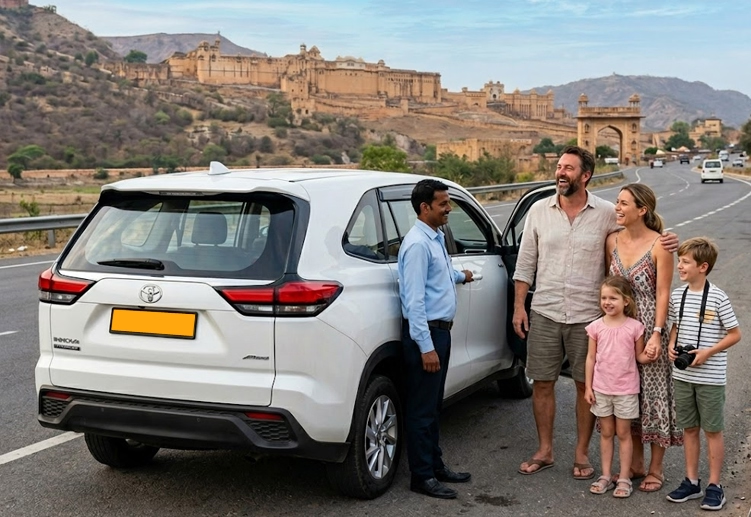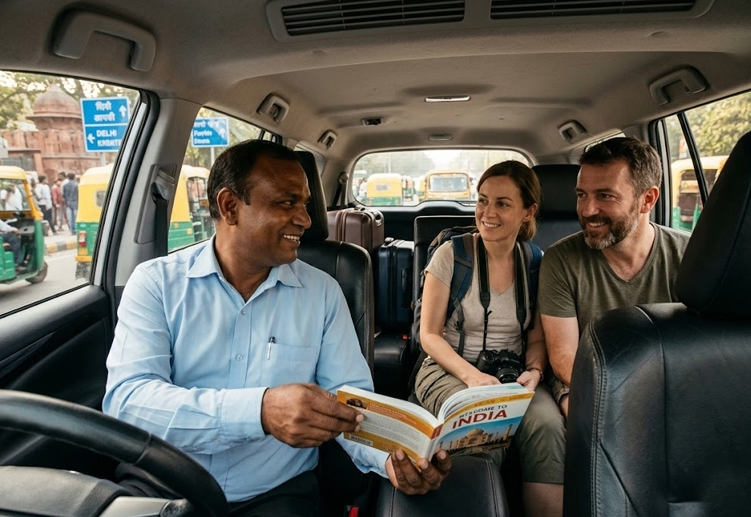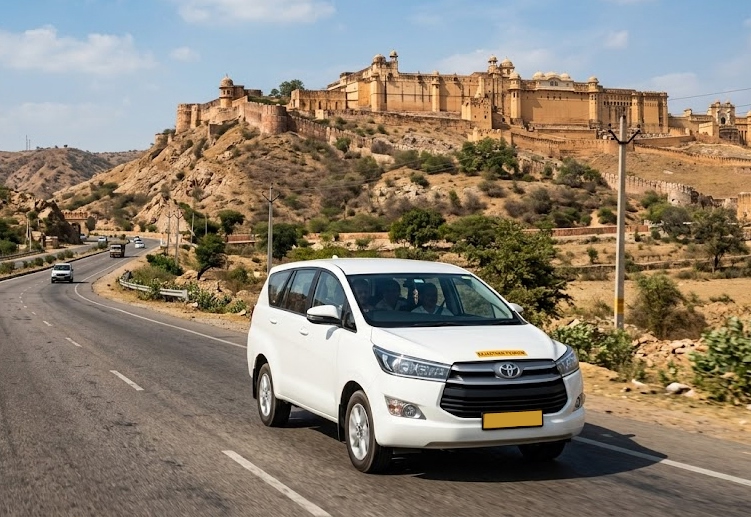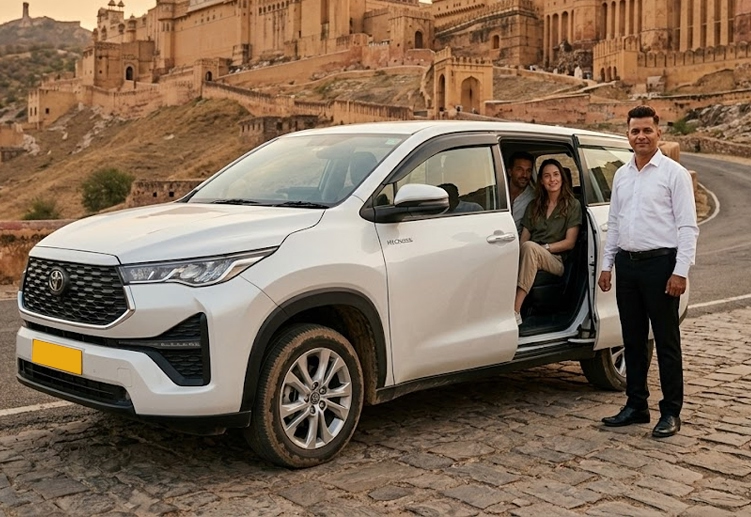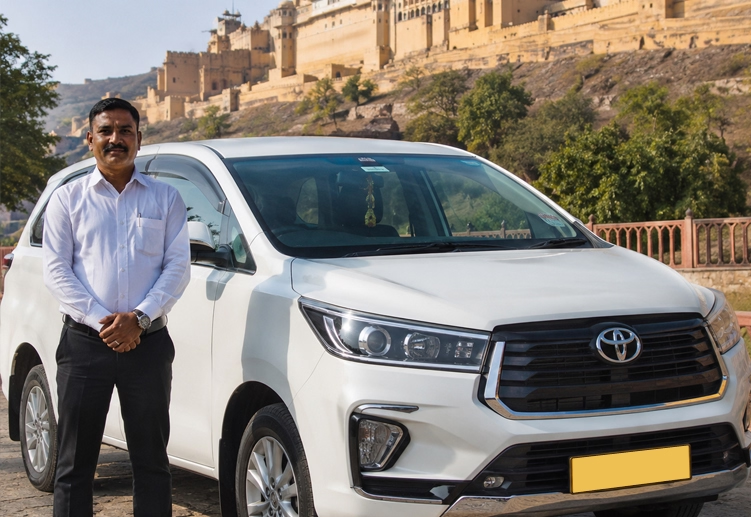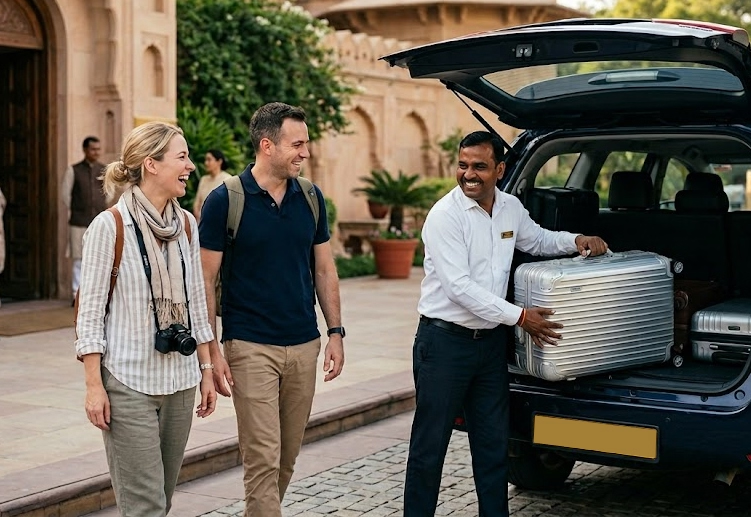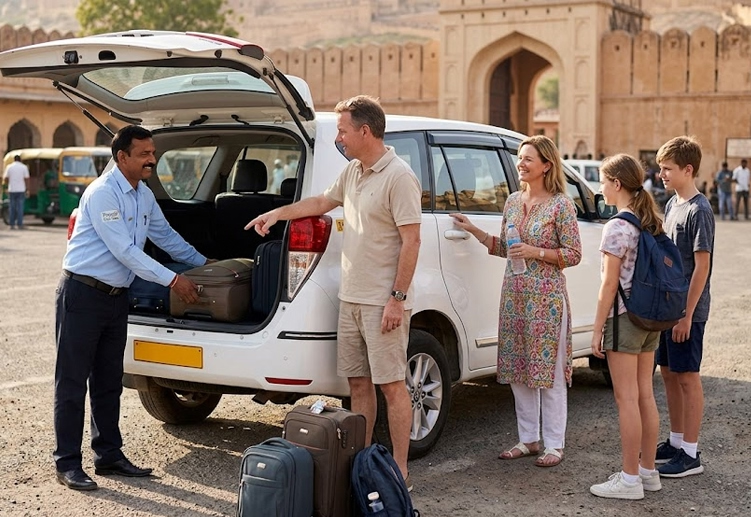


Yes—hiring a private driver in India can be a safe, comfortable and practical way for international travelers to move between cities, provided you verify the operator, driver and vehicle before the trip and use sensible road-safety habits once you are traveling. A good private-driver booking gives you a known pickup, one consistent transport contact, door-to-door movement, secure luggage space and more control over timing than repeatedly arranging anonymous taxis. But the word private does not automatically mean safe. The quality of the company, vehicle, driver, itinerary and communication matters far more than the label used in an advertisement.
That distinction is important because India is not one uniform travel environment. A pre-booked airport transfer in Delhi, a five-day Golden Triangle route, a two-week Rajasthan circuit and a mountain road in the Himalayas involve very different risks. Traffic density, road quality, weather, night visibility, driver fatigue and local conditions all change from one journey to another. The safest approach is therefore not to ask only, "Is India safe?" but to ask a more useful set of questions: Who am I hiring? What vehicle will arrive? How long will we drive each day? What happens if something changes? Can I reach a responsible company contact at any time?
Official travel guidance from several countries consistently recommends using reliable or pre-arranged transport, avoiding unnecessary night road travel, using seat belts and being cautious with unverified taxis or people who approach travelers at airports and stations. For most visitors, that makes a properly arranged private driver in India a sensible option-but only when the booking is transparent and the road plan is realistic.
Is Hiring a Private Driver in India Safe? The Practical Answer
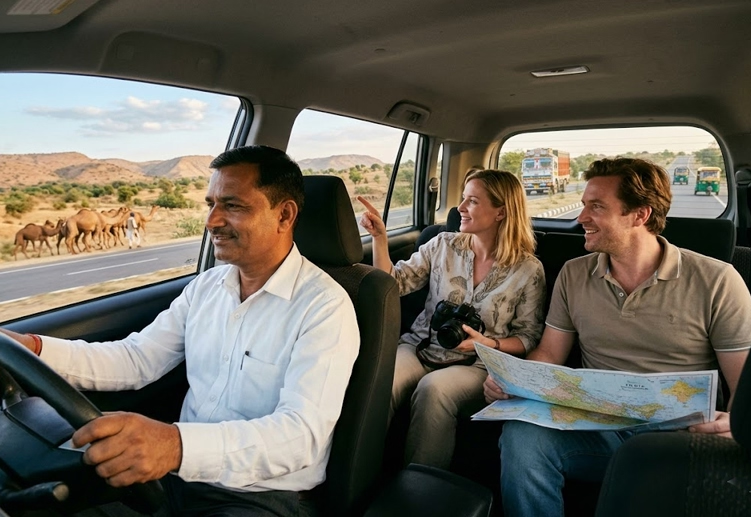
For many first-time visitors, a pre-booked car and driver can reduce several common travel stresses at once. You do not need to negotiate a new fare every time you leave a hotel. You do not have to move large suitcases through crowded stations for every short regional leg. You are less likely to accept an unsolicited ride from someone who approaches you outside an airport. And on a multi-city trip, the same driver often learns your pace, hotel locations, preferred meal stops and sightseeing schedule.
None of those advantages removes ordinary travel risk. Road crashes are a serious issue in India, and official guidance repeatedly highlights speeding, night driving, poor visibility, mixed traffic, lack of seat-belt use and fatigue as important concerns. Personal-safety advice also differs for solo women, late-night arrivals and isolated areas. A private driver is best understood as a way to control and reduce avoidable transport uncertainty, not as a guarantee that nothing can go wrong.
The Safest Booking Starts Before You Arrive in India
The most important safety decisions are usually made before the first drive begins. A traveler who waits until landing to search for the cheapest available car has fewer ways to compare reviews, verify a business, examine terms or ask detailed questions. Pre-booking does not mean paying blindly months in advance. It means creating enough of a paper trail that the service is identifiable and accountable.
Start by sending the same written itinerary to each provider. Include dates, arrival flight if relevant, every overnight city, final drop, passenger count and luggage. Ask which exact vehicle category will be used and whether the same driver is expected to stay with you. This is also the right time to ask about tolls, parking, interstate charges and driver expenses. Price clarity is part of safety because unexpected cash demands on the road can create pressure or conflict.
If you want a step-by-step booking process, use our detailed guide on how to hire a private driver in India. It covers quotes, vehicles, payments and verification in more detail.
12 Things to Verify Before You Book
Private driver safety checklist
- Company identity: confirm the trading name, website, phone number and a contact who is responsible for the booking.
- Recent independent reviews: look for comments about driving style, communication, cleanliness, punctuality and whether promised vehicles were actually supplied.
- Driver details: ask when the driver's name and phone number will be provided.
- Vehicle category: do not accept a vague "AC car" description for a long trip.
- Seat belts: confirm functional rear seat belts, particularly if you are traveling with children or older relatives.
- Luggage fit: bags should not block passenger seating or prevent proper belt use.
- Commercial use: ask whether the vehicle is appropriately registered, insured and permitted for the planned route.
- Driving hours: challenge any itinerary that requires very long days or repeated late-night arrivals.
- Backup plan: ask what happens after a breakdown, driver illness or vehicle problem.
- Payment trail: keep a quote, deposit receipt and booking confirmation.
- Cancellation terms: understand what happens if your flight or trip changes.
- No forced shopping: make clear that shops, restaurants and guides are optional unless specifically requested.
How to Check Whether the Driver Is the Person You Booked
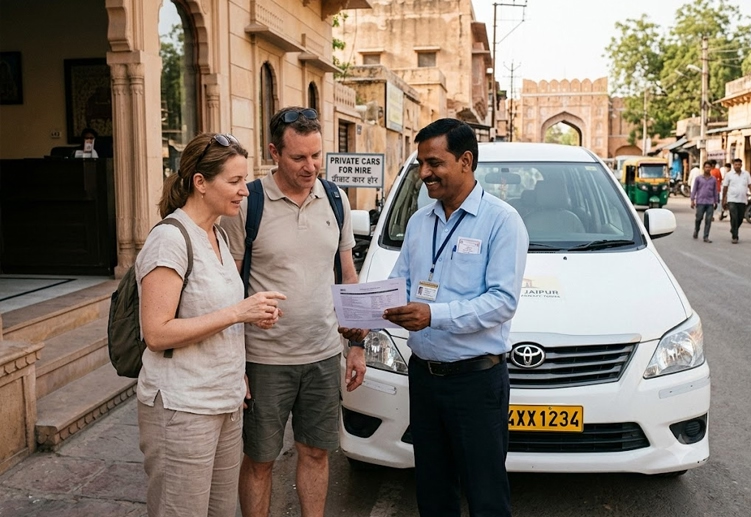
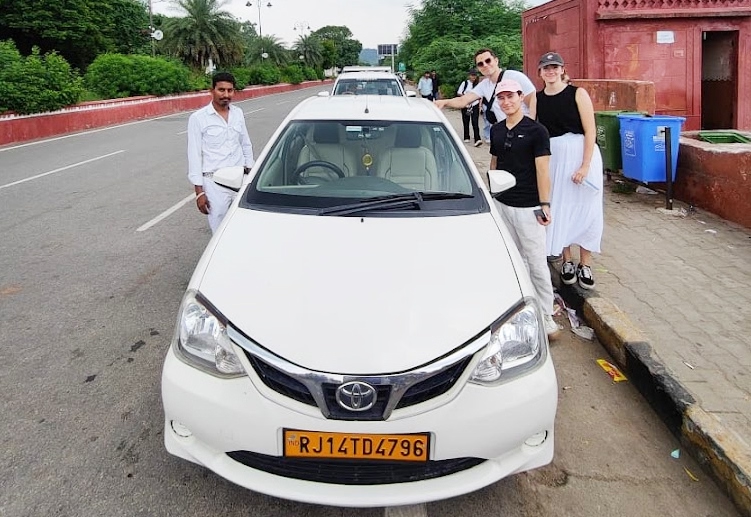
A safe pickup should not depend on guessing which person in a crowd is your driver. Before the trip, save the driver's name and phone number. If the operator can provide the vehicle registration number in advance, save that too. At the meeting point, call or message the driver directly rather than following someone merely because they know your name from a signboard.
For an airport pickup, it is useful to have two contacts: the driver and the booking office or owner. If you cannot find the driver, call the operator before accepting help from an unrelated person. A common travel-scam pattern is to tell visitors that their hotel, road, booking office or original transport has a problem and then redirect them to another service. Direct verification breaks that chain quickly.
Vehicle Safety Matters as Much as Driver Trust
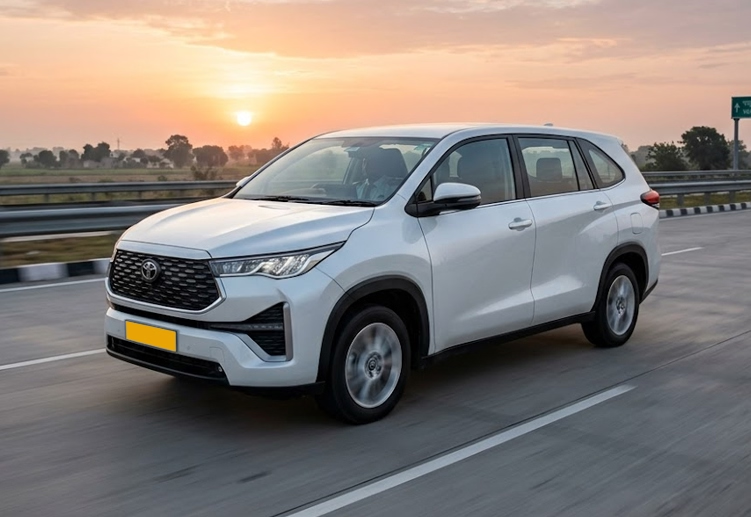
Travelers often focus on whether a driver seems friendly and forget that the car itself is part of the safety equation. For a multi-day journey, look beyond polished photos. You need a vehicle that is suitable for the passenger load, luggage and route. A small sedan carrying four adults and several large suitcases may be technically possible but uncomfortable and may compromise visibility or access to seat belts.
When the car arrives, take a minute before leaving. Confirm that it matches the booked category, that the registration looks consistent with what you were told, and that the rear seat belts are usable. Check air conditioning for hot-weather travel. Look at tyres and general condition if anything appears obviously neglected. You are not performing a mechanical inspection; you are simply refusing to ignore visible problems.
| Check | Why it matters | What to do if it fails |
|---|---|---|
| Rear seat belts | Basic crash protection for passengers | Ask for another vehicle if belts are missing or unusable on a long trip |
| Luggage space | Prevents bags from blocking seats or visibility | Upgrade vehicle size rather than overloading the cabin |
| AC and ventilation | Important in heat and long road days | Report the problem before starting an intercity leg |
| Vehicle condition | Obvious neglect can indicate weak maintenance | Contact the operator and request a replacement when necessary |
| Registration/category | Helps confirm you are entering the booked vehicle | Verify with the operator before departure |
Seat Belts: One of the Simplest Safety Decisions
Wear a seat belt in the front or rear whenever one is fitted. This should not be treated as optional just because local habits vary. India's motor-vehicle law addresses seat-belt use, and major travel advisories also tell visitors to use them. Before reserving a larger van or older vehicle, ask specifically about belts in the seats your group will actually use.
Families should discuss child restraints in advance. Availability and standards can vary, so do not assume the driver will have the correct seat waiting automatically. If a particular child seat is essential, confirm the exact arrangement before paying or consider bringing an approved travel seat that suits your needs and airline rules.
Road Safety: The Bigger Risk Is Often the Driving Environment
When travelers ask whether a private driver is "safe," they sometimes imagine personal-security problems but overlook ordinary road risk. India has dense, mixed traffic in many areas. Cars may share the road with motorcycles, buses, trucks, pedestrians, bicycles, animals and slow local vehicles. Road quality can change quickly, and traffic rules may be followed differently from what a visitor expects at home.
A professional local driver can reduce the stress of navigating this environment because they understand local road behavior and routes. But professional skill should never be used as an excuse for speeding, aggressive overtaking or driving while fatigued. Tell the driver early that you prefer safe, steady driving over saving a few minutes.
Do not create unsafe incentives yourself. If your itinerary requires a six-hour drive, a full sightseeing program, dinner in another city and a midnight airport transfer, the problem may be the schedule rather than the driver. A safer journey often begins by removing one activity.
Should You Travel by Road at Night in India?
For intercity tourism, daytime driving is usually the better choice. The UK, U.S., Australian and CDC guidance all caution about night road travel or recommend daylight where possible. Reduced visibility, fatigue, unlit vehicles, animals, road works and limited services can make a difficult situation harder after dark.
That does not mean every drive after sunset is automatically unsafe. A short hotel transfer in a major city or a pre-booked airport pickup may be routine. The important difference is between a necessary urban transfer and intentionally planning a six-hour rural or highway drive that starts late at night.
- Start long transfers in the morning.
- Keep major sightseeing before or after the transfer, not both.
- Build extra time for winter fog in North India.
- Avoid pressuring the driver to "make up" time after traffic delays.
- For a late international arrival, sleep in the arrival city instead of immediately starting a long road trip.
Driver Fatigue Is a Safety Issue Travelers Can Influence
Long itineraries can quietly turn into unsafe schedules when every city is treated as an opportunity to save a hotel night. A driver may start before sunrise for a monument visit, remain available during sightseeing, then continue several hours to the next city. If the same pattern repeats daily, fatigue becomes a real concern.
Ask how the company handles driving hours and rest. On very long routes, a responsible operator may suggest an earlier start, an overnight stop, a train or flight for one leg, or a second driver. Those suggestions are signs of professional planning, not inconvenience. A company that agrees instantly to every extreme schedule without discussing road time deserves more scrutiny.
Private Driver Safety for Solo Female Travelers
Women travel in India in many different ways, including independently, but official travel advisories recommend heightened precautions. A pre-arranged private driver can help by giving the traveler a known vehicle, a predictable pickup and the ability to move door to door rather than waiting alone for transport. The booking should still be structured to preserve the traveler's control.
Before arrival, share the itinerary, driver number and car registration with a trusted person. Keep your own hotel addresses and maps rather than relying on the driver as the only source of information. If practical, share live location during long transfers. Sit where you feel comfortable, keep your phone charged and avoid giving unnecessary details about being completely alone or about valuables.
Boundaries matter. A driver can recommend a restaurant, shop or sightseeing stop, but the choice remains yours. If you say no and the driver repeatedly pushes the same stop, contact the operator. If any conversation, behavior or route change makes you uncomfortable, do not worry about appearing impolite. Ask to stop at a busy public place or hotel and call the company or emergency services if necessary.
For travelers who want a familiar route for a first trip, the Golden Triangle is easier to structure than an extremely remote multi-state itinerary because Delhi, Agra and Jaipur have established tourist infrastructure and frequent road movement.
Safety Tips for Couples, Families and Senior Travelers
Couples: keep both passengers aware of the route and booking terms. One person should not hold all the contact numbers, money and travel documents. If one phone battery dies, the other should still have the driver and operator details.
Families: choose the car around luggage and child restraints, not just legal seat count. Keep water, snacks, basic medicines and children's items accessible rather than buried under suitcases. Plan more breaks than a couple might need.
Senior travelers: prioritize step-in height, seat comfort, AC and shorter road days. A slightly larger vehicle can reduce fatigue. Avoid a schedule that repeatedly requires early departures followed by late arrivals simply to include another city.
Our first-time India private-driver guide explains how to combine route planning, vehicles and local guides without turning the holiday into a sequence of long transfers.
Airport Pickup Safety: A Step-by-Step Routine
Use this arrival sequence
- Before flying, save the driver and operator numbers offline.
- Send the correct flight number and arrival terminal.
- Agree on a specific meeting point, not only "outside airport."
- When you meet the driver, confirm your destination before loading bags.
- Check the vehicle registration if it was provided in advance.
- Do not accept a surprise replacement car without confirming it with the operator.
- Send a quick message to family or your hotel once you are in the correct vehicle.
If your flight is delayed, a reputable operator should have a process for monitoring or adjusting the pickup. Clarify waiting charges before travel so a delay does not create a stressful money discussion at 2 a.m.
Shopping Stops, Commissions and "Your Hotel Is Closed" Scams
Many problems that tourists describe as "driver safety" are actually commercial pressure. A driver or tout may receive commission from a shop, restaurant, hotel or guide. Recommendations are not automatically bad—local knowledge can be useful—but the service becomes problematic when you are pressured, misled or told that a planned attraction is closed merely to redirect you somewhere profitable.
Before the trip, write "no shopping stops unless requested" into your message. If you enjoy crafts or markets, ask for specific categories and keep shopping separate from sightseeing time. Never allow a driver to decide that your confirmed hotel is unavailable without you calling the hotel yourself.
The U.S. and several European travel advisories specifically warn about taxi or travel-agent scams involving overpriced hotels, false claims, unwanted tours and pressure to buy goods. The practical defense is simple: maintain direct control of your reservations and verify unexpected changes independently.
How to Protect Your Luggage and Valuables
A private car is convenient because luggage can stay with the vehicle during hotel transfers and some sightseeing stops, but do not treat the car like a hotel safe. Keep passports, phones, wallets, medication and high-value electronics with you. Large suitcases can remain in the luggage area when appropriate, ideally out of obvious view.
When leaving the car for a long period, ask where the driver will park and how you will contact each other. Avoid displaying large amounts of cash inside the vehicle. If you carry expensive camera equipment, use an ordinary bag rather than making the value obvious whenever possible.
What Documents Should You Ask the Operator About?
You do not need to become an expert in Indian transport regulation, but a professional operator should not become defensive when asked basic questions. The car should be suitable for commercial tourist use, the driver should be licensed for the work, and the vehicle should have appropriate registration, insurance and permits for the route.
On interstate routes, especially longer Rajasthan or North India circuits, ask whether the quotation includes required state taxes or permits. The goal is not to inspect every document personally; it is to see whether the company responds clearly and confidently.
| Ask about | Reason |
|---|---|
| Driver licence | Confirms the assigned driver is authorized to drive |
| Commercial registration/permit | Relevant to a vehicle carrying paying tourists |
| Vehicle insurance | Part of responsible commercial operation |
| Interstate permissions/taxes | Important on multi-state itineraries |
| Backup vehicle process | Shows how the operator handles a mechanical issue |
What If the Driver Starts Speeding?
Do not wait for an unsafe pattern to become normal. Say clearly, "Please drive more slowly; we are not in a hurry." If the driver uses a phone while moving, ask them to stop in a safe place before making calls or messages. If aggressive overtaking, fatigue or speeding continues, contact the operator and request intervention or a replacement.
It can help to tell the company during booking that safe driving is more important to you than strict arrival times. That creates the expectation before the driver is assigned. If a route commonly takes five or six hours, build the itinerary around that reality instead of telling the driver you must reach in four.
Breakdowns: What a Professional Operator Should Do
Even a well-maintained vehicle can develop a problem. The safety question is how the company responds. You should have a contact number beyond the driver's personal phone. Ask before booking whether the company can arrange a replacement car if the original vehicle cannot continue.
On a highway, stay in a safe location away from moving traffic. At night, prioritize reaching a hotel, toll plaza, fuel station or other populated place rather than waiting in an isolated roadside location if a safe alternative exists. Follow the driver's and local authorities' instructions when the situation involves traffic or a collision.
What to Do After a Road Accident
In an emergency, call India's national emergency number 112. The official tourist helpline is 1363 or 1800-11-1363. Keep your travel insurer's emergency assistance number available and know which policy covers medical treatment or evacuation. In a serious incident, the driver or operator should assist with local communication, but you should also contact your own insurer and embassy or consulate when appropriate.
Do not rely on memory for important numbers after an accident. Save them in your phone and in a screenshot that works without internet. If you take prescription medication, keep enough in your day bag that being separated from a suitcase for several hours would not create a second problem.
Why Daylight Travel Usually Makes a Better India Road Trip
Daylight improves visibility and also gives you more options when something changes. Fuel stations, restaurants, tyre repair shops and local support are easier to find. You can see road conditions and landmarks more clearly, and the driver is less likely to be fighting normal late-night fatigue.
Winter travel in North India introduces another factor: fog. Delhi, Agra and surrounding highways can experience periods of low visibility. A fixed promise that "this drive always takes three hours" is therefore less useful than a driver who adjusts speed and timing to the actual conditions.
Is It Safer to Self-Drive or Hire a Driver in India?
Visitors who are confident drivers at home sometimes assume self-driving will provide more control. In India, self-driving can add a different set of demands: left-side traffic, unfamiliar lane behavior, local road signs, parking, tolls, mixed traffic and the need to hold valid licensing and insurance. Some official Indian visitor guidance explicitly notes that driving can be hazardous for visitors and that chauffeur hire is common.
A private driver shifts the navigation and local-road workload to someone familiar with the environment. That can reduce traveler stress, especially in crowded cities and on multi-city routes. The driver still needs to be chosen carefully, but for many foreign visitors the professional-driver model is more practical than learning local traffic while on holiday.
Private Driver vs App Taxi: Which Feels Safer?
App taxis have useful safety advantages over an anonymous street hail: there is a digital booking record, driver profile, vehicle information and often a trip-sharing function. They work well for short journeys in major cities. A private touring driver adds continuity for multi-day routes because the same vehicle can collect you from hotels, carry luggage and remain connected to one itinerary.
For a one-day city stay, an app taxi may be entirely sufficient. For Delhi–Agra–Jaipur or a Rajasthan circuit, repeated app bookings create more handoffs. The safest choice is the one that is verifiable and appropriate to the journey—not automatically the more expensive option.
Safety on the Golden Triangle
The Golden Triangle is one of the most common private-driver routes because Delhi, Agra and Jaipur connect naturally by road. For safety and comfort, do not compress the route simply because the cities look close on a map. Traffic leaving Delhi, monument timings and hotel check-in can turn a short plan into a long day.
A sensible trip gives Delhi enough time before moving to Agra, treats Agra–Jaipur as a transfer day with only realistic en-route stops, and gives Jaipur a full sightseeing day. If you want a detailed cost comparison as well, see how much a private driver costs in India.
Safety on a Rajasthan Road Trip
Rajasthan is ideal for private-car travel because cities such as Jaipur, Jodhpur, Udaipur and Pushkar form a natural overland circuit. The main safety planning issue is cumulative road time. A traveler can become tired even while sitting in the back seat, and the driver is doing the far more demanding work.
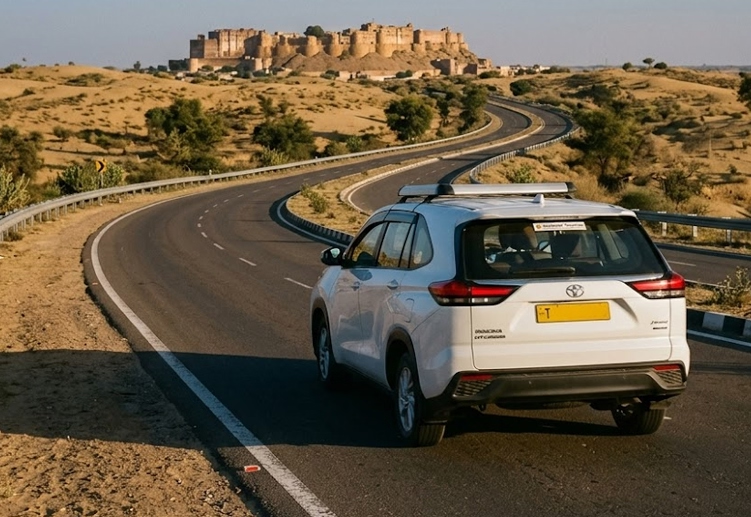
Plan the route in one logical direction and avoid unnecessary backtracking. Add Jaisalmer only when the total trip length gives it enough time. On desert or rural roads, try to reach the next hotel before late night. Our Rajasthan tour packages can be used as route examples when deciding how many cities fit comfortably.
Is a Driver Also Your Security Guard?
No. A responsible driver can help you avoid confusing transport situations, wait near the vehicle, coordinate hotel access and offer practical local advice. But you should not treat the driver as a licensed bodyguard, medical professional or police officer. Personal awareness still matters.
Likewise, a driver is not automatically a professional sightseeing guide. If you want detailed historical interpretation at the Taj Mahal, Amber Fort or major Delhi monuments, arrange a qualified local guide. Keeping roles clear prevents unrealistic expectations and reduces situations where one person is asked to do too much.
How Much Personal Information Should You Share?
The driver needs practical travel information: your name, pickup point, hotel, route and contact number. The operator may need additional booking details. But there is usually no reason to discuss how much cash you are carrying, the value of your jewelry, account balances or other sensitive personal information.
If a provider asks for a passport copy, ask why. Some hotels, permits or regulated services genuinely require identity information, but an unverified individual should not be collecting unnecessary documents. Send sensitive information only through a channel you trust and retain a record of what you provided.
Safe Payment Practices
A normal deposit can be reasonable because the operator is reserving a car and driver. The safety issue is not whether any advance is requested; it is whether the payment is traceable and tied to a clear booking. Before paying, obtain the total price, route, vehicle category, deposit amount, balance schedule and cancellation policy in writing.
Be cautious when the only option is an urgent transfer to an unrelated personal account, especially if the seller refuses to provide business details. Keep payment receipts and important messages until the trip is complete. If a card gateway or payment link is used, check that you are on the correct site rather than a lookalike page.
Online Booking Scams: Verify the Website Itself
India's cybercrime authorities have warned about fake websites, social pages and advertisements that impersonate tourist services and collect payments for cab or travel bookings. This is an important reminder that driver safety begins before any driver exists: you need to know that the website or WhatsApp account is connected to the company you intend to hire.
Type the company's official domain yourself when possible. Cross-check the phone number on more than one page. Be careful when a search advertisement sends you to a nearly identical domain. If you found a provider through social media, verify that the payment details match the business information you were given.
Red Flags Before the Trip
- No written quote: everything is promised only by a phone call.
- No identifiable operator: you cannot find a business name, address or responsible contact.
- No vehicle detail: the booking says only "best AC car."
- Unusually low price with vague extras: tolls, fuel, parking and driver allowance are unclear.
- Pressure for immediate full payment: especially to an account unrelated to the company name.
- Impossible itinerary: the provider promises extremely long drives and full sightseeing every day without concern.
- No backup process: nobody can explain what happens after a breakdown.
- Forced shopping language: "mandatory factory visit" or repeated commission stops.
- Driver details never supplied: even shortly before arrival.
- Vehicle downgrade at pickup: a much smaller or visibly poor vehicle appears without prior agreement.
Red Flags During the Trip
Some warning signs only become visible after travel starts. A driver who repeatedly drives aggressively after being asked to slow down, insists that you pay unexpected charges in cash, takes you to unrequested shops, changes hotels without permission, picks up unknown passengers or becomes angry when you contact the operator should not be treated as normal.
Small misunderstandings can happen, especially with language and timing. The key difference is whether the issue is corrected when you raise it. A professional driver should accept reasonable boundaries and a professional company should respond when a guest reports a real problem.
What to Do If You Do Not Feel Comfortable with the Driver
You do not need to prove that the driver has committed a serious offense before asking for a change. If communication is poor, driving style feels unsafe or boundaries are repeatedly ignored, contact the operator. Explain the specific issue and ask for another driver or vehicle.
If you feel immediately threatened, prioritize getting to a hotel, police station, toll plaza, fuel station or other populated location. Call 112 if necessary. Keep the operator's number separate from the driver's number so you are not forced to resolve everything through the same person who is causing concern.
A 60-Second Safety Check Before Every Long Drive
Before the car moves
- Everyone has a working seat belt.
- Large bags are secured and do not block passengers.
- You know the destination and approximate road time.
- Your phone has battery and the driver's number is saved.
- Water and essential medication are accessible.
- The planned arrival is not unreasonably late.
- The driver appears rested and ready for the road.
- You have enough flexibility that traffic does not require unsafe speed.
Emergency Contacts Travelers Should Save
| Contact | Number / action | Use |
|---|---|---|
| National emergency | 112 | Police, emergency assistance and urgent situations |
| Tourist helpline | 1363 / 1800-11-1363 | Tourist information and assistance in distress |
| Your operator | Save before arrival | Driver, vehicle, route or booking problems |
| Travel insurer | Policy emergency line | Medical care, claims and evacuation support |
| Hotel | Official hotel number | Verify arrival access and claims that a booking is closed |
| Embassy/consulate | Your government's local contact | Serious legal, passport or emergency assistance |
How to Share Your Trip Without Giving Up Privacy
Sharing information with a trusted person can improve safety without broadcasting your itinerary publicly. Send the booking confirmation, driver's first name and phone, vehicle registration, hotel list and major transfer days to one family member or friend. You can also share live location during a long road leg when mobile coverage allows.
Avoid posting real-time details on public social media that identify an empty home, exact hotel room or valuable equipment. Safety sharing should be targeted to people who need the information.
Why the Cheapest Driver Is Not Automatically the Safest—or the Most Dangerous
Price alone is a weak safety signal. A low quote may come from a small, efficient local operator with excellent service. A high quote may come from a large agency with poor communication. What matters is what the price includes and whether the provider behaves professionally.
Compare the same itinerary, vehicle category and inclusions. Ask about driving hours, replacement policy and driver experience. The goal is not to buy the most expensive chauffeur. It is to avoid a booking where the low headline price depends on an old vehicle, exhausted driver, hidden charges or commission shopping.
How Recent Reviews Help—and Their Limits
Reviews are valuable when you read them for operational details. Look for repeated mentions of safe driving, clean cars, punctual airport pickups, clear English communication, flexibility and absence of unwanted shopping. One five-star sentence saying "great service" tells you less than a detailed review describing a ten-day route.
Also read lower-rated reviews. A professional company can have occasional problems; what matters is whether the pattern shows repeated vehicle substitutions, money disputes, unsafe driving or ignored complaints. Check more than one platform when possible.
Questions to Ask Your Driver on Day One
- What time should we leave tomorrow to avoid the worst traffic?
- How long is the next intercity drive realistically?
- Where do you recommend stopping for a clean restroom?
- How should I contact you when you are parked away from the monument?
- If we change the route, should I confirm the extra cost with the office first?
- Do you prefer that I tell you directly if I want slower driving or more breaks?
- Is the same driver and car planned for the entire route?
Those questions establish a cooperative relationship without giving the driver control over decisions that belong to you.
When You Do Not Need a Private Driver
Safety does not require hiring a private car for every day in India. If you are staying in central Delhi for several days and your activities are well served by the metro and reputable app taxis, a full-time car may add little. In Mumbai, Bengaluru and other large cities, heavy traffic can also make rail or metro useful for certain journeys.
A private driver becomes most valuable when the trip involves luggage, airport arrival, several hotels, day trips or connected road cities. Use the tool where it solves a real problem. A mixed itinerary can combine flights, trains, metro, app taxis and a private driver.
Final Booking Checklist
Frequently Asked Questions
Is it safe to hire a private driver in India?
Yes, it can be a safe and practical way to travel when the driver, vehicle and operator are verified in advance. Use a reputable company, get written booking details, confirm the assigned driver and vehicle, wear seat belts and avoid unnecessarily long or late-night road journeys.
How do I know if a private driver in India is trustworthy?
Check recent independent reviews, obtain the company name and contact details, ask for the driver name and phone number before pickup, confirm the vehicle registration, keep written itinerary and payment records, and make sure there is an operator or office contact you can reach if something changes.
Should I send my passport copy to a driver or car company?
Only provide identity information when it is genuinely required for a booking, permit, hotel or regulated travel purpose. Ask why it is needed and how it will be used. Avoid sending unnecessary personal documents to an unverified individual.
Is it safe for a woman to travel with a private driver in India?
Many women use pre-booked private transport in India, but extra precautions are sensible. Choose a reputable operator, share the itinerary and driver details with someone you trust, keep live location available when practical, avoid isolated late-night stops and contact the company immediately if the driver ignores boundaries or makes you uncomfortable.
Is it safe to travel by car at night in India?
For most tourist road trips, daytime intercity travel is the better plan. Visibility can be poorer at night and fatigue, road conditions, animals and mixed traffic can increase risk. Late airport transfers may be unavoidable, but long rural or highway drives should generally be scheduled during daylight where practical.
Should I wear a seat belt in the back seat in India?
Yes. Use a seat belt in every seating position where one is fitted. Before a multi-day trip, confirm that rear seat belts are present and functional and do not accept luggage or seat arrangements that prevent passengers from using them properly.
What should I check on the car before starting the trip?
Check that the vehicle matches the booked category, looks roadworthy, has working seat belts and air-conditioning, has enough luggage space, and that the registration number matches the details you were given. For a long trip, also ask the operator about insurance, commercial authorization and backup support.
How can I make an airport pickup safer?
Pre-book the pickup, exchange flight details, obtain the driver name and phone number, confirm a clear meeting point and verify the vehicle registration before leaving. If somebody approaches you claiming your hotel is closed or your booked driver is unavailable, contact your original operator or hotel directly before changing plans.
What are common private-driver scams in India?
Common problems are more often financial or commercial than physical: vague extra charges, being taken to commission shops, claims that a hotel or monument is closed, pressure to change the itinerary, inflated parking or toll requests, or a last-minute vehicle downgrade. Written terms and direct verification prevent many of these problems.
Should I use the same driver for a multi-day India road trip?
Using one verified driver can improve continuity because the driver learns your schedule, luggage and preferences. Confirm whether the same driver is intended to stay with you throughout and what happens if a replacement is required due to illness, rest or vehicle issues.
What should I do if my driver is speeding or driving unsafely?
Ask the driver clearly to slow down or stop using the phone while driving. If the behavior continues, contact the operator and request a change. Do not let a tight itinerary pressure the driver into unsafe speed or excessively long hours.
What emergency numbers should travelers save in India?
India uses 112 as the national emergency number, and the Ministry of Tourism tourist helpline is 1363 or 1800-11-1363. Save your hotel, operator, insurer and embassy or consulate contacts as well.
Is a private driver safer than self-driving in India?
For many international visitors, hiring a local professional driver is easier because the driver is familiar with local traffic patterns, road behavior, parking and routing. Self-driving requires appropriate licensing, insurance and confidence in a road environment that may be very different from home.
Can a driver also be my tour guide?
A driver can help with transport, practical timing and everyday local information, but that is not the same as a licensed or specialist sightseeing guide. At major monuments, book a qualified local guide separately if detailed history and interpretation are important to you.
How much deposit is safe to pay before the trip?
There is no single correct percentage. Pay only after receiving a written itinerary, vehicle category, total price, cancellation terms and business contact details. Prefer a traceable payment method and be cautious about pressure to send the entire amount immediately to an unverified personal account.
What is the biggest safety mistake tourists make when hiring a driver in India?
The biggest mistake is treating a low price as proof of a good booking. Safety depends more on verification, realistic driving hours, a suitable vehicle, seat belts, transparent communication, documented terms and access to support if something goes wrong.
Final Safety Advice for International Travelers
Hiring a private driver in India can be a very good way to travel safely and comfortably, especially on routes where the alternative is a series of station transfers, street taxis and repeated luggage handling. The safest booking is not defined by a luxury badge or the highest price. It is defined by accountability: you know who is responsible for the service, which car will arrive, who the driver is, what the route costs and who will help if something changes.
Once the trip starts, treat road safety as seriously as personal security. Wear the seat belt, keep long drives in daylight where practical, allow rest, avoid pressuring the driver to speed and challenge unsafe behavior early. Maintain control of your hotel bookings, payments and sightseeing choices so a driver remains what you hired them to be: a professional transport partner.
If you are planning Delhi, Agra, Jaipur, Rajasthan or a longer North India route, Hire Private Driver India can prepare a private car-and-driver plan based on your dates, luggage, route and preferred vehicle. You can also review our complete hiring guide and private-driver cost guide before requesting a quote.
Plan a Safer Private Driver Trip in India
Send your travel dates, arrival city, route, passenger count and luggage details. We can recommend a suitable vehicle and a realistic road itinerary for your private India journey.
Request Your Private Driver Quote