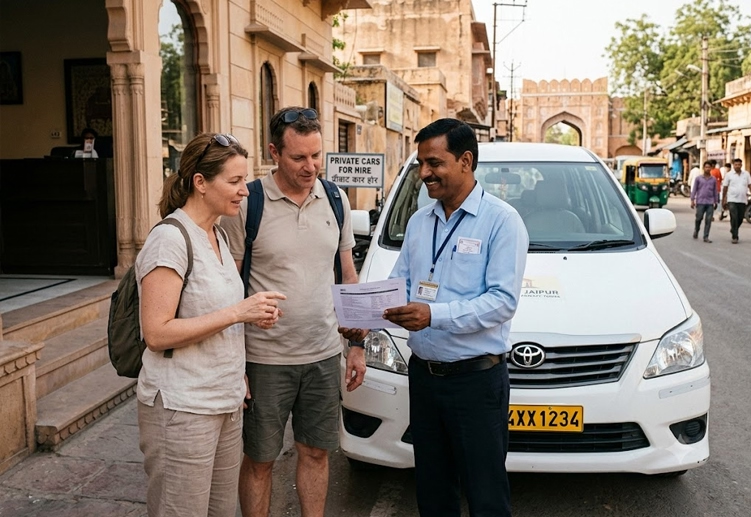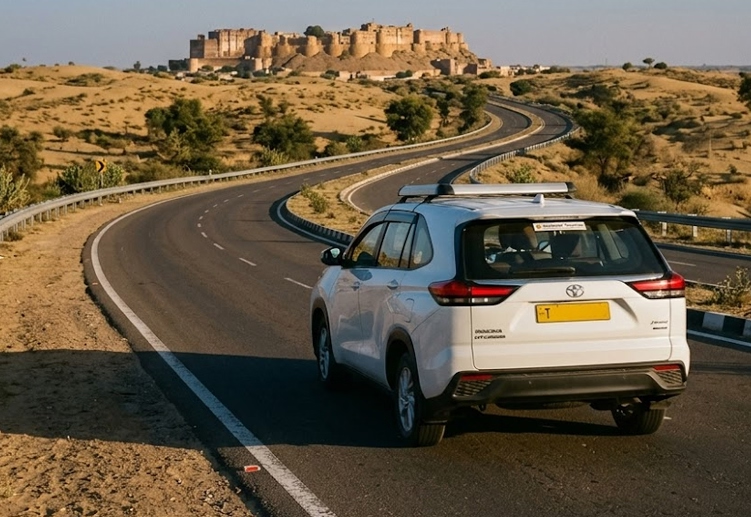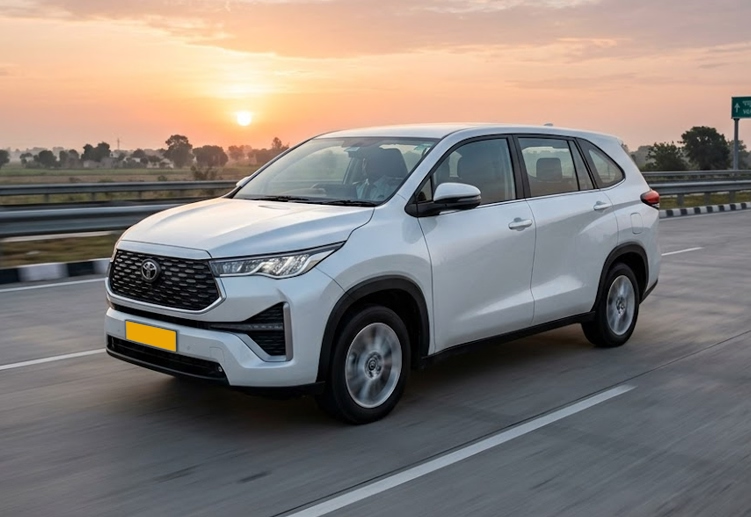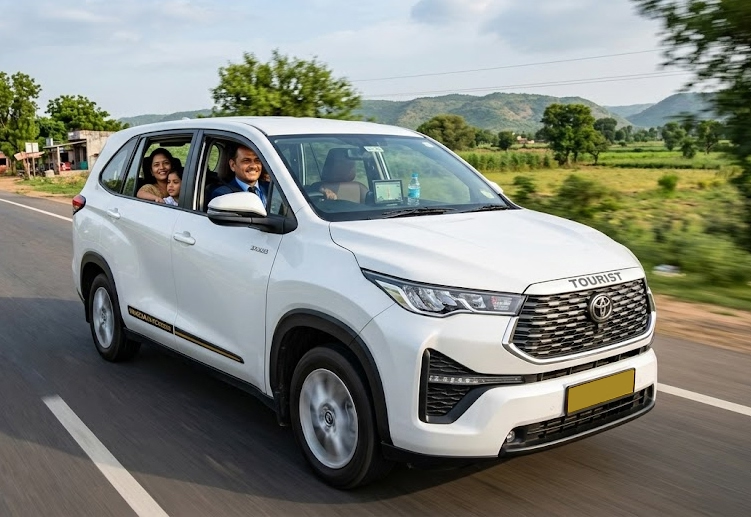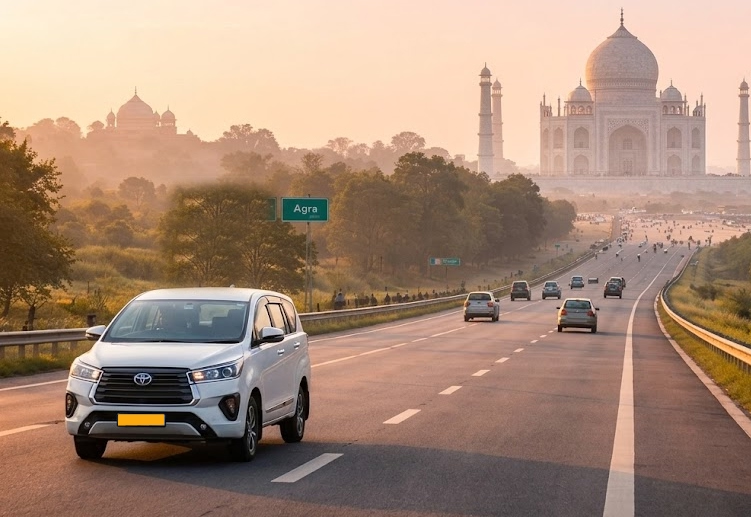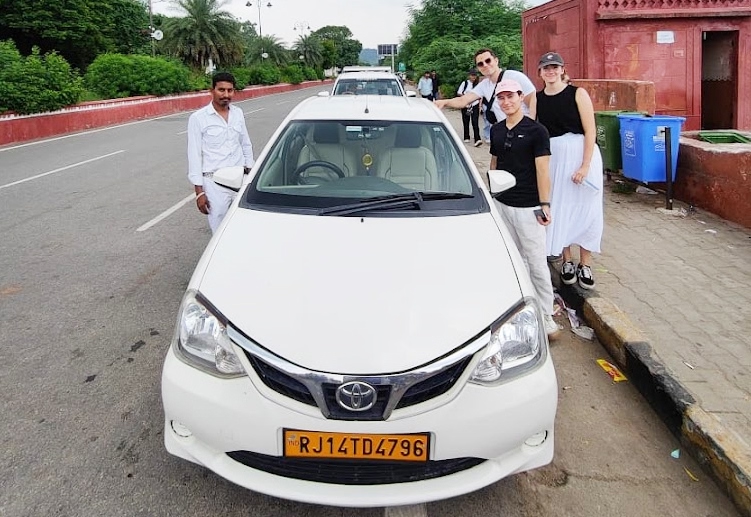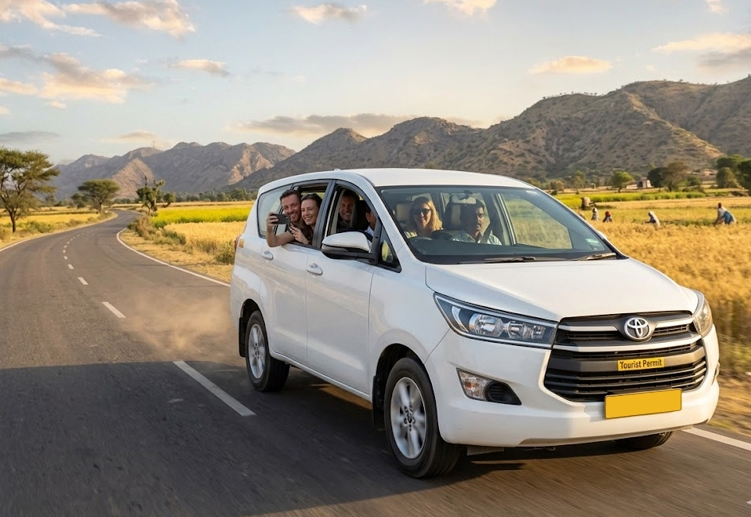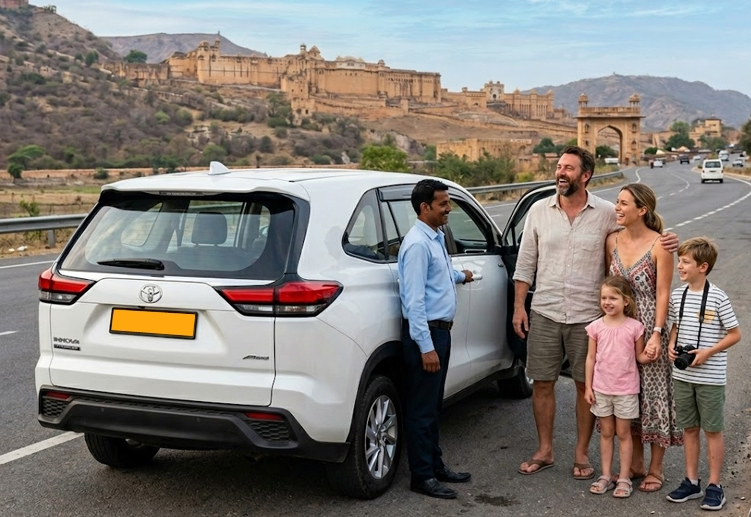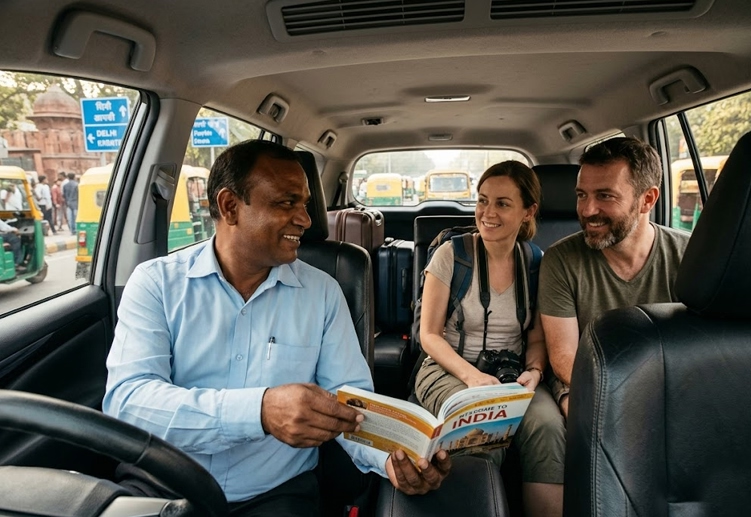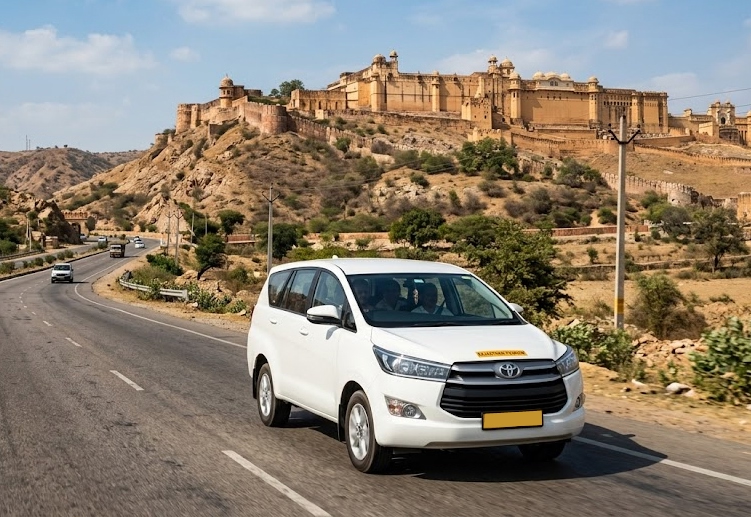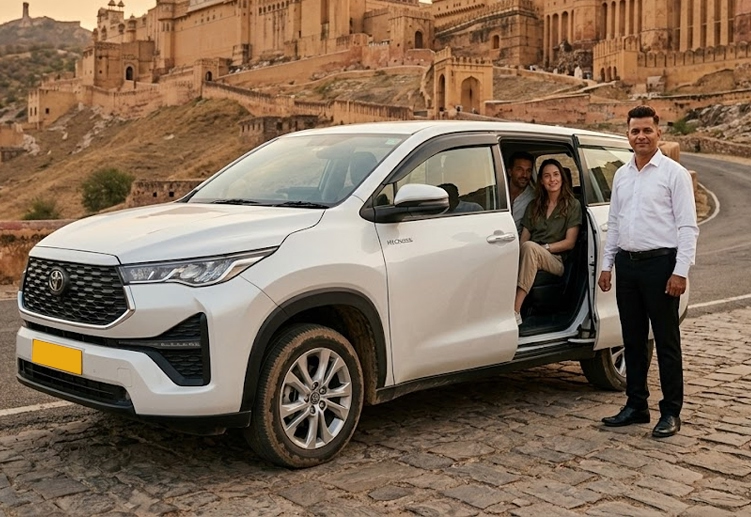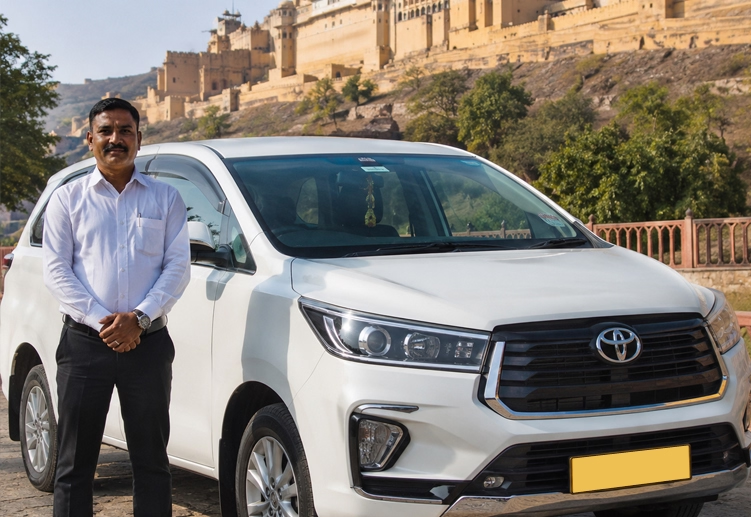


For most tourists, a taxi is best for a simple one-way city ride, while a private car with driver is usually better for full-day sightseeing, airport-plus-sightseeing plans, intercity routes and multi-day India tours. The important point is that these are not really competing versions of the same service. A taxi is designed to take you from A to B. A private driver is designed to stay with your travel plan for a defined block of time, often using the same vehicle for several stops, cities or days.
That difference affects almost everything: price, waiting time, luggage handling, flexibility, safety checks, driver continuity, route knowledge and how much planning you need to do during the trip. If you are spending three days in Delhi and only need a ride from your hotel to a restaurant, a dedicated chauffeur can be unnecessary. If you are traveling Delhi-Agra-Jaipur with suitcases, sightseeing stops and changing hotels, repeatedly arranging taxis can quickly become the more tiring option even when each individual fare looks cheaper.
This guide compares private drivers in India, local taxis, app-based cabs and pre-booked transfers from a tourist's point of view. The goal is not to declare one option the winner in every situation. It is to show exactly where each one works best so you can build a transport plan that is comfortable, safe and cost-efficient.
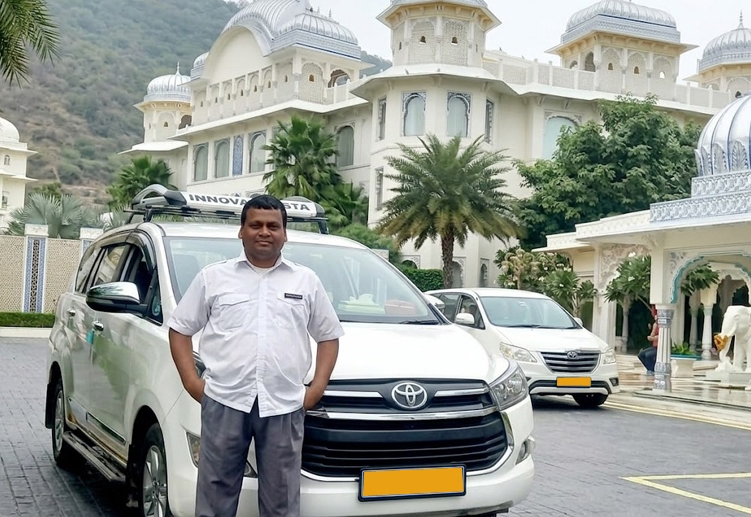
Private Driver vs Taxi in India: The Biggest Difference
A taxi is normally a single transport transaction. You request a pickup, travel to a destination and the ride ends. Even when you book a rental or outstation taxi, the commercial model is usually built around a specific package, time allowance or route. A private-driver booking is broader. The car and driver are reserved for your itinerary, which may include hotel pickups, monuments, restaurants, photo stops, villages, intercity highways and final hotel drops.
For a tourist, this changes the experience from booking transport repeatedly to having transport available as part of the trip. Neither model is automatically superior. The taxi model is efficient when your travel need is simple. The private-driver model becomes useful when the transport itself has to adapt to the day.
| Travel need | Taxi / app cab | Private driver |
|---|---|---|
| 5-10 km city ride | Usually the better fit | Often unnecessary |
| Airport to hotel | Very practical | Better when pre-arrival coordination matters |
| Full-day sightseeing | Possible, but repeated rides can be inconvenient | Usually easier |
| Several monuments plus lunch and shopping | Requires multiple bookings or a rental package | Natural use case |
| Delhi-Agra-Jaipur | Possible as separate outstation rides | Usually more convenient |
| 10-14 day road trip | High coordination | Strongest use case |
| Spontaneous city evening | Excellent | Use only if already booked |
When a Taxi Is Clearly the Better Choice
Taxis are excellent when you need movement rather than a travel companion for the day. If your hotel is in central Mumbai and you want to go to a restaurant, museum or shopping district, booking a car only for that ride avoids paying for hours in which you do not need a vehicle. The same logic applies when you are staying in one neighborhood and most of your day is walkable.
App-based cabs can also be useful because the booking creates a digital record of the driver, vehicle and route. In large cities, this can remove the need to negotiate a street fare. However, availability, pickup zones, surge pricing, cancellations and payment options can vary, so tourists should treat apps as a practical tool rather than a guarantee that a car will always appear immediately.
Taxi usually wins when:
- You need one short ride within a major city.
- You are traveling light and do not need luggage stored during sightseeing.
- You have a flexible schedule and can wait for a new car.
- You do not need the same driver to return later.
- Your hotel, restaurant or attraction is easy for taxis to reach.
- You want to pay only for actual journeys rather than reserve a car for the day.
When a Private Driver Is Clearly the Better Choice
A private driver becomes more valuable as soon as your itinerary has moving parts. Imagine a day in Jaipur with an early pickup, Amber Fort, a photo stop at Jal Mahal, City Palace, lunch, a textile workshop that you actually chose, and then dinner near your hotel. With a dedicated car, your bags, water and small purchases remain in one place and you do not spend time requesting a new ride at every stop.
The advantage becomes even stronger on intercity travel. If you are doing Delhi, Agra and Jaipur, the driver handles hotel-to-hotel transfers as well as the road between the cities. There is no need to coordinate a separate local taxi to the station, another vehicle after arrival, and then new sightseeing transport. For first-time visitors, families and travelers with several suitcases, reducing those handovers can be worth more than a small difference in price.
If you want to understand the booking process in detail, see our guide on how to hire a private driver in India.
Cost: Do Not Compare a Taxi Fare With a Full-Day Chauffeur Rate
The most common comparison mistake is looking at a ₹300 or ₹500 city taxi ride and placing it beside a multi-thousand-rupee private-car day rate. They buy different things. A taxi fare pays for one ride. A private-driver quote may include the vehicle, driver, fuel, a daily distance allowance, waiting during sightseeing and sometimes tolls, parking, interstate charges and driver expenses depending on the operator.
For one short journey, the taxi will normally be cheaper. For a day containing five or six separate rides, the arithmetic changes. You also need to value waiting time, the possibility of surge pricing, repeated pickups, the chance of cancellations and the fact that a new vehicle may arrive each time. That does not mean a private driver is always cheaper; it means the correct comparison is the whole day or route, not one isolated fare.
What Does a Private Driver Cost in India?
There is no single nationwide rate because prices change by vehicle, city, route, duration, season and what the operator includes. A sedan on an easy regional route costs less than an Innova Crysta on a long Rajasthan circuit, and a premium vehicle costs more again. Some companies quote a daily package; others use kilometres plus driver allowance and route charges.
Rather than relying on a single headline price, ask for an itemized written quote. Our dedicated private driver cost guide for India explains vehicle rates, daily budgets, tolls, parking, driver allowance, interstate taxes and the questions to ask before you pay a deposit.
Taxi Pricing in India: Why the Cheapest Number Can Change
Taxi pricing depends on the service. Traditional taxis may use meters, negotiated rates or fixed counters. App-based services calculate fares digitally but can apply dynamic pricing based on demand, location and time. Airport taxi systems may have their own queues or prepaid arrangements. Outstation services commonly use route, distance and minimum billing rules.
For tourists, the practical lesson is to look at the final payable structure rather than the advertised starting fare. Confirm tolls, airport fees, parking, state taxes, waiting time and extra kilometres. If you are booking a taxi for several hours, take screenshots of the package and terms before the ride begins so you can compare them with the final bill.
Safety: Which Option Is Safer?
Neither a taxi nor a private driver is safe simply because of the category. A reputable taxi booked through a tracked app can be safer than an unverified person offering a cheap "private driver" deal at an airport. Equally, a well-reviewed operator providing a known driver and vehicle for a week can offer more continuity than entering a different taxi several times a day.
For both options, confirm the car registration, use seat belts, share your trip details when useful and avoid accepting transport from strangers who pressure you to change plans. Official travel advice for India commonly recommends reliable or pre-arranged transport and extra caution with street-hailed taxis, especially at night. If safety is a major concern, read our complete guide: Is it safe to hire a private driver in India?
- Verified pre-booked transport with clear company and vehicle details.
- Tracked app-based taxi or official prepaid airport taxi.
- Hotel-arranged transport with a known booking record.
- Unsolicited street offers only when you understand the local system and can verify the service.
Driver Continuity: An Underrated Advantage
With taxis, each ride may involve a different person, vehicle and communication style. That is not a problem for short trips. On a complex itinerary, however, repeatedly explaining hotel names, luggage needs, pickup timings and route preferences becomes work. A dedicated driver removes much of that repetition.
After the first day, a good driver knows whether you prefer early starts, how much luggage you have, whether you need frequent breaks and which hotel entrance you are using. That familiarity can make a long trip feel more organized. The trade-off is that you are spending many hours with the same person, so booking a professional driver with appropriate boundaries and an operator behind them matters.
Luggage: Private Drivers Have a Big Practical Advantage
Luggage is one of the strongest reasons to use a dedicated car on a touring itinerary. With a taxi, every hotel change means loading and unloading all bags. If the next car is smaller than expected, you may have a problem. With a private vehicle, you can choose the category around your passenger and luggage count before the trip starts.
Do not assume that a four-passenger vehicle is suitable for four passengers plus four large international suitcases. Boot space varies. For couples with several bags, families, photographers or travelers carrying mobility equipment, an Innova-class vehicle may be more comfortable even if a sedan technically has enough seats.
Airport Transfers: Taxi or Private Pickup?
At major Indian airports, app taxis and official taxi services can be perfectly practical. If you arrive in daylight, know where the pickup zone is and have mobile data working, booking after landing can be simple. A pre-booked private pickup becomes more attractive when your flight lands late, you are traveling with children or seniors, you have several bags, or you simply want a named driver waiting for your flight.
For a first trip to India, reducing decisions during the first hour after a long international flight can be valuable. Send the flight number, confirm the meeting point and save both the driver's number and the operator's number. If a stranger says your hotel or booked driver is unavailable, verify that claim directly before changing plans.
City Sightseeing: One Car for the Day vs Repeated Taxis
For a single attraction, a taxi is efficient. For a full sightseeing day, the balance shifts. Tourism days rarely run like a commuter trip. You may spend 45 minutes at one place and three hours at another. You may want to stop for coffee, change the order because a monument closes, or return to the hotel briefly.
A full-day private car handles those variations naturally. Repeated taxis can still work, especially in metros with strong app coverage, but every new booking introduces waiting and coordination. The decision comes down to how tightly packed your day is and how much you value having the car available.
Delhi: Taxi or Private Driver?
Delhi is large, traffic conditions vary dramatically by time and district, and major visitor sites are spread across Old Delhi, New Delhi and South Delhi. If you only need hotel-to-restaurant or airport-to-hotel transfers, app taxis are usually convenient. If you want to combine Jama Masjid, Raj Ghat, India Gate, Humayun's Tomb, Qutub Minar and other sights in one day, a dedicated car reduces repeated pickups and keeps the schedule together.
See our Delhi destination guide if you are planning a city stop before a longer road trip.
Agra: Taxi or Private Driver?
Agra is different because many visitors arrive for the Taj Mahal, Agra Fort and perhaps Mehtab Bagh before continuing onward. If you arrive by train and leave the same day, a local taxi can work. If Agra is one stage of a Delhi-Agra-Jaipur road trip, keeping the same private car is far easier because your luggage remains with the vehicle and you do not have to organize another intercity transfer after sightseeing.
Our Agra travel page can help you connect the transport decision with your sightseeing plan.
Jaipur: Taxi or Private Driver?
Jaipur's main sights are spread between the old city and areas such as Amber. A taxi is fine for an individual ride, but a day that includes Amber Fort, Jal Mahal, City Palace, Jantar Mantar and hotel transfers is usually smoother with one car. This is especially true in hot weather when waiting outside for another vehicle after each attraction is less appealing.
For route ideas, see our Jaipur destination guide.
Golden Triangle: Private Driver Usually Wins
The Golden Triangle is where the difference becomes clearest. Delhi, Agra and Jaipur are connected by road, but the trip is not merely three transfers. Most itineraries mix city sightseeing, hotel check-ins, monument visits, lunch stops and sometimes places such as Fatehpur Sikri between Agra and Jaipur. A dedicated car turns all of those movements into one continuous plan.
You can certainly combine trains and local taxis, and that may suit travelers who enjoy rail journeys. But if your priority is door-to-door convenience and keeping luggage with you, a private driver is difficult to beat. Explore our Golden Triangle tour options for examples of how the route can be structured.
Rajasthan Road Trips: Why Taxis Become Harder to Manage
Rajasthan itineraries often include Jaipur, Pushkar, Jodhpur, Udaipur, Jaisalmer and smaller stops that do not all function like major metro taxi markets. Even where taxis are easy to find, arranging a new outstation vehicle for every leg creates negotiation and timing work. A private car is more consistent for long loops and lets you stop at stepwells, villages, viewpoints or roadside restaurants without beginning a new booking.
For a multi-city Rajasthan route, look at our Rajasthan tour packages and Pushkar guide for planning ideas.
Solo Travelers: A Hybrid Strategy Often Works Best
Solo travelers feel the cost difference most because nobody is sharing the private-car price. For a week entirely inside Delhi or Mumbai, app taxis can keep transport spending much lower. But a solo traveler doing several road-trip days may still value the convenience and predictable logistics of one driver.
A smart compromise is to use taxis for free days in major cities and hire a private driver only for the intensive route sections. This preserves flexibility without paying for a dedicated car when you plan to spend most of the day walking, in a museum or relaxing at the hotel.
Couples: Comfort Often Matters More Than the Smallest Fare
For two people, a private sedan can offer a good balance of price and convenience. Couples usually have enough luggage that repeated taxi changes become noticeable, but not so much that they need a large group vehicle. If the itinerary is road-heavy, the ability to leave the hotel at your chosen time and stop for photos or meals can be worth the premium.
For a city break with long restaurant dinners and only one attraction per day, taxis make more sense. Again, match the service to the day rather than forcing one transport style across the entire holiday.
Families With Children: Private Car Usually Wins
Families benefit from continuity. Snacks, water, jackets and small travel items can remain in the vehicle during a sightseeing day. Parents do not have to move children and bags between multiple cars, and stops for toilets or meals are easier to make. The ability to select a larger vehicle before the trip is also important.
Ask specifically about working rear seat belts and any child-seat needs. Do not assume a particular child restraint will be available unless the operator confirms it. If bringing your own, verify that the vehicle can accommodate it properly.
Senior Travelers: Fewer Transfers, More Control
For older travelers, repeated getting in and out of taxis can be tiring. A private vehicle reduces transfers and allows the day to slow down. You can leave later, add rest stops, return to the hotel early or skip a monument without reorganizing transport.
Vehicle choice matters more than it does for young backpackers. Easy entry, legroom, air conditioning and luggage space can justify choosing a larger MPV or SUV class rather than the cheapest sedan.
Women Travelers: Compare Accountability, Not Just Price
Women traveling alone or in small groups should evaluate how easy it is to identify the driver, share the trip, reach the operator and change plans if something feels wrong. App taxis create a digital trip record and often provide sharing features. A reputable private-driver company offers a different kind of accountability: a known operator, pre-arranged vehicle and continuity over the itinerary.
Whichever you choose, avoid unnecessary late-night road travel, verify the registration before entering, share travel details with someone you trust when appropriate and speak up immediately if the route or driver behavior makes you uncomfortable.
Communication: A Dedicated Driver Has an Edge
A private driver who regularly works with international visitors often becomes familiar with the practical vocabulary tourists need: hotel entrance, monument gate, luggage, rest stop, airport terminal and timing changes. That does not make the driver a licensed guide, but it can reduce misunderstandings on the road.
With taxis, communication varies each ride. Apps reduce the amount of conversation needed because the destination is entered digitally, which is a major advantage. For complex sightseeing days, however, a driver who already understands the itinerary can save time.
A Driver Is Not Automatically a Tour Guide
This distinction matters. A professional private driver should drive safely, manage the agreed route, keep the vehicle clean and coordinate pickups. Detailed historical interpretation at monuments is a different service. If you want expert commentary inside sites such as the Taj Mahal, Amber Fort or major Delhi monuments, hire an appropriate local guide rather than expecting the driver to perform both jobs.
Many travelers enjoy a combination: one private driver for the road journey and specialist guides only in the cities where they want deeper context.
Flexibility: Where a Private Driver Earns the Premium
Travel plans change. You wake up late. A monument is more interesting than expected. You want an unscheduled coffee. The weather turns bad. With a dedicated car, small changes are often easy because the driver is already part of the day. With taxis, each new stop can require a new booking or waiting-time negotiation.
Flexibility is not unlimited. Long detours, extra cities, large mileage changes or late-night extensions can increase the charge. A professional operator should explain those limits before the trip so “flexibility” does not become a surprise bill.
Waiting Time: The Hidden Factor Most Comparisons Ignore
Tourists spend a surprising amount of time not moving. You may spend two hours at a fort, ninety minutes at lunch and another hour shopping. A taxi is efficient because you do not pay for a driver to sit outside—provided another taxi is easy to get when you finish. A private driver is efficient because the car is already there when you are ready.
Which type of efficiency matters more depends on location. In a dense city center with strong app coverage, booking again may take minutes. At a remote monument, hotel outside town or late-evening event, guaranteed availability can be far more valuable.
Cancellations and Availability
Ride-hailing services depend on nearby drivers accepting the trip. During rain, peak hours, holidays, very early mornings or long-distance requests, the experience can be less predictable. Drivers may also prefer particular destinations. This does not make apps unreliable overall, but tourists should build time buffers around flights and trains.
A confirmed private transfer should provide stronger commitment because the vehicle is assigned in advance. The quality of that commitment still depends on the operator, so ask for the driver's details and a backup contact rather than relying on a generic booking message.
Remote Places and Small Towns
Taxi apps are strongest where there is a large pool of active drivers. That is usually major cities. Smaller towns, rural attractions and highway stops may have fewer options. Even if you can get a taxi to a remote place, finding another one for the return can be the harder part.
A private driver solves the return problem because the same car waits or meets you at the agreed time. For routes involving wildlife areas, heritage villages, countryside hotels or long stretches between cities, that continuity is often more important than the per-kilometre price.
Night Travel: Neither Option Makes an Unsafe Plan Good
Long overnight road journeys should not be chosen simply because a driver is available. Road risk changes with fatigue, visibility, fog, animals, heavy vehicles and local conditions. Where practical, schedule intercity travel during daylight and use night driving mainly for necessary airport or station transfers.
If a late transfer is unavoidable, a pre-booked known vehicle can reduce pickup uncertainty. But the fundamental safety decision is still the itinerary: a rested driver in a roadworthy vehicle and a realistic schedule matter more than whether the booking is called a taxi or chauffeur service.
Vehicle Quality: Taxi Variety vs Pre-Selected Category
With an on-demand taxi, the exact vehicle condition and luggage capacity are not always known until it arrives. For short trips, this is rarely a major problem. For a ten-day road trip, it can be. A private-driver booking lets you specify a sedan, Innova-class vehicle, larger van or premium category in advance.
Ask whether the vehicle shown in photos is guaranteed or only representative. Confirm air conditioning, rear seat belts, approximate age and luggage capacity. The best operators will answer clearly instead of hiding behind a vague phrase such as “similar car.”
Scams and Unwanted Commission Stops
Transport scams are often less dramatic than travelers imagine. The more common problem is commercial pressure: a driver claims your chosen shop is closed, recommends a “government” store, redirects you to a hotel that pays commission or adds vague charges for tolls and parking. These issues can happen with any informal transport arrangement.
Written bookings reduce ambiguity. State in advance that shopping stops are optional and that itinerary changes require your approval. If a driver claims a hotel or attraction is closed, verify directly with the business or an official source before changing plans.
Payment: Apps Are Simple, Private Bookings Need Clear Terms
One advantage of ride-hailing apps is the standardized booking flow. Fare estimates and trip records appear digitally, though payment methods and final charges can still vary. Private-driver bookings require more judgment because you may be paying a deposit to a travel company or operator before arrival.
Keep the quote, payment receipt and final confirmation in one email or WhatsApp thread. Confirm the balance method and currency. Avoid sending a large payment to an unverified personal account simply because someone offers a dramatic discount.
How to Compare Two Private Driver Quotes Fairly
Compare the complete package, not the headline total
- Exact vehicle category and passenger/luggage capacity.
- Number of days and expected daily driving hours.
- Included kilometres and extra-kilometre rate.
- Fuel and driver allowance.
- Tolls, parking and interstate taxes.
- Airport or night charges if applicable.
- Driver accommodation or overnight allowance.
- Cancellation and itinerary-change terms.
- Whether the same driver is expected for the whole route.
- Backup support if the vehicle breaks down.
How to Compare Taxi and Private Driver Costs for One Day
Build a mini transport plan. List the hotel pickup, every attraction, lunch area, shopping stop and return. Estimate how many separate rides you would need and whether any of them fall in peak hours. Then add the value of waiting and the risk that your next vehicle may be smaller or farther away than expected.
Now compare that with a full-day car quote. If the taxi total is much lower and availability is strong, use taxis. If the difference is modest and the day has many stops, the private car may offer better value even before you put a price on convenience.
The Best Hybrid Strategy for a Two-Week India Trip
You do not need to choose one system for the entire holiday. A strong itinerary often combines them. Use a pre-booked private car for the road-trip section—such as Delhi to Agra to Jaipur and onward through Rajasthan—then release the car when you reach a city where you plan to stay several days with little driving.
During those slower city days, use app taxis, hotel cars, metro systems or walking as appropriate. If you then start another regional circuit, hire a new private car. This approach prevents you from paying for a dedicated vehicle on days when you barely need one.
Red Flags When Booking a Private Driver
- No clear company identity or responsible contact.
- Pressure to pay the full amount immediately.
- No written itinerary or price inclusions.
- Refusal to discuss vehicle category or luggage capacity.
- Very low quote that becomes vague when you ask about tolls and parking.
- Claims that shopping is “compulsory” or part of sightseeing.
- No backup plan for breakdowns or driver illness.
- Repeated requests to move communication away from the original booking channel without explanation.
Red Flags When Taking a Taxi
- The registration does not match the app or booking details.
- The driver asks you to cancel the app ride and travel privately without a clear reason.
- A stranger intercepts you before you reach the official airport pickup area.
- The driver refuses a meter or agreed fare where one should apply.
- You are asked to pay unexplained tolls or extra kilometres.
- The route changes substantially without explanation.
- The vehicle appears unsafe or working seat belts are unavailable.
Questions to Ask Before Hiring a Private Driver
- Will the same driver stay with us throughout the route?
- Which exact vehicle category is included?
- How many large suitcases will fit without using passenger seats?
- Are fuel, tolls, parking and interstate taxes included?
- Is there a daily kilometre or hour limit?
- What are the charges for extra kilometres or late use?
- Who pays the driver's meals and accommodation?
- When will I receive the driver and vehicle details?
- Who do I contact if the car breaks down?
- Can I add or remove sightseeing stops during the trip?
- What deposit is required and what is the cancellation policy?
A Simple Decision Formula
Choose a taxi if most of these are true:
- You are staying in one major city.
- You need only one or two rides per day.
- You are traveling with light luggage.
- You are comfortable using apps and mobile data.
- Your destinations are in busy, easy-to-reach areas.
- Your schedule can tolerate occasional waiting or cancellation.
Choose a private driver if most of these are true:
- You have several sightseeing stops in one day.
- You are changing hotels or cities frequently.
- You have large luggage or family equipment.
- You want one consistent driver and vehicle.
- You plan to visit remote attractions or smaller towns.
- You value door-to-door convenience more than the absolute lowest fare.
Which Is Better for First-Time Visitors to India?
For first-time visitors doing a classic North India circuit, a private car and driver is usually the easier introduction. It removes several layers of logistics at once and gives you continuity while you learn how the country works. You can still use taxis during free evenings or in cities where you do not need the dedicated car.
Experienced visitors may prefer a more mixed approach because they already know which journeys are easy to arrange locally. The “best” choice therefore changes with familiarity, not only with budget.
Which Is Better for Budget Travelers?
If minimizing cost is the top priority, taxis and public transport will usually beat a dedicated chauffeur in large cities. Use metros where practical, walk between nearby sights and book taxis only for the gaps. A private driver makes most sense when the itinerary would otherwise require many separate paid rides or when several passengers can share the daily cost.
Budget travel does not mean choosing the cheapest unknown ride. Keep the same verification standards regardless of price.
Which Is Better for Luxury Travelers?
Luxury travelers usually benefit more from a private chauffeur because the service can be matched to a premium vehicle, punctual airport assistance, flexible dining schedules and multi-city hotel transfers. The value is consistency rather than speed. You know which vehicle will arrive and can request a standard that would be difficult to guarantee through on-demand taxis.
If you want a broader overview of vehicle choices, visit our car rental with driver page.
The Real Tourist Cost: Fare, Time and Mental Effort
Tourists often compare transport only by the rupee amount shown on a screen, but that is not the full travel cost. A cheaper ride can still be a poor value if you spend twenty minutes locating the pickup point, another fifteen minutes waiting for a driver, and then repeat the same process six times in one sightseeing day. On the other hand, keeping a chauffeur waiting outside a museum for four hours makes little financial sense when your next journey is only a short city hop.
A better comparison uses three variables: money, time and coordination. Taxi apps can minimize direct cost when rides are short and supply is strong. A private driver can minimize coordination when the day contains many moving parts. International travelers should decide which resource is scarcer on a particular day. On a relaxed city day, money may matter more. On a tightly planned road-trip day, time and certainty may be more valuable.
Compare the complete tourist cost
- Fare: the amount you actually pay for all rides or the complete chauffeur package.
- Waiting: time spent finding pickup zones, requesting cars and waiting for acceptance.
- Coordination: how often you need to explain destinations, luggage, stops and timings.
- Risk buffer: extra time needed before trains, flights or timed monument entries.
- Comfort: whether your group and luggage fit properly every time.
- Continuity: the value of having one known vehicle and driver for a complicated route.
Private Driver vs Taxi for Train Station Transfers
Rail journeys are an important part of many India itineraries, and station transfers deserve their own plan. A taxi works well when you are traveling with one suitcase, the station is centrally located and your train departs at a comfortable hour. The situation changes when you have several bags, young children, senior travelers or a very early departure. In those cases, a confirmed pickup can reduce uncertainty and give you more control over departure time.
If you are arriving by train and starting a sightseeing day immediately, a private car can also save a hotel detour. The driver can meet you at an agreed point, store the luggage and continue to the first attraction. Always confirm the exact station name because large cities may have several major railway stations, and names that sound similar can be far apart.
What Happens When Your Sightseeing Day Runs Late?
India sightseeing days can expand unexpectedly. Security queues take longer, a monument deserves more time than planned, lunch becomes a long meal, or traffic slows the return journey. With taxis, a late finish usually means you simply request the next ride when you are ready. That is convenient when cars are available, but the final pickup may be harder during peak evening demand or from an attraction outside the city center.
With a private driver, the vehicle is already assigned, but you should understand the agreed working hours. Some bookings include a defined daily duration or kilometre limit, and late-night extensions may attract extra charges. A professional quote should explain this before the tour begins. Tourists should not expect unlimited waiting simply because the vehicle is described as “full day.”
For a long sightseeing day, confirm:
- Approximate pickup and return time.
- Daily kilometre or hour allowance.
- Extra-hour or late-night charges.
- Whether dinner waiting is included.
- How last-minute route changes are priced.
- Who to contact if the day finishes much later than expected.
A 7-Day Example: When Using Both Options Makes Sense
Consider a seven-day first-time itinerary with Delhi, Agra and Jaipur. On arrival day, a pre-booked airport transfer may be worth it because you are tired, carrying luggage and unfamiliar with the airport. The next day, a private car can handle a full Delhi sightseeing route. On a free evening, however, there is little reason to keep the same vehicle if you only want to travel from your hotel to dinner and back; a taxi or hotel-arranged car may be more economical.
For Delhi to Agra, Agra sightseeing, Fatehpur Sikri and onward travel to Jaipur, one private driver becomes highly practical because the itinerary combines hotels, luggage and intercity travel. In Jaipur, keep the car for a packed sightseeing day, then use a taxi on a final free afternoon if your plans are simple. This is the kind of hybrid strategy that can offer both convenience and sensible spending.
Common Mistakes Tourists Make When Choosing Between the Two
The first mistake is choosing one transport type for the entire holiday before looking at the itinerary day by day. The second is comparing a single taxi fare with a full-day private-car quote. The third is ignoring luggage. A vehicle that is comfortable for two passengers may become cramped once several large suitcases are added. Another mistake is assuming that a driver automatically acts as a tour guide, or that a low quote includes every toll, parking fee and state tax.
Tourists also sometimes over-plan the transport but under-plan the driver’s working day. Very long road sectors followed by late-night sightseeing are tiring for everyone and can create unnecessary safety risk. Build realistic travel times, keep intercity journeys mainly in daylight where practical, and allow breaks. The best transport arrangement is not the one that squeezes the most kilometres into a day; it is the one that keeps the trip comfortable and predictable.
- Choosing only by the lowest advertised price.
- Ignoring luggage capacity and rear-seat comfort.
- Assuming tolls, parking and taxes are automatically included.
- Planning repeated late-night intercity drives.
- Accepting a different vehicle without checking the registration and condition.
- Expecting unlimited changes without discussing extra kilometres or hours.
- Paying a large deposit before verifying the operator and written terms.
The Best Questions to Ask Yourself Before Every Travel Day
Instead of asking “Which is better in India?” ask a more useful question: “Which is better for tomorrow?” Look at how many rides you need, whether you are carrying all your luggage, how far the attractions are from one another, whether you have a flight or train deadline, and how easy it will be to find a return vehicle from the final stop. This produces a much more accurate answer than applying one rule to every city.
Use this five-minute transport check
- How many separate rides will we need today?
- Are we changing hotels or carrying full luggage?
- Do we have a fixed train, flight or entry time?
- Are any attractions outside strong taxi-app coverage?
- Will we want unscheduled photo, meal or rest stops?
- Would waiting for a new car create stress for children or seniors?
- Is the full-day private-car price close enough to the likely taxi total to justify the convenience?
Private Driver vs Taxi: Final Verdict
A taxi is the better tool for a ride. A private driver is the better tool for an itinerary. That one sentence explains most of the decision. If you are moving from your hotel to dinner, use a taxi. If you are spending the day crossing a city with five stops, carrying luggage between hotels or driving through several cities, reserve a dedicated car.
Do not turn the decision into a status question. A private driver is not automatically “luxury,” and a taxi is not automatically inconvenient. The right choice is the one that matches the structure of your day. Many of the best India trips use both.
Private Driver vs Taxi in India in 2026: What Has Actually Changed?
The basic choice has not changed: taxis remain excellent for short, simple journeys, while a private car with driver becomes more useful as an itinerary gets longer and more complicated. What has changed is the quality of digital booking. App-based services now make it easier to request a ride, see driver details, follow a route and share trip information. Some platforms also offer advance reservation features in selected cities. That makes taxis more useful for planned airport and city journeys than they were for many travelers a decade ago.
At the same time, digital convenience has not removed the limitations of an on-demand ride. A reserved or requested trip still depends on service availability, the correct pickup zone, an appropriate vehicle and a driver who can take the journey. For tourists traveling with large bags, children, older relatives or a sequence of hotel changes, continuity still has real value. The question in 2026 is therefore not whether apps have replaced private drivers. It is which service model fits the travel day you are actually planning.
Current official travel guidance for India continues to emphasize reliable transport, seat-belt use and caution with unnecessary night road travel. UK guidance notes that app-based taxis such as Uber and Ola are widely available and also points travelers toward prepaid airport taxis and hotel transfers. U.S. travel guidance recommends reliable cars and drivers and advises travelers using ride-hailing services to share trip information. For a tourist, the practical lesson is simple: choose transport that is identifiable, appropriate for the route and easy to verify.
The Most Accurate Way to Compare Taxi and Private-Driver Prices
Do not begin with the cheapest number visible on a taxi app. Start with the itinerary. Write down every movement you will realistically make during the day: hotel pickup, monument, lunch, second monument, shopping area, hotel return and perhaps dinner later. Then consider whether any of those journeys will happen during peak demand, whether waiting time matters and whether you will be carrying luggage between hotels.
Compare these items side by side
- Total expected taxi rides, not only the first fare.
- Peak-time or high-demand fare variation.
- Airport pickup or parking charges.
- Waiting time and additional stops.
- Tolls and interstate charges.
- Vehicle size required for passengers and luggage.
- Cost of a full-day or route-based private car.
- Extra kilometre or hour charges.
- Driver allowance or overnight expenses where applicable.
- Value of guaranteed availability between sightseeing stops.
If taxis remain dramatically cheaper and your destinations are easy to reach, use them. If the difference becomes modest after you add several rides, the private car may give better overall value. Cost efficiency is not about choosing the cheapest transport category; it is about avoiding payment for services you do not need while also avoiding repeated friction that wastes a valuable travel day.
Taxi Apps, Official Taxis and Street Taxis Are Not the Same Thing
The word taxi covers several different experiences in India. A ride booked through an app has a digital record and usually shows driver and vehicle information. An official prepaid airport taxi is arranged through a designated system. A hotel-arranged car has a hotel or operator behind the booking. A street-hailed taxi may depend more heavily on local fare knowledge and direct negotiation.
Tourists should distinguish between these categories rather than treating every taxi as identical. App and prepaid systems are easier for first-time visitors because the booking is documented. Street taxis can be perfectly legitimate, but they require more confidence about price, destination and local procedure. Foreign travel advice commonly recommends avoiding unverified street hails, particularly when traveling alone at night.
Can You Reserve a Taxi in Advance?
Yes, advance booking is increasingly possible through ride-hailing platforms and local operators. Uber, for example, advertises Reserve for selected markets and allows eligible rides to be scheduled well ahead of pickup. That can be useful for airports, appointments and early departures. However, advance scheduling should not be confused with having a dedicated touring car assigned for an entire day or week.
A taxi reservation solves one pickup. A private-driver booking can solve the chain of transport around that pickup: luggage collection, hotel transfer, sightseeing waiting, lunch stop, onward drive and final hotel drop. If your only concern is reaching the airport at 5 a.m., an advance taxi may be enough. If that airport ride begins a five-city road trip, a private vehicle is a different product.
Airport Arrival After a Long International Flight
Your arrival day deserves special treatment because it is often the point when you are most tired and least familiar with the local environment. If your phone is working, you understand the pickup zone and you are traveling light, an app taxi or official prepaid taxi can be straightforward. If you arrive after midnight with children, several suitcases or an onward plan, pre-booking can reduce decisions at the worst possible time.
A private airport pickup should be specific. Send the flight number, not merely the expected landing time. Ask where the driver will wait. Save the driver and operator numbers. If a different vehicle appears, verify the change before leaving. Never allow a stranger to redirect you to another hotel or transport provider merely because they claim the original booking has failed.
A low-stress airport arrival sequence
- Save the hotel, operator and driver numbers before flying.
- Send the correct flight and terminal details.
- Use airport Wi-Fi or mobile data to check messages after landing.
- Go to the agreed pickup zone or meeting point.
- Confirm driver name and vehicle registration.
- Confirm the hotel or destination before loading all luggage.
- Contact the original operator if anyone proposes an unexpected change.
Private Driver vs Taxi for Delhi: A Day-by-Day Approach
Delhi is one of the clearest examples of why the answer changes by day. For airport-to-hotel, hotel-to-restaurant and short evening rides, app taxis can be convenient. The city has extensive ride-hailing use, and point-to-point journeys do not require a driver waiting for hours.
For a full sightseeing day, one vehicle often becomes more efficient. Old Delhi, Raj Ghat, central New Delhi, Humayun's Tomb, Lotus Temple and Qutub Minar are not one compact walking district. Traffic and parking access also affect the sequence. A driver who remains assigned to the day removes repeated pickup searches and lets you keep water, jackets or small purchases in the car.
The smartest Delhi plan may therefore be mixed: private car for intensive sightseeing, taxi or metro for free evenings. That approach gives you convenience where the itinerary is complicated without paying for unused hours when it is not.
Private Driver vs Taxi for Agra and the Taj Mahal
Agra creates a different calculation because many visitors stay only one night or pass through between Delhi and Jaipur. If you arrive by train for the Taj Mahal and Agra Fort and return by train the same evening, a local pre-arranged car or taxi can be enough. You do not necessarily need a multi-day chauffeur.
If Agra is one stage of a road journey, the private car becomes much more useful. Your luggage remains with the same transport, hotel check-in and checkout are easier, and an en-route stop such as Fatehpur Sikri can be incorporated without creating another booking. For travelers following the Golden Triangle, continuity usually wins over arranging each segment independently.
Private Driver vs Taxi for Jaipur
Jaipur rewards a dedicated sightseeing car because Amber lies outside the historic center while City Palace, Jantar Mantar, Hawa Mahal and market areas involve different access points. A full day commonly contains several short and medium-distance transfers. In hot weather, the ability to return directly to an air-conditioned car after each monument can also matter more than it sounds on paper.
On a relaxed shopping or dining day, however, keeping a dedicated car may be unnecessary. If you plan to spend several hours inside one bazaar area and then return to the hotel, a taxi can be more economical. The broader lesson remains consistent: reserve the private vehicle for days when availability between multiple stops improves the itinerary.
Udaipur, Jodhpur, Pushkar and Smaller Rajasthan Stops
As an itinerary moves beyond the biggest cities, the case for one touring vehicle often becomes stronger. Udaipur and Jodhpur have local taxis, but a Rajasthan journey usually involves roads between cities, countryside hotels, forts, stepwells, villages and scenic stops. The travel day itself becomes part of the experience.
Pushkar is a good example. If you are simply staying in town, you may walk much of the central area. But if Pushkar is a stop between Jaipur and Jodhpur, keeping the same private car is easier than arranging a new outstation taxi on each side. The same principle applies to heritage properties located outside city centers: reaching them is only half the transport problem; you also need a reliable onward or return plan.
For ideas on how these cities fit together, see our Rajasthan tour routes and Pushkar guide.
Monsoon, Winter Fog and Extreme Heat Can Change the Decision
Weather affects transport strategy. Heavy monsoon rain can slow traffic and increase demand for taxis in large cities. North Indian winter fog can disrupt road travel and make long drives slower than expected. Extreme summer heat can make repeated waiting outdoors after monuments less comfortable, particularly for families and older travelers.
A private driver does not remove bad weather, but an assigned vehicle gives you a known place to return to. A taxi can still be the better choice if you are making only one journey. During fog or severe weather, the bigger issue is schedule realism: no transport service should be expected to maintain a normal travel time when visibility or roads make that unsafe.
Shopping Stops and Commission Pressure
One concern travelers sometimes raise about private drivers is being taken to commission-paying shops. The correct solution is not to assume every recommendation is dishonest. Drivers can know useful restaurants, craft areas and practical stops. The problem begins when a recommendation becomes pressure or when your requested itinerary is changed for someone else's commercial benefit.
State your preferences before the trip. If you do not want shopping, say so in writing. If you do want textiles, jewelry or handicrafts, choose the type of market or store yourself and keep the final decision under your control. The same rule applies to taxis: do not accept claims that a hotel, monument or office is closed without verifying directly.
- Shopping should be optional.
- Restaurant suggestions are recommendations, not obligations.
- Verify unexpected claims that a hotel or monument is closed.
- Do not agree to a new hotel because a driver or tout promises a special rate.
- Confirm extra route charges with the operator before a major detour.
Private Driver vs Taxi for Wildlife Trips
Wildlife itineraries have fixed safari reporting times and are often based near parks outside major urban taxi networks. The safari itself is normally operated separately in an authorized park vehicle, but you still need reliable transport between the railway station, airport, hotel and lodge. A pre-booked driver is often preferable when a missed connection could mean missing a safari slot.
For destinations such as Ranthambore, a driver can also connect the wildlife stay with Jaipur, Agra or another city. If you are flying into a nearby city and staying at one lodge for several days, however, you may only need scheduled transfers rather than a car waiting throughout the stay.
When Trains Plus Taxis Beat a Private Car
A private driver is not always the fastest or most interesting way to travel. On selected routes, trains can be excellent. If you enjoy rail travel, pack lightly and stay near convenient stations, a train plus local taxi can provide a rewarding alternative. This is particularly attractive when you want to avoid several hours on the road and do not need stops between cities.
The trade-off is the number of handoffs. You need a car to the station, luggage handling, the train journey, another pickup and perhaps a separate sightseeing vehicle. For independent travelers, that can be part of the adventure. For families, seniors or anyone prioritizing door-to-door simplicity, one road vehicle may still be preferable.
A Private Driver Is Not a 24-Hour On-Call Employee
One misunderstanding can create both service problems and safety risks: assuming that a multi-day driver is available without limits from early morning until late night. Drivers need rest. A responsible operator will structure working hours, explain late-use charges and sometimes arrange a replacement or second driver when a schedule requires unusual hours.
Tourists should actively support safe scheduling. If the driver has completed a long intercity transfer, do not automatically expect another late-night airport run without discussing the plan. Driver fatigue affects passengers too. A professional service is defined partly by the ability to say that an unrealistic schedule should be changed.
Signs of a professionally planned chauffeur itinerary
- Reasonable daily road distances.
- Clear pickup and approximate finish times.
- Breaks on longer drives.
- Separate handling of exceptional late-night work.
- No promise that every long transfer will take the best-case map time.
- A backup plan for illness, fatigue or vehicle problems.
A 10-Day India Trip: Where Taxi and Private Driver Each Fit
Imagine a ten-day first visit: three nights in Delhi, one night in Agra, three nights in Jaipur and three nights in Udaipur. On arrival, use a pre-booked airport transfer. Use a private car for one intensive Delhi sightseeing day, then rely on taxis or metro for a flexible second day. Start the touring car when you leave Delhi for Agra, keep it through Agra and Jaipur, and use it for the road to Udaipur if the itinerary includes useful stops.
Once you reach Udaipur, decide whether you still need the vehicle every day. If you plan to walk around the old city, enjoy the hotel and take one boat ride, release the car and use local taxis only when required. This is a good example of transport planning based on use rather than habit.
The 15-Question Transport Test
If you are still undecided, answer these questions for each travel day. You do not need a complicated spreadsheet. A few honest answers usually make the right choice obvious.
- How many separate rides will I need?
- Am I carrying full luggage?
- Am I changing hotels?
- Do I have a fixed flight, train or safari time?
- Are my attractions spread across a large area?
- Will a car need to wait while I sightsee?
- Am I traveling outside a major city?
- Will I want spontaneous roadside stops?
- Do I have children, seniors or mobility needs?
- Do I require a particular vehicle size?
- Will I finish after dark?
- How reliable is mobile data where I am going?
- What is the likely total cost of all taxi rides?
- How much more does a private car cost for the same day?
- Which option removes the most unnecessary stress?
Final Pre-Booking Checklist: Taxi or Private Driver
Before you commit
- Write the actual route and expected stops.
- Count passengers and large bags.
- Identify fixed deadlines such as flights and trains.
- Compare total taxi cost with the complete private-car quote.
- Confirm seat belts and appropriate vehicle size.
- Check recent reviews relevant to your type of trip.
- Understand cancellation and waiting terms.
- Save operator, hotel and driver contacts offline.
- Avoid unrealistic overnight intercity schedules.
- Keep shopping and guide services optional.
- Use taxis for simple journeys instead of paying for unused standby time.
- Use a private car where continuity clearly improves the itinerary.
Frequently Asked Questions: Private Driver vs Taxi in India
Is a private driver better than a taxi in India for tourists?
For multi-day sightseeing, intercity routes, families, couples with luggage and first-time visitors, a private car with driver is usually more convenient because the same vehicle and driver stay with your itinerary. For short city rides, a taxi or ride-hailing app is often cheaper and perfectly practical.
Is a taxi cheaper than a private driver in India?
Usually yes for one short point-to-point ride. A private driver becomes better value when you need several stops, waiting time, full-day sightseeing, airport plus city use, or multiple intercity days because you are paying for availability and continuity rather than only one ride.
Should I use Uber or Ola instead of a private driver in India?
Uber or Ola can work well for short urban trips in cities where service is strong. A private driver is usually easier for sightseeing days, early airport pickups, remote attractions, long waits, luggage-heavy travel and multi-city road trips where repeated bookings would be inconvenient.
Is a private driver safer than a taxi in India?
Neither option is automatically safe simply because of the label. Safety depends on the operator, driver, vehicle, route and your travel habits. A reputable pre-booked private driver can offer more continuity and accountability, while app taxis offer digital driver details and trip tracking. Verify the vehicle and use seat belts in either case.
Which is better for the Golden Triangle: taxi or private driver?
A private driver is generally the more practical choice for Delhi, Agra and Jaipur because the route combines intercity driving, hotel transfers, sightseeing stops and luggage. Booking separate taxis for every segment creates more coordination and less continuity.
Can I hire taxis for intercity travel in India?
Yes. Outstation taxis are available on many routes, but terms vary by operator and city. Confirm whether the fare includes tolls, interstate taxes, parking, driver allowance, waiting time and the return journey that the taxi may need to make.
Do private drivers wait while I visit monuments?
Normally a private car and driver booked for sightseeing or a tour remains available according to the agreed itinerary. Exact waiting hours and daily usage limits should be confirmed in writing because packages differ.
Are app taxis good for airport transfers in India?
They can be convenient at major airports, especially when pickup zones and app service are clearly organized. For late arrivals, families, large luggage loads or travelers who want a driver waiting with flight details, a pre-booked private transfer can reduce coordination.
What is the best option for solo travelers in India?
Solo travelers can use both. App taxis may keep short city trips economical, while a private driver can reduce logistics on long sightseeing or intercity days. The right choice depends on budget, route complexity, comfort and how much independence you want.
What is better for families with children?
A private driver is often easier because you can choose a suitable vehicle, keep luggage in one car, stop for breaks and avoid repeatedly installing or moving child equipment. Families should still confirm usable seat belts and any child-seat requirements before booking.
What is better for senior travelers in India?
A private car and driver is usually more comfortable for seniors because it reduces repeated boarding, waiting and luggage handling and allows flexible rest stops. A larger vehicle may be worth the extra cost for easier entry, legroom and luggage space.
Do I need a guide if I hire a private driver?
Not necessarily. A driver handles transport, while a licensed or specialist guide provides in-depth interpretation at monuments and heritage sites. Some travelers use only a driver; others add local guides in cities such as Delhi, Agra and Jaipur.
Can a private driver change my itinerary during the trip?
Minor changes are often possible if they fit the route, driving hours and booking terms. Significant detours, extra kilometres, additional cities or late-night usage may change the price, so discuss changes with the operator rather than assuming they are included.
How far in advance should I book a private driver in India?
For popular travel periods, festivals, Christmas and New Year, or specific vehicle categories, earlier booking gives you more choice. For ordinary dates, the key is allowing enough time to compare written quotes, reviews, inclusions and vehicle details rather than booking the first offer.
What should a private driver quote include?
A clear quote should explain the vehicle category, route, duration, daily or kilometre limits, fuel, driver allowance, tolls, parking, interstate taxes, night charges if any, payment terms and what happens when the itinerary changes.
Can I combine private drivers and taxis on one India trip?
Yes, and for many tourists this is the smartest approach. Use a private car and driver for road-trip sections or intensive sightseeing days, then use app taxis or hotel-arranged cars for simple point-to-point rides in large cities where a full-day vehicle is unnecessary.
Plan the Right Transport for Your India Trip
If your itinerary includes several cities, full sightseeing days or long road sections, send the route before asking only for a price. A good transport plan should match the vehicle to your passenger count and luggage, keep driving hours realistic and explain what is included before you pay.
Need a Private Car and Driver in India?
Share your travel dates, route, passenger count and luggage. We can help you choose the right vehicle and build a clear chauffeur-driven itinerary for Delhi, Agra, Jaipur, Rajasthan and other destinations.
Request a Custom Quote